Asheville elevation changes this repair
Buncombe County pools age differently than the same pool built in the Piedmont. Asheville sits high in the Blue Ridge, where temperatures drop below hard-freeze thresholds repeatedly each winter — long enough for water to infiltrate any microscopic gap between tile and shell, freeze, expand, and shear the bond. A tile installation that holds for fifteen years on a Wilmington lot can start popping here after a single unmanaged winter.
That distinction shapes every decision before anyone picks up a trowel. Tile that separated because ice worked behind the bond coat needs substrate repair first, not just new tile on top. Tile that came off because pool chemistry ran low for two seasons needs water correction alongside the adhesive work. Get the diagnosis wrong and the next batch of tile fails on the same schedule. Buncombe County carries 19 federal disaster declarations spanning 1973-2026, most of them storm and flood events that drive repeated ground saturation into pool shells — accelerating the bond coat failures that mountain winters begin.
What falling tile is actually telling you
Tap the tiles still attached with a coin. A hollow sound means the bond is already gone and more tiles are waiting to drop. Tile that popped off cleanly with adhesive still on the back usually points to the substrate letting go, not the tile itself. Tile that cracked or shattered before falling typically traces to freeze damage: water found a path behind the tile, froze, and split it from the inside.
Grout loss that runs ahead of tile loss deserves its own diagnosis. Pool grout is a sacrificial joint designed to flex without eroding — but when total alkalinity drops and water turns aggressive, grout thins faster than it should. Water then has a direct path to the adhesive layer, and tile loss follows in the next season or the one after. If grout is dissolving across the waterline band while the tiles themselves still hold, that is early-stage tile failure, not a finished problem. The waterline tile and coping replacement guide covers what a full strip-and-reset looks like when that warning goes unaddressed long enough.
Scope and cost in plain numbers
Pool tile repair in western North Carolina spans a wide range because the scope can be a dozen tiles or the entire pool interior. The main scenarios and their typical regional ranges:
| Scope | What it covers | Typical range |
|---|---|---|
| Spot repair | Up to 20 individual tiles, matched grout | $200 – $600 |
| Partial waterline band | One wall or section, bond coat and new tile | $800 – $2,500 |
| Full waterline band | All walls stripped and reset | $2,500 – $6,000 |
| Full interior retile | Steps, walls, floor, specialty finish | $8,000 – $20,000+ |
In practice, freeze damage and bond coat failure push scope larger than the initial tile count suggests. When a contractor pulls the loose tiles, hollow tiles that are still technically in place ring out and come off too — the row count often expands two or three times what was visible from the deck. Treat any estimate that does not account for that expansion as optimistic rather than affordable.
Mountain water chemistry and the bond coat
Blue Ridge watershed water tends to be naturally soft, meaning low in dissolved calcium and other minerals. Soft water is chemically aggressive toward calcium-based pool surfaces: it draws minerals out of grout and plaster to balance itself, thinning grout, pitting plaster, and weakening the bond coat's grip on the shell over time. This is slower and quieter than freeze damage but compounds with it across multiple seasons.
The NC DHHS Environmental Health Section sets water quality standards for licensed commercial pools and spas in North Carolina, and the target ranges it specifies — pH 7.2 to 7.8, total alkalinity 80 to 120 ppm, calcium hardness 200 to 400 ppm — apply to residential pools for exactly the same structural reasons. Pools running outside those ranges for extended periods show accelerated tile and grout failure. Before any retile, a competent contractor should pull a water chemistry history and correct the water itself, not just the surface above it.
The Pool and Hot Tub Alliance publishes installation standards covering bond coat selection, curing time, and grout specification for residential pool tile. Work performed to those standards holds through mountain winters; work that shortcuts bond coat thickness or grout type tends to fail on roughly the same schedule as the original installation.
The repair sequence and seasonal timing
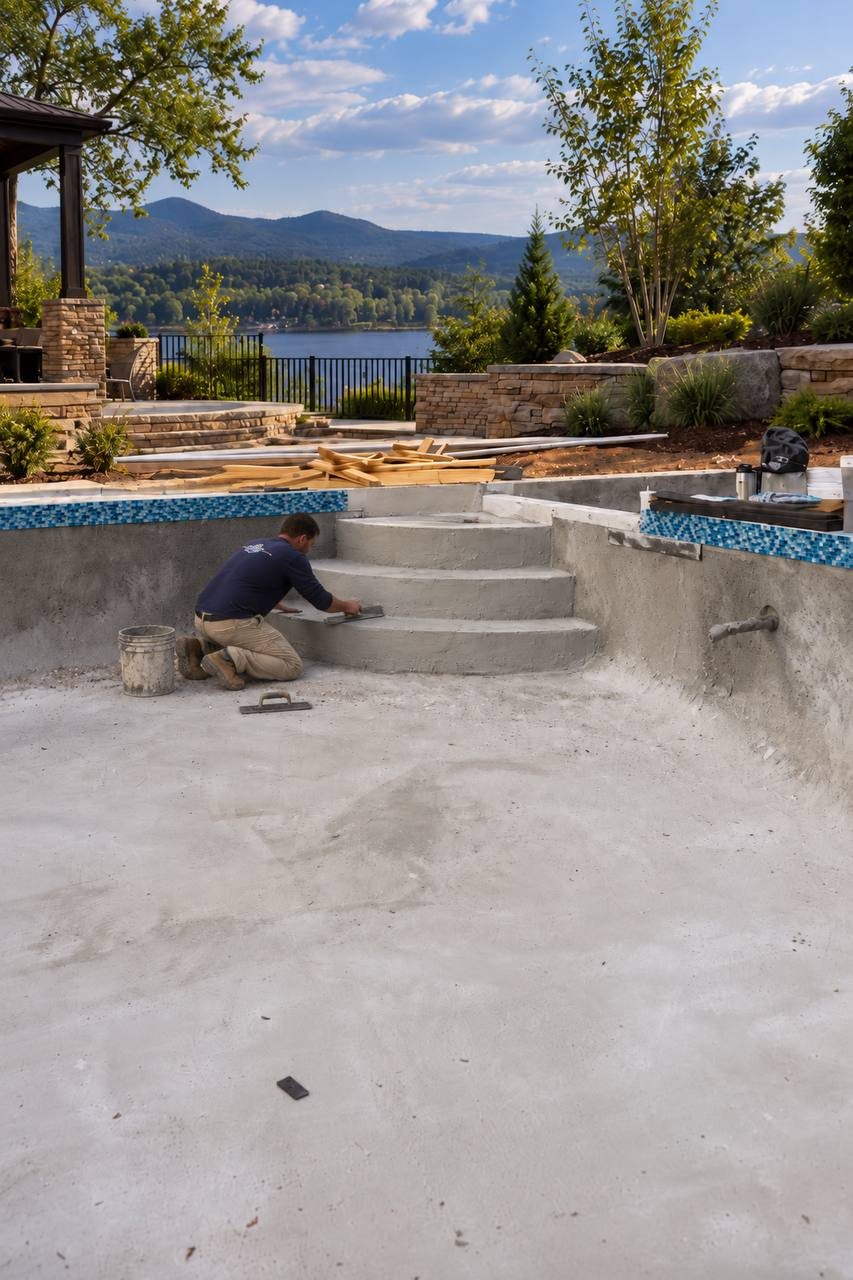
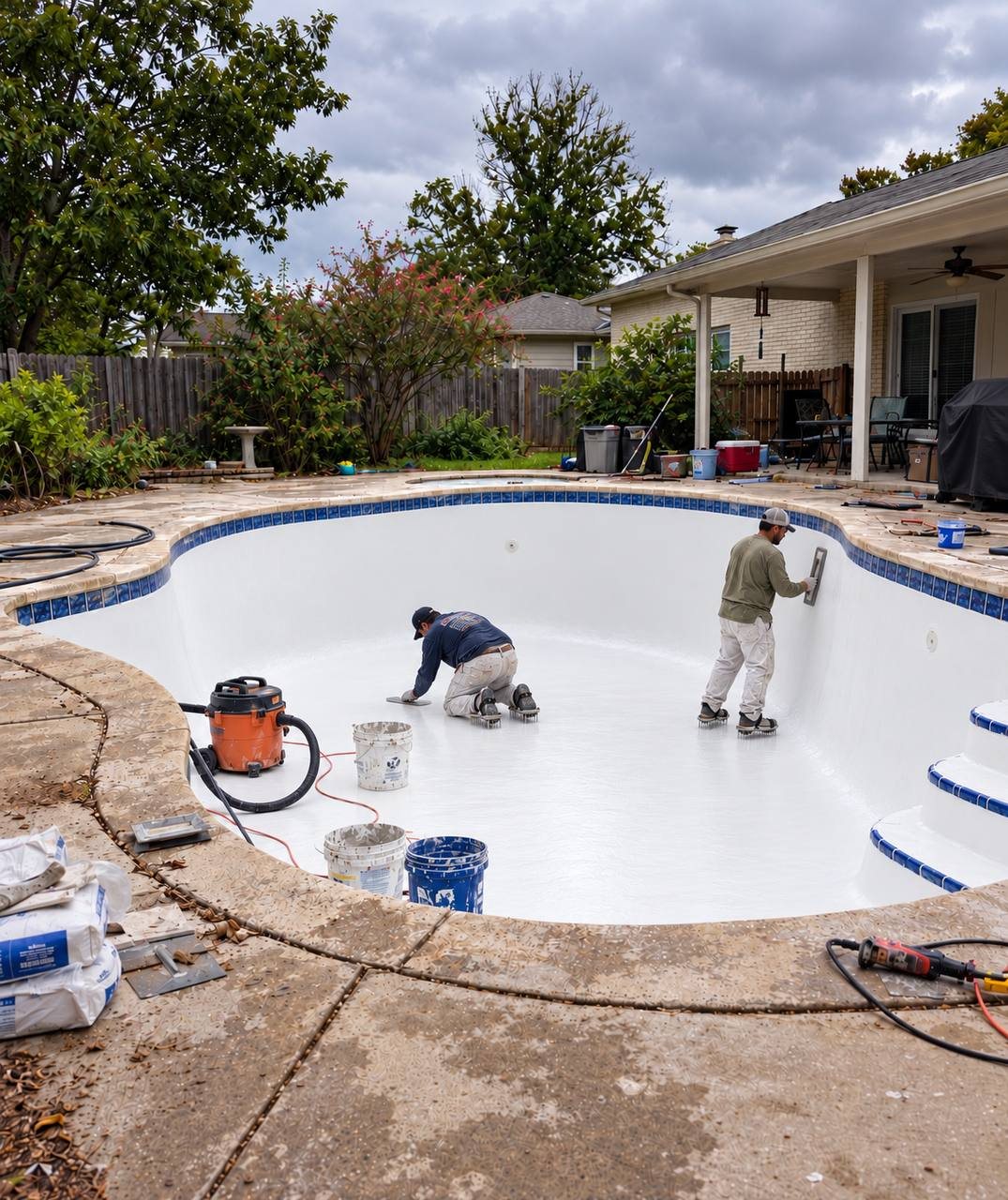
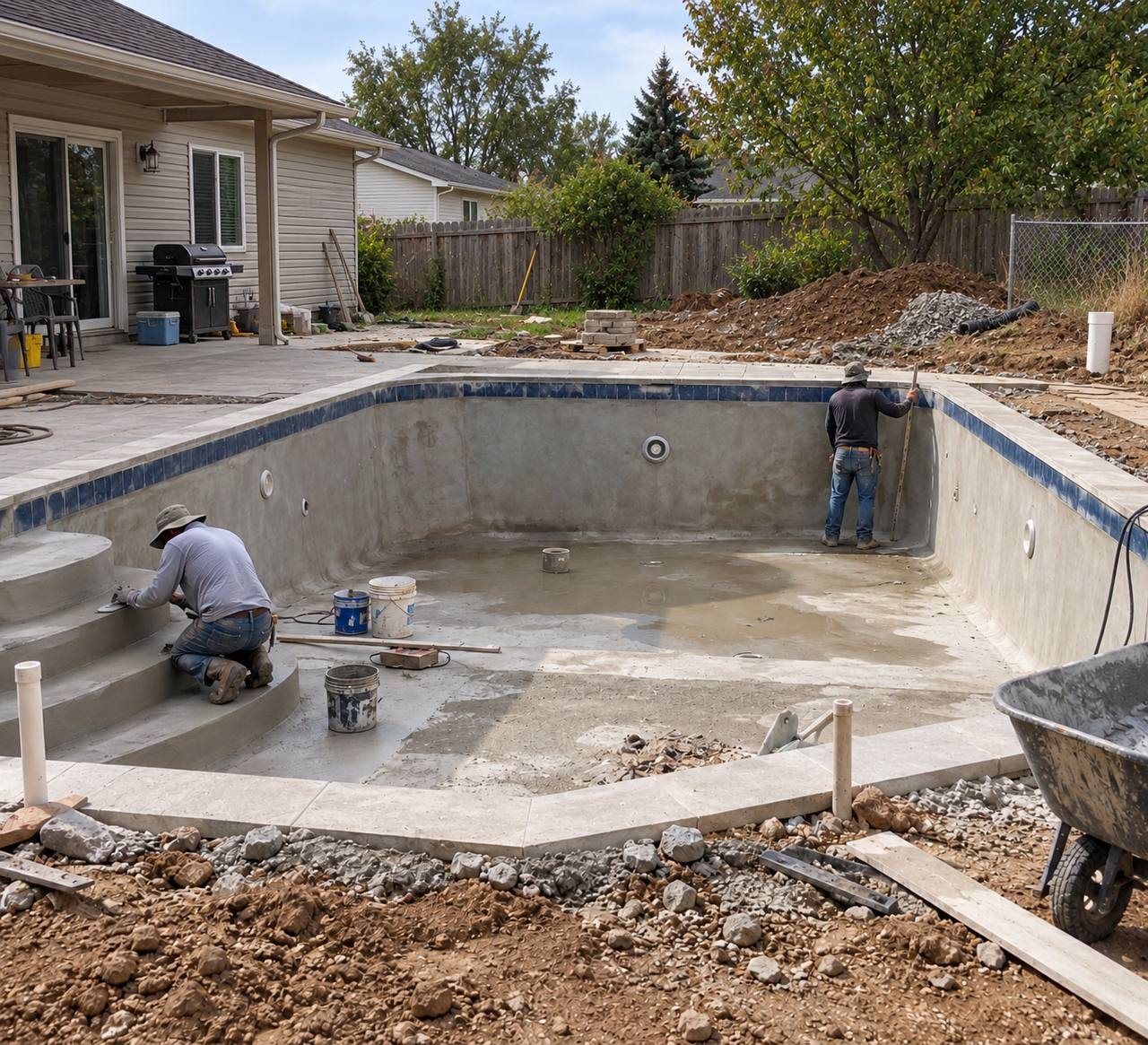
A tile repair that holds starts well before the first new tile is set. The damaged section needs to drain and dry fully — in Buncombe County's humid mountain air, that drying window takes longer than in drier climates. Every hollow tile comes out, not just the ones already on the pool deck. The substrate gets ground down to a sound surface, any cracks in the shell addressed, and bond coat applied per specification before tile is set and grouted.
For damage that has moved beyond tile loss into the pool shell itself — cracking plaster, delaminating finish, or visible structural shifts — the right frame is full pool renovation, not a tile repair. A retile applied over a cracking shell is a two-year fix on a ten-year problem. If freeze damage is the suspected cause, reading through what pool freeze damage actually looks like will clarify whether the scope ends at the tile or extends into the shell.
Seasonal timing also matters in the mountains. Tile work done in late fall needs adequate cure time before Asheville temperatures drop below freezing. Work scheduled mid-winter needs temperature management to keep bond coat and grout curing correctly inside an uncovered pool. A contractor who does not raise the seasonal question in this market is either unfamiliar with Blue Ridge winters or comfortable handing you a callback in April.
Hiring a tile contractor in western North Carolina
North Carolina contractor licensing requirements and pool-specific building standards are administered in part through the NC Department of Insurance Building Code Council. For any tile replacement project that involves shell work, plumbing, or structural components, verify that the contractor carries appropriate licensing for the actual scope — a tile patch is a different credential requirement than a project that touches the pool structure.
Three questions worth asking any prospective contractor in this market: how they diagnose the original failure before pricing a fix, what bond coat system they specify and whether it meets PHTA standards for the finish type, and whether they have completed similar work on pools in the Asheville area specifically. Freeze-thaw exposure in Buncombe County is meaningfully different from lower-elevation counties in the Piedmont or coast, and a contractor whose experience does not include mountain pool work may not be pricing for what the winters here actually do to tile.