Altitude is the variable flatland contractors miss
Cashiers sits at roughly 3,500 feet in Jackson County's southern Blue Ridge — high enough that a pool surface lasting twelve years in the NC piedmont might show significant degradation in eight or nine. The mechanism is freeze-thaw cycling. At this elevation, temperatures cross the freezing threshold more frequently and more sharply than in lower-elevation North Carolina towns, and each cycle drives micro-stress into plaster and aggregate surfaces. A finish that looks merely worn after ten years on a Charlotte pool may already be blistering, cracking, or delaminating on a Cashiers pool that absorbed a series of hard mountain winters.
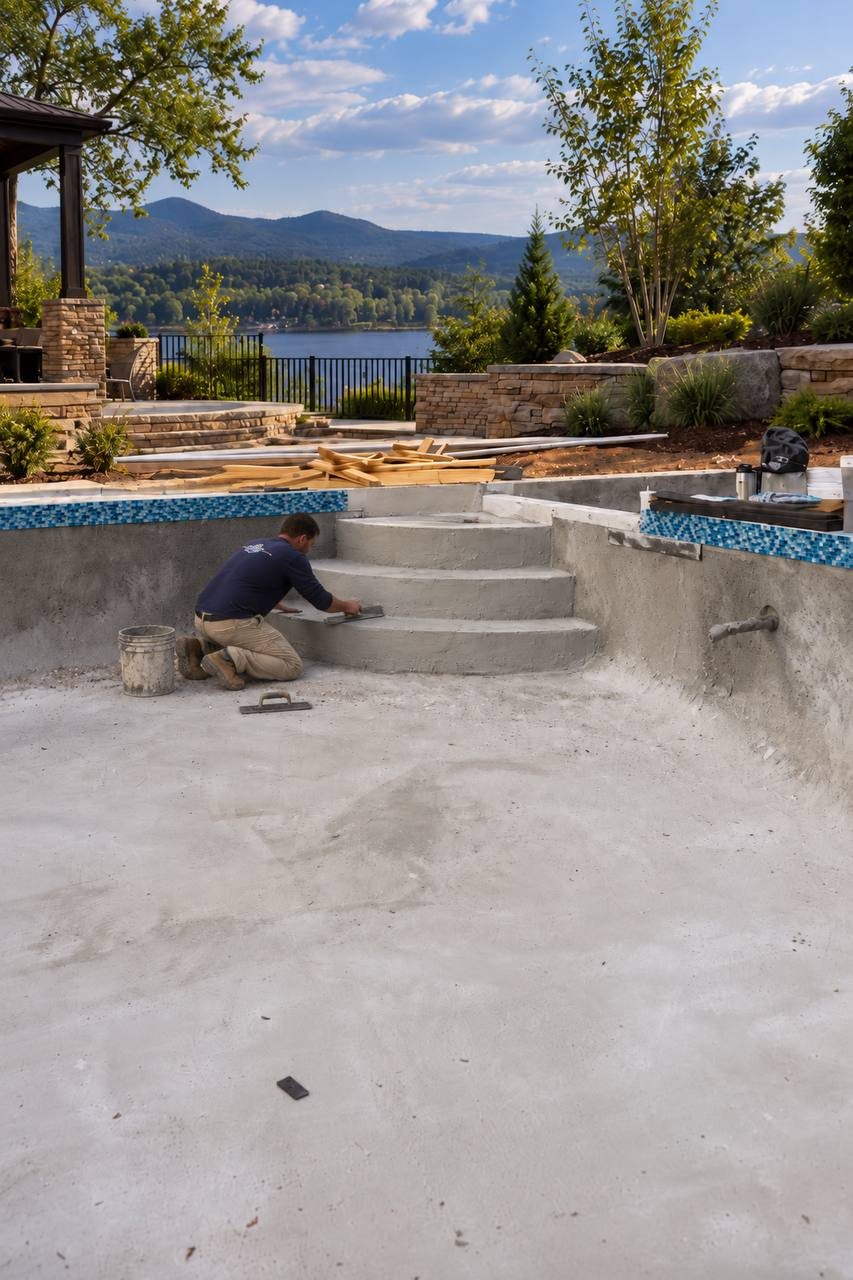
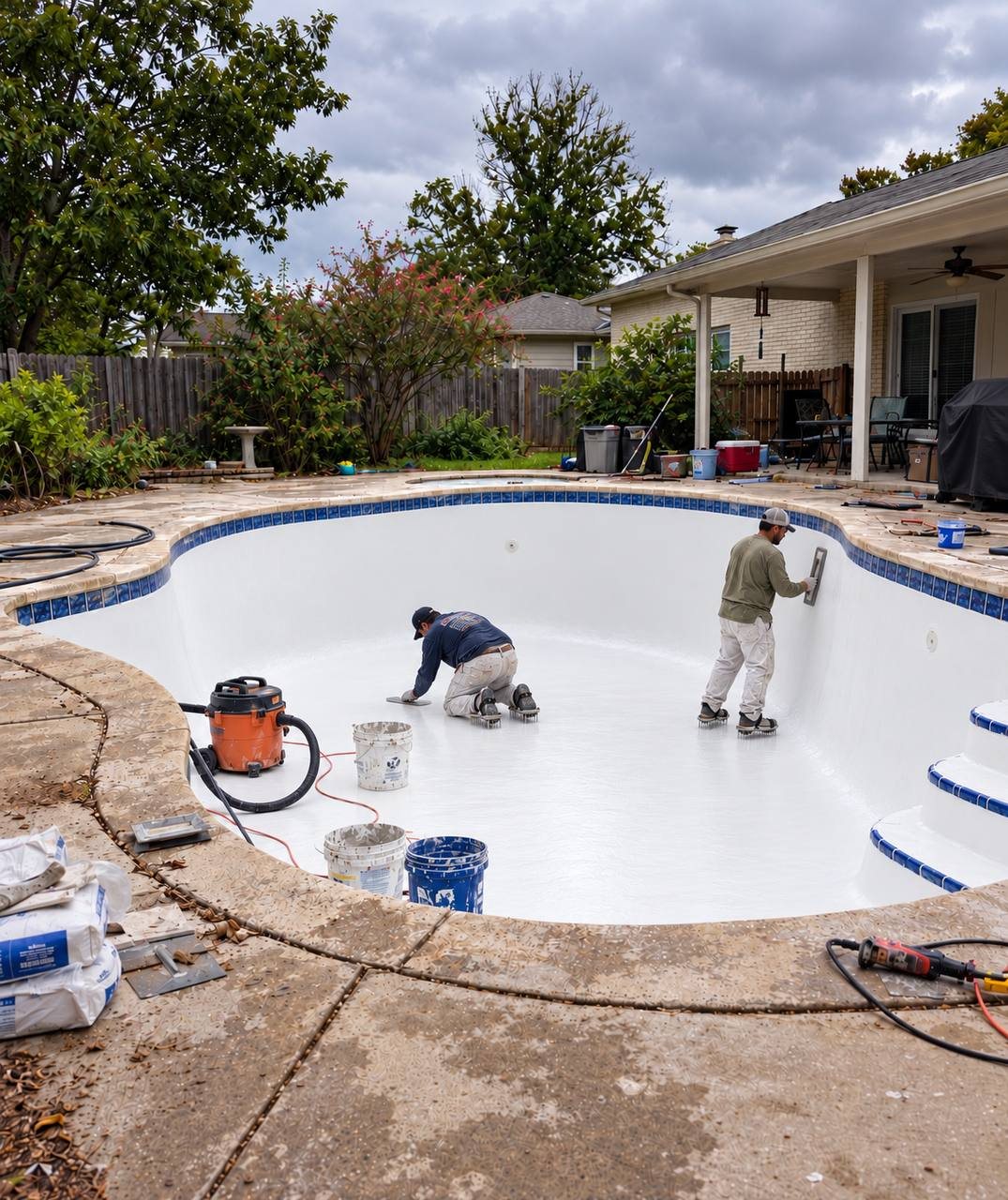
That elevation differential separates a pool resurfacing Cashiers NC job from the same square footage in Mecklenburg or Guilford County in ways that only show up on arrival. Standard plaster is serviceable on a flat-lot suburban pool that rarely freezes hard. On a pool that sits above 3,000 feet and endures sharp temperature swings through November, December, and March, the margin for imperfect bond-coat prep or a slightly thin finish layer shrinks considerably. A competent scope starts by naming that constraint, not assuming it away. The broader pool resurfacing guide explains what the prep process should look like before any finish material goes down.
What the work actually costs in this market
Cashiers-area pool jobs price toward the upper portion of the regional range more consistently than most mountain communities, for two compounding reasons: the finish materials that hold up best here cost more, and the access challenges on steep Jackson County lots add labor that bids from flatland contractors routinely omit. The full line-item picture lives in the pool resurfacing cost breakdown; the table below reflects typical ranges for a 1,000-square-foot gunite pool in this market.
| Scope | Typical range | What drives the high end |
|---|---|---|
| Standard plaster (marcite) replaster | $6,000 – $9,000 | Extensive chip-out, deep bond-coat damage |
| Quartz aggregate finish | $8,500 – $12,500 | Steep lot surcharge, equipment staging |
| Pebble blend finish | $10,000 – $15,000 | Premium materials, tight access, coping reset |
| Pebble finish with coping and tile reset | $12,000 – $15,000 | Additional masonry labor, extended site time |
A bid that does not mention lot access, drainage, or finish suitability for mountain conditions should be treated as incomplete rather than attractively priced. Contractors who price Cashiers pools the same way they price flatland jobs are almost always missing one of those three line items — and that missing item becomes a change order once work starts.
Finish materials and what seasonal closure does to them
Three finish families cover most of the market: standard white plaster, quartz aggregate blends, and pebble finishes. For pools in Cashiers, the durability hierarchy matters more than aesthetics alone. Plaster is the entry point for cost but is also the most sensitive to freeze-thaw stress and to the water chemistry drift that accumulates in a pool sitting idle through a mountain winter. Quartz aggregate is harder, more chemically stable, and handles temperature cycling better. Pebble finishes are the most durable option in the line, and their exposed aggregate surface tolerates the slight pH imbalances that a closed pool accumulates over a long off-season.
Vacation and second-home pools in the Cashiers area often sit unused from late fall through early spring — a pattern that stresses any interior finish differently than a year-round suburban pool. Idle water that drifts alkaline or acidic over several months will etch a soft plaster surface in ways that show up as roughness or staining by the time the pool reopens. The pebble and quartz finish guide covers the material trade-offs in detail, including longevity comparisons and water chemistry interaction for each finish type. If the pool spends four or five months closed each year, the durability section of that guide belongs early in any finish conversation.
What the local rain record means for pool surfaces
Jackson County sits in one of the highest-rainfall corridors in the eastern United States. Terrain-forced precipitation from weather systems tracking up the southern Appalachians delivers some of the heaviest annual totals on the eastern seaboard, concentrated in the mountains around Cashiers and the surrounding high-elevation communities. The county's federal disaster history reflects that pattern: 17 declared events span 1973-2026, most of them storm and flood family. For pool owners, that rain intensity has a direct consequence — drainage around pool decks, equipment pads, and return plumbing is not a secondary detail. It is a primary factor in how long a new finish holds.
Standing water that migrates under a pool deck loosens bond coats from the shell over time. Overloaded drainage, graded lots that sheet runoff toward the equipment pad, and saturated soil adjacent to the pool wall all accelerate surface failure from the outside in. The NC DHHS Environmental Health Section addresses drainage and sanitation standards for permitted pools — requirements that exist in part because drainage failures create sanitation risk as well as structural ones. Any resurfacing scope that skips a drainage review before the shell is prepped is leaving the most likely cause of early finish failure unaddressed.
Getting a scope you can trust before you get a number
The mountain resort market around Cashiers attracts traveling contractors during peak season — crews that quote jobs in Asheville, Charlotte, or Greenville and extend into the mountains when their schedule allows. Those contractors are not necessarily unqualified, but they routinely underprice access on steep Jackson County lots and underprepare for the elevation-specific demands described above. Three questions sort the prepared crews from the rest: how do they account for freeze-thaw cycling in their surface prep? Have they worked pools on lots with a grade above ten percent? And how do they address drainage before applying a finish? Contractors certified through the Pool and Hot Tub Alliance have completed recognized industry training — a useful baseline filter in a market with variable contractor experience.
The structural question matters too. Resurfacing that uncovers a cracked shell, delaminated bond coat, or deteriorated plumbing shifts from cosmetic work to structural repair — and structural repair generally requires a permit under the NC Building Code Council's residential construction standards. Knowing that line before work starts, and confirming with Jackson County where your project falls, prevents the most common mid-job delays. Cosmetic resurfacing typically does not require a permit; the shell work that sometimes follows it often does.