Why Asheville pools lose tile ahead of schedule
The shaded north walls of pools on Buncombe County hillside lots often show failing tile years before the sun-facing sides do. That pattern points to the real culprit: freeze-thaw cycling. Asheville sits above 2,100 feet, and temperatures drop reliably below freezing through the winter. Water that has wicked into grout joints expands when it freezes, and over a few seasons the bond coat separates, grout cracks, and individual tiles hollow out or drop entirely — see the full failure sequence on the pool tile falling off page.
Slope adds a second mechanism. Many Buncombe County pools are built on graded hillside lots where groundwater and surface runoff migrate toward the shell rather than away from it. Elevated hydrostatic pressure against the waterline tile from behind accelerates delamination even when freeze damage is modest. Buncombe County has recorded 19 federal disaster declarations over 1973-2026, most tied to heavy mountain rainfall events. The saturated-soil seasons that follow are exactly when marginal tile bonds announce themselves — a pool that survived the rain event intact can still shed tile three months later as soil pressure peaks and relaxes.
Waterline tile and coping — what each covers and why they usually go together
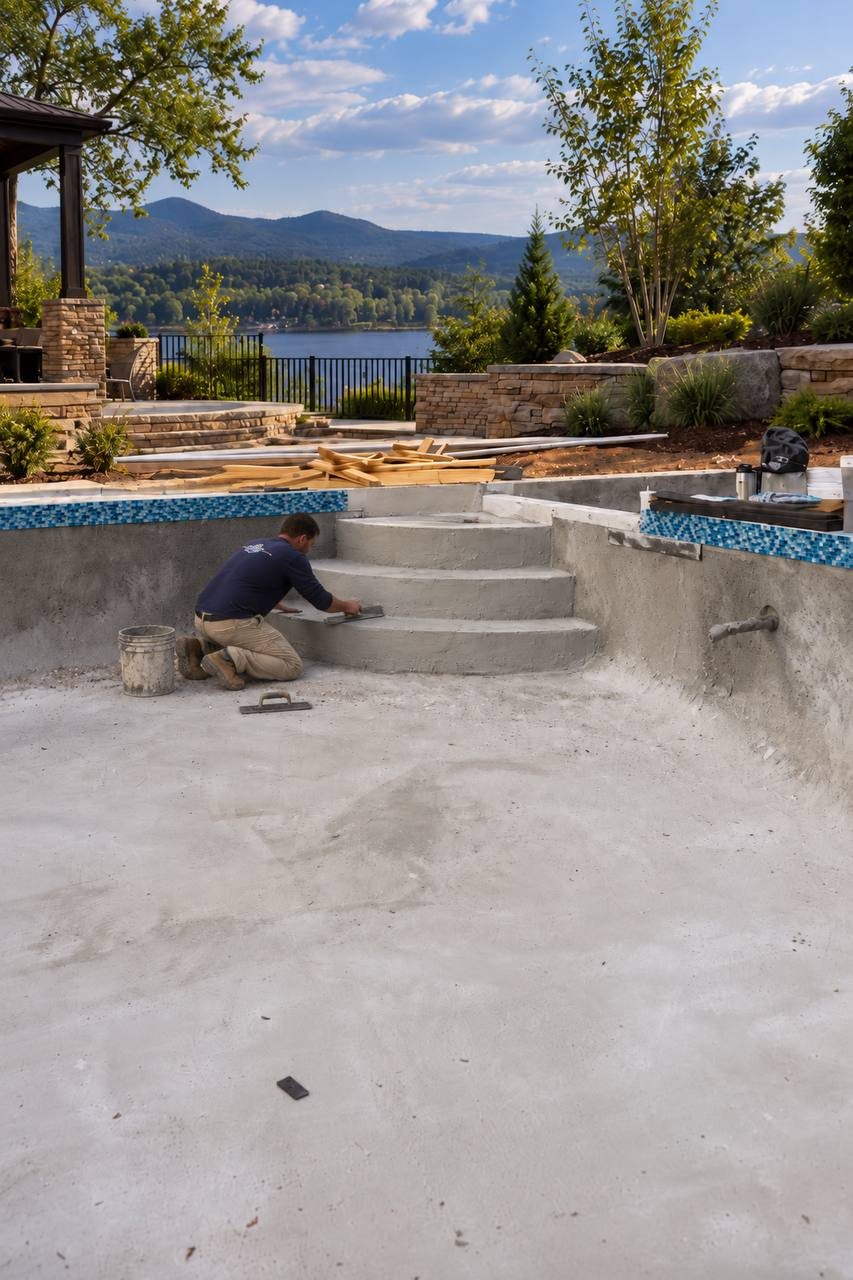
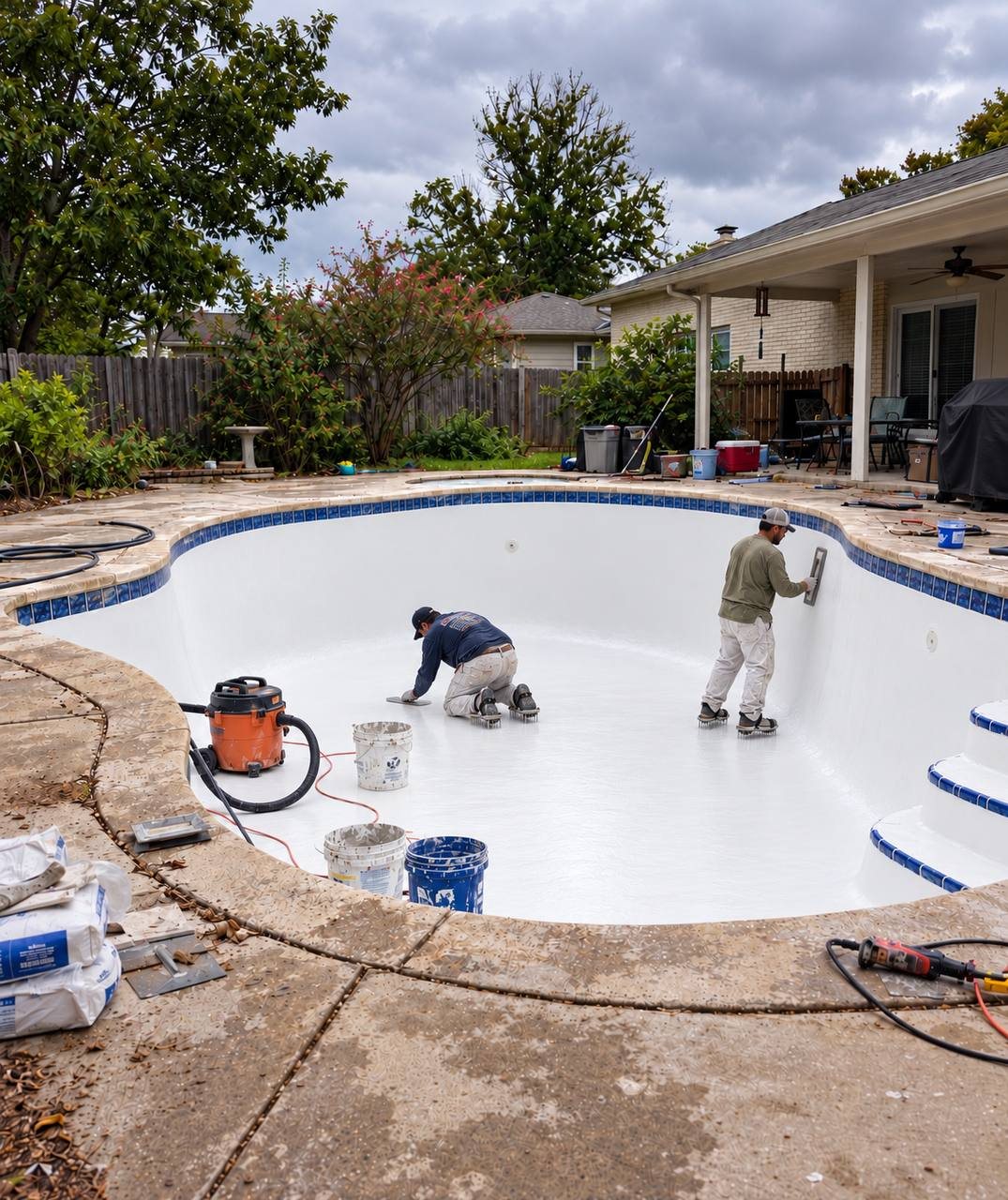
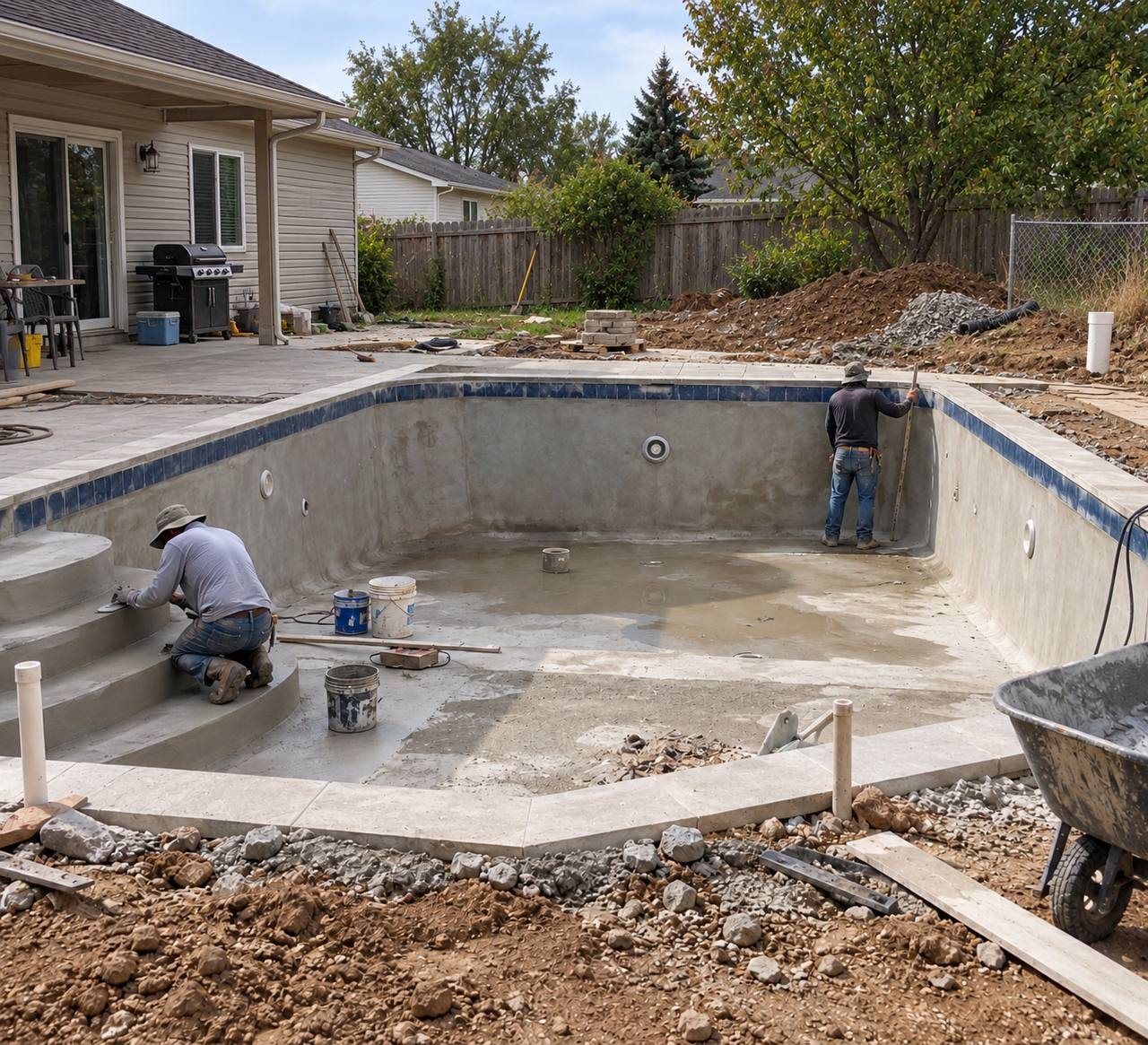
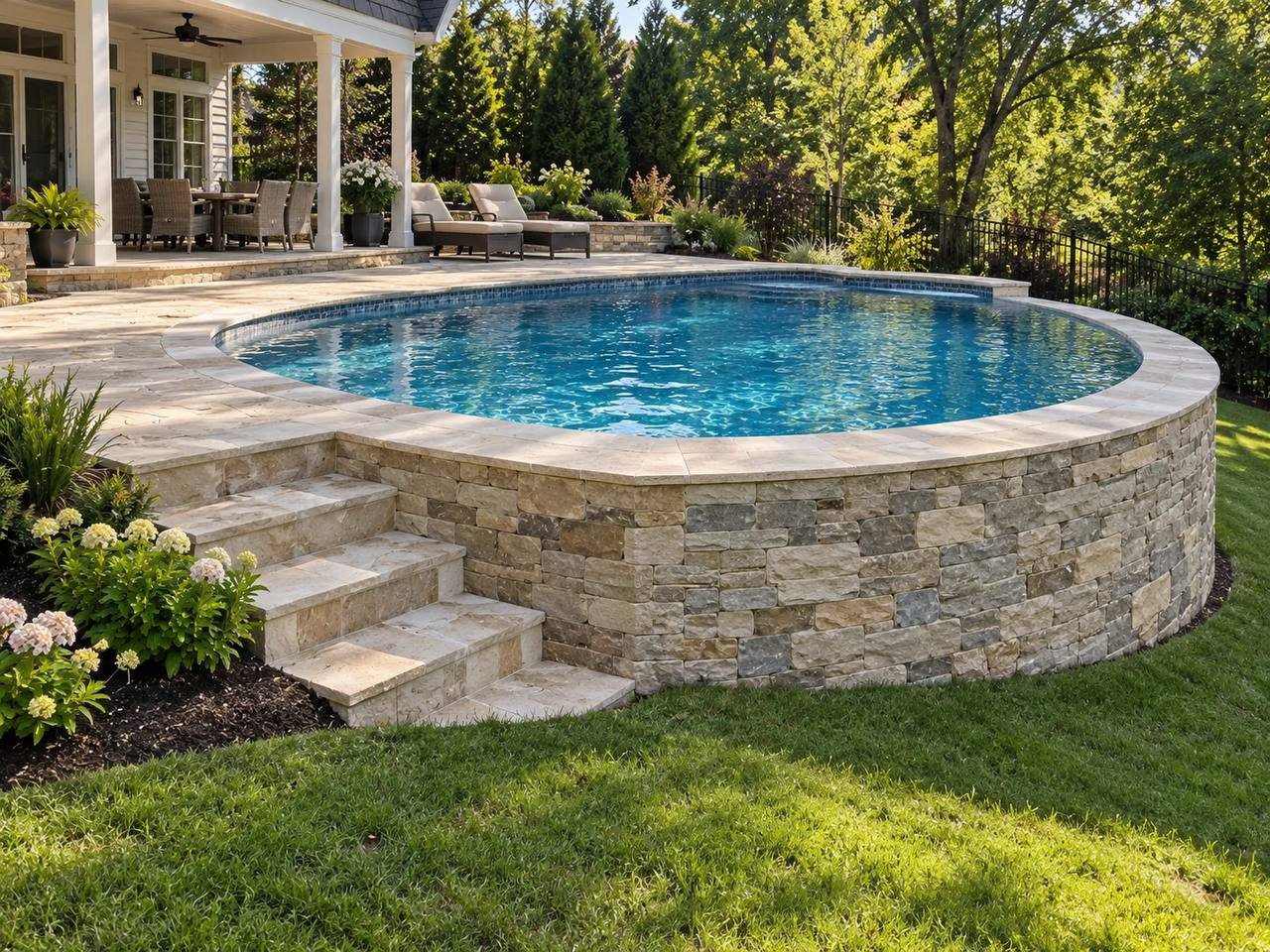
Waterline tile is the band running around the pool's interior perimeter at the water surface. It occupies the most punishing zone on the shell: wetting and drying daily, freezing in winter, absorbing sunscreen oils and calcium scale all season. Coping is the capstone material that covers the bond beam — the structural top edge of the shell — and it overhangs the waterline tile below it.
The two jobs are tightly linked because coping must typically come off to properly access and reset waterline tile beneath it. Running them separately means double mobilization costs, mismatched grout lines, and a gap at the tile-to-coping joint that channels water straight into the bond beam. Combining them is almost always the right call on a mountain pool that is already showing age. A full scope covering shell work, plaster, and equipment is covered on the pool renovation page; this page focuses on tile and coping specifically.
Material choice matters in this climate. Ceramic tile, glass mosaic, and natural stone each expand and contract at different rates, and all three differ from the concrete shell beneath them. The Pool and Hot Tub Alliance (PHTA) publishes installation standards governing mortar type, substrate prep, and joint sizing for submerged applications — standards that exist precisely because the wrong mortar in a freeze climate is a timed failure, not a question of if but when.
What the work costs and what moves that number
Waterline tile replacement runs $25 to $35 per linear foot installed — about $1,500 to $2,500 for a typical 10×20 pool. Natural-stone coping runs $40 to $80 per linear foot installed. The table below breaks out common scopes:
| Scope | Material | Typical range |
|---|---|---|
| Waterline tile only | Ceramic | $25–$30 / linear ft |
| Waterline tile only | Glass mosaic | $30–$35 / linear ft |
| Full waterline, 10×20 pool | Either | $1,500–$2,500 |
| Coping only | Concrete paver or brick | $40–$55 / linear ft |
| Coping only | Natural stone (travertine, bluestone) | $55–$80 / linear ft |
| Combined tile + coping, 10×20 | Mid-grade ceramic + paver | $4,000–$6,500 |
What moves the number: depth of removal (finding shell cracks under the tile adds plaster-repair scope before new tile can go in), material selection, and site access. Asheville's hillside lots often require carrying materials down grades a flatbed can't reach, which adds labor hours that won't appear in a per-foot quote. The pool remodel cost page breaks down Buncombe County pricing across a wider range of project types.
What removal reveals — and why it matters before anyone commits to a price
Pulling waterline tile is the most honest diagnostic step on a pool renovation. Once the first section comes off, the bond coat and scratch coat tell the story: was the original installation built for a continuously submerged application? Is the plaster cracking behind the tile? Is there evidence of hydrostatic pressure migrating through the shell wall? Any of these findings changes the scope — and changes it before new tile can responsibly go on.
A bid that prices only the tile surface without an allowance for what's underneath is pricing a guess. The honest structure looks like this: a base price for tile and coping work, a disclosed per-square-foot allowance for plaster or shell repair if needed, and a clear change-order threshold so you know before the chisel goes in what finding would trigger additional cost. Shell cracks discovered mid-job are legitimate change orders — the rate and trigger should be scoped up front, not surfaced once half the tile is already on the ground.
The NC Department of Insurance building code division does not require a permit for waterline tile replacement on existing residential pools in most Buncombe County jurisdictions, but the PHTA standards serve as the industry code of record for installation quality. Ask any bidder which exposure class they're building to — submerged mountain pools fall in the most demanding category.
Three questions worth asking before anyone picks up a chisel
"What mortar system are you using, and is it rated for continuous submerged immersion?" The freeze-thaw environment in western North Carolina requires a polymer-modified mortar rated for that exposure. Standard thinset fails here — not always in year one, but reliably within three to five seasons. If the answer is vague, ask for the product name and check the manufacturer's freeze-thaw exposure rating yourself.
"Does coping need to come off, and what is your plan at the tile-to-coping joint?" Water infiltration at that joint is one of the leading causes of coping failure on mountain pools. A contractor who plans to leave coping in place and re-grout the transition joint is trading your long-term result for their short-term efficiency. The tile-to-coping joint in a freeze climate needs to be rebuilt, not patched.
"What is the per-square-foot rate if you find shell damage under the tile?" This number should be in the contract, not decided on the fly. For a broader look at how tile and coping work fits into a full renovation budget, the pool renovation page covers the complete project scope.