Under the tile: what estate-era pools carry
Biltmore Forest is a small incorporated town pressed against Asheville's southeastern edge and one of the most consistently established residential communities in Buncombe County. The pools installed here over the decades were built to match the properties: larger footprints, formal layouts, and construction that often predates modern plumbing standards by forty years or more. That age is the defining renovation variable, and it separates a Biltmore Forest job from work on a pool poured in any newer neighborhood elsewhere in the county.
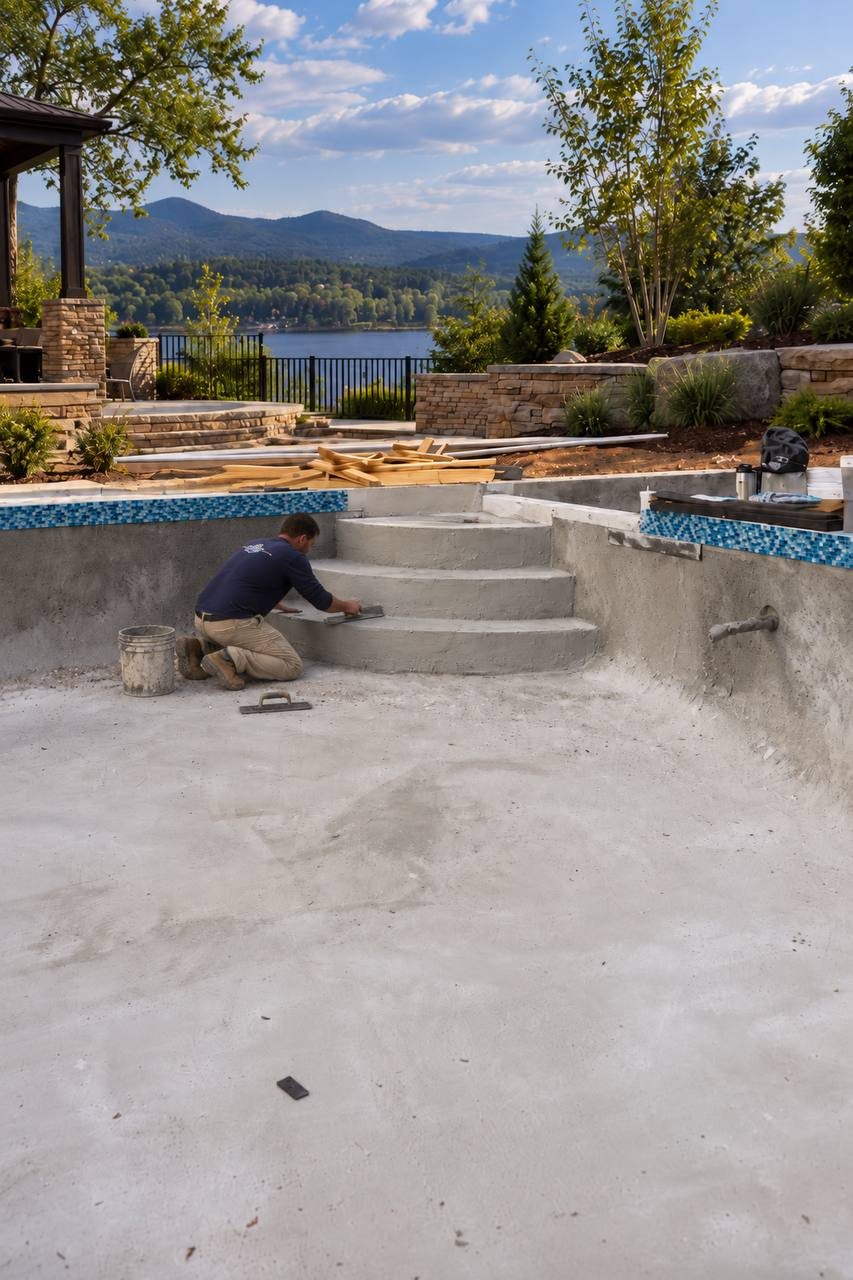
Original plumbing run in schedule-40 PVC from the 1970s and 1980s is a common discovery on a first inspection. The surface looks like the job, but the real scope question is whether those returns and suction lines are still serviceable or whether a replumb belongs in the proposal. Pools with raised bond beams, vanishing edges, or attached spa structures carry their own structural requirements before any honest scope can be written. Formal water features — raised bowls, grottos, attached waterfalls — add tile and coping work that has to coordinate with whatever stays.
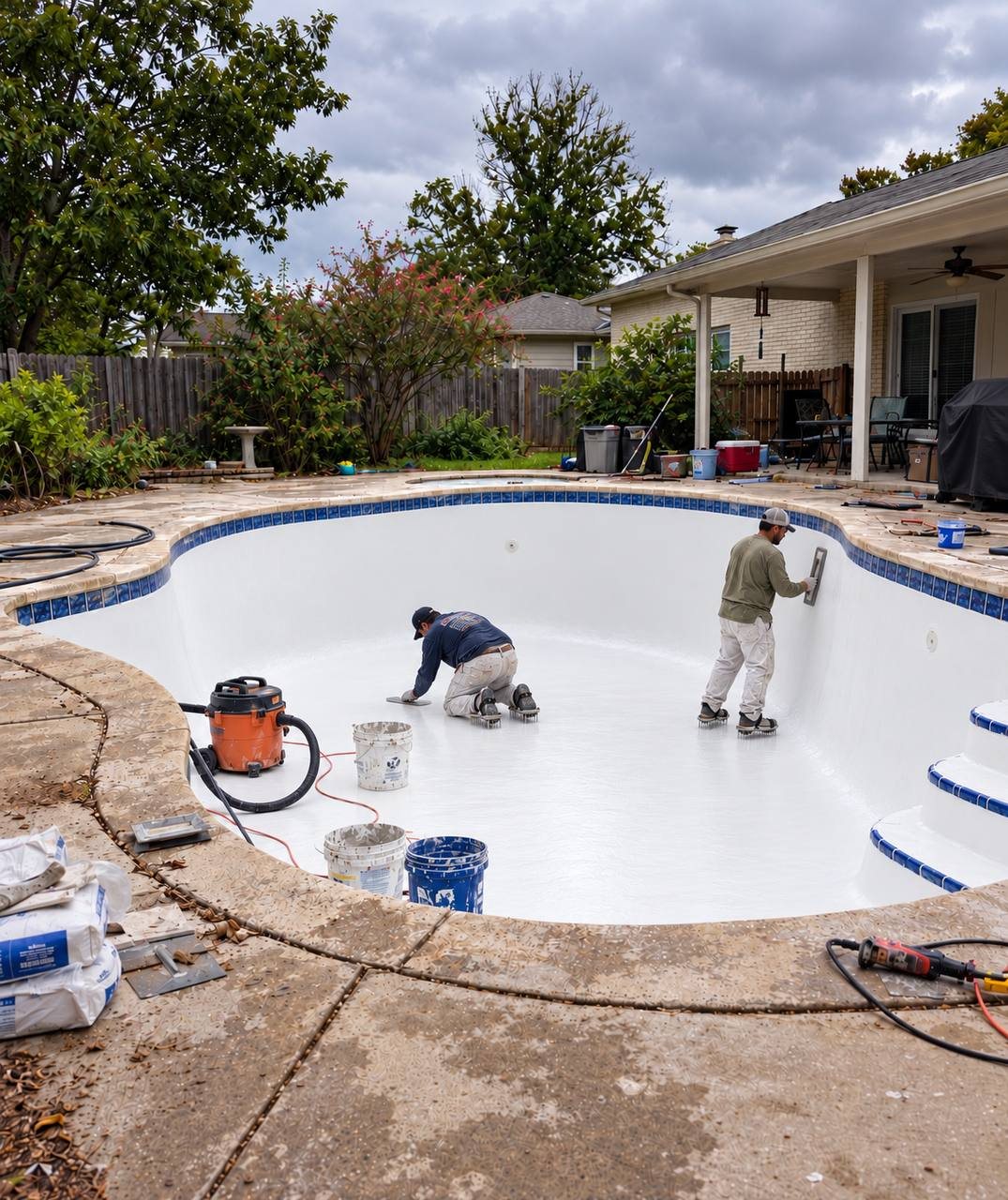
Before a resurface or full renovation, a proper first visit checks shell integrity, plumbing pressure, equipment condition, and electrical bonding. The pool renovation overview explains what a complete inspection covers and what decisions it unlocks before a single proposal goes out.
What renovation scopes typically cost
The working price range for pool renovation in the Biltmore Forest area runs from roughly $6,000 for a plaster resurface on a structurally sound shell up to $60,000 for a comprehensive remodel: new interior finish, full tile and coping replacement, deck work, and an equipment package. Most jobs here, given pool scale and owner expectations around finish quality, sit toward the middle and upper portions of that band. For a full breakdown of line-item ranges by scope, the pool remodel cost page covers each category in detail.
| Scope | Typical Range | What drives the number |
|---|---|---|
| Plaster resurface only | $6,000–$12,000 | Pool size, plaster type (standard vs. pebble or quartz finish) |
| Tile and coping replacement | $8,000–$18,000 | Linear footage, material selection, bond beam condition |
| Deck replacement or resurfacing | $8,000–$20,000 | Square footage, material (concrete, pavers, or natural stone) |
| Equipment package (pump, filter, heater) | $4,000–$10,000 | Pool volume, heater type, automation add-ons |
| Full remodel (all of the above) | $20,000–$60,000 | Combined scopes; plumbing condition; formal water features |
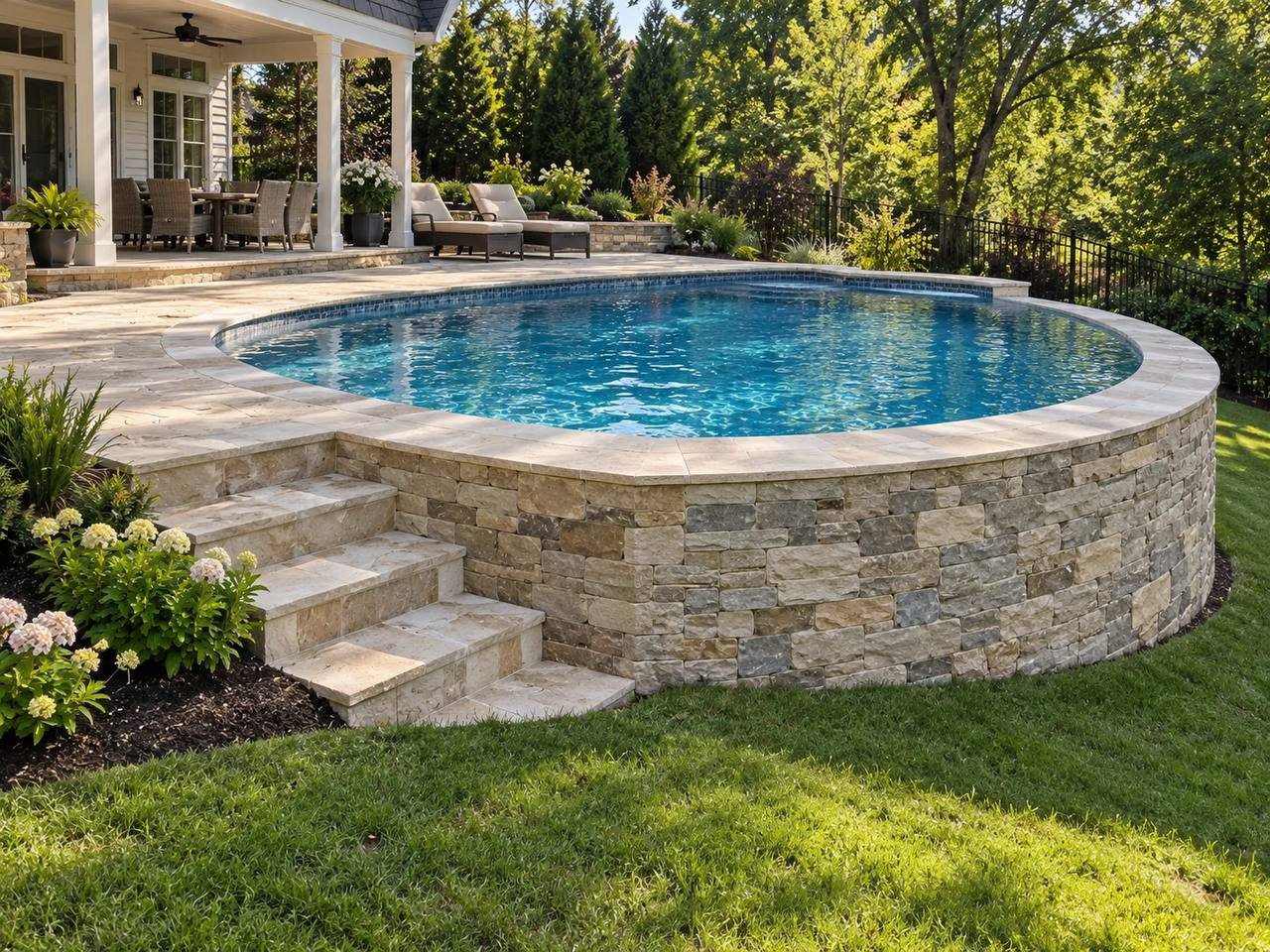
Formal water features common on older Biltmore Forest properties — attached spas, raised bowls, grottos — push renovation jobs toward the upper end of the full remodel range. They are not separate costs layered on top; they are why some jobs price at the ceiling rather than the middle.
Mountain water and what storm events do to pool infrastructure
Buncombe County's federal disaster record covers 19 declared events across 1973-2026, the majority in the storm and flood family. Those events affect pool infrastructure in specific ways: saturated soil around pool shells can crack plaster and shift deck panels; high-flow water moving across pool surrounds damages equipment pads; and debris loads in the aftermath accelerate finish wear on surfaces not built for repeated exposure. In Biltmore Forest, where mature tree canopies are part of the residential character, storm events add an organic load on pools that older filtration systems were not sized to handle.
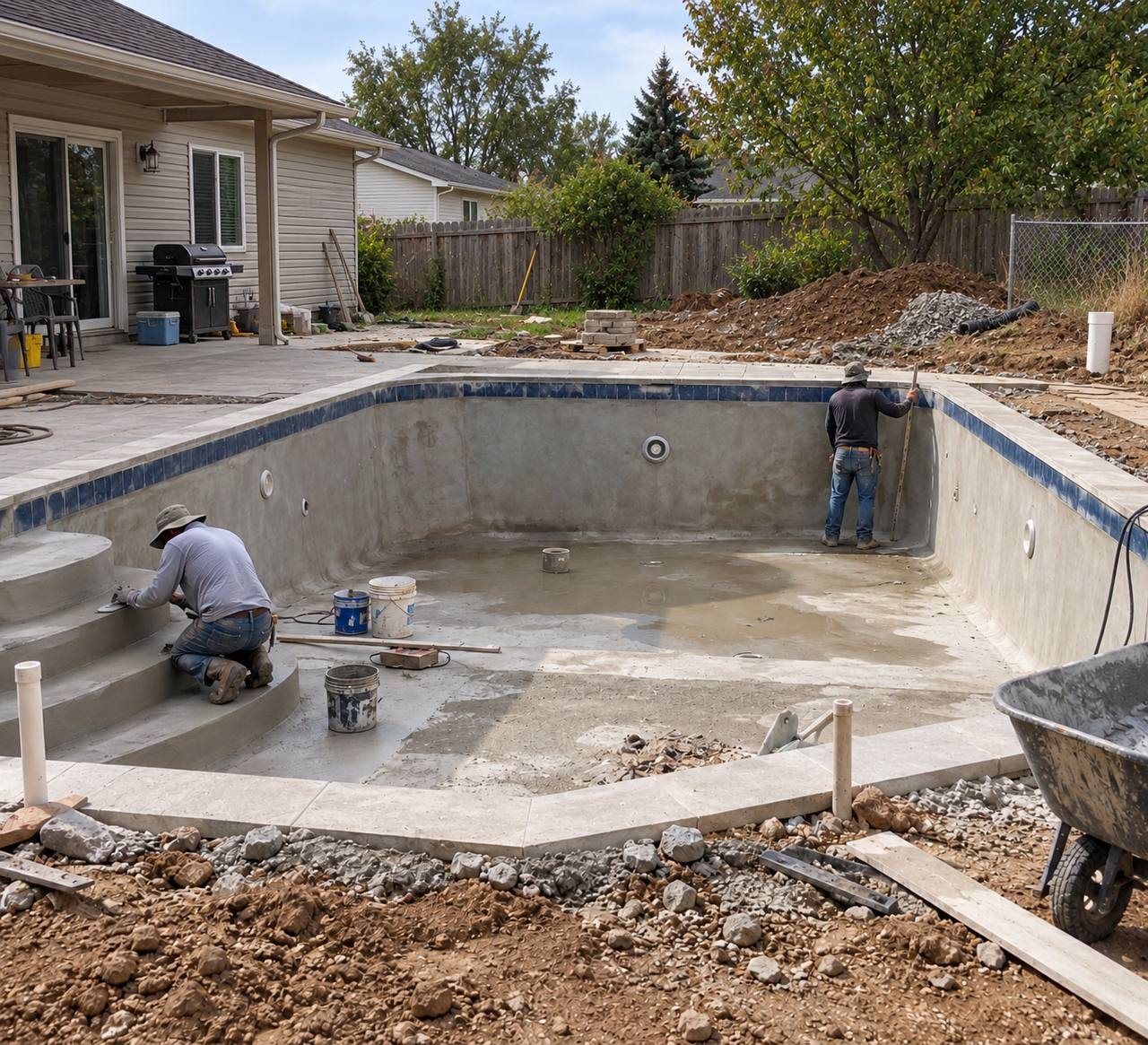
Deck drainage matters more than contractors quoting a resurface typically discuss. If the existing deck grades toward the pool and water sits against the tile line after heavy rain, correcting that slope before refinishing the surface is the repair that protects the new work. Grading, deck pitch, and perimeter drainage are pre-renovation questions worth settling before surface materials are selected or ordered.
Equipment, code, and what has changed since your pool was built
Pool equipment and safety standards have changed materially since most Biltmore Forest pools were constructed. Two changes bear directly on renovation scopes today.
The federal pump efficiency standard — established under the Department of Energy's 2023 dedicated-purpose pool pump rule — sets minimum efficiency thresholds for pool pump motors. Any equipment replacement in a renovation now needs to meet those requirements, which in practice means variable-speed pumps are the current installation standard. A pool still running a single-speed motor from the 1990s is both out of step with current code expectations and paying more per kilowatt-hour than a replacement requires.
Residential pool safety in North Carolina draws on rules maintained by the NC DHHS Division of Public Health, Environmental Health Section. While those rules address public pools primarily, they establish the baseline that licensed contractors reference for drain cover replacement, bonding and grounding, and GFCI protection on residential work. On a pool built before the Virginia Graeme Baker Act drain cover standard took effect, cover replacement is typically included in any scope that involves interior replastering.
When tile, coping, or structural decking changes, permits run through the local building authority. For a detailed look at what tile and coping work involves as its own scope, the tile and coping replacement guide covers material selection, linear footage pricing, and what a bond beam inspection includes.
Finding the right crew for a formal renovation
Not every pool contractor in the Asheville area has worked on an estate-scale pool with a forty-year plumbing system, a formal water feature, and a deck material that may no longer be in production. These three questions help separate crews with relevant experience from those pricing by square footage alone.
Ask whether they will provide a written scope that separates surface work from infrastructure findings. A contractor who folds plumbing results into a single line item cannot explain what changes when the pressure test changes the job.
Ask for references on pools of similar age and scale. A contractor whose experience is concentrated on newer pools in other parts of Buncombe County may have no context for what makes estate-era renovation different, and no reason to say so unless asked directly.
Ask about sequencing: whether drainage correction and structural inspection happen before surface work begins. The answer describes how they approach renovation in practice, not just what they list in the contract.
When you are ready to compare proposals, the cost breakdown page gives line-item ranges for each phase so you can read any bid against what the market supports.