When Pool Work in Buncombe County Becomes a VGB Compliance Event
The pools set into Asheville's graded hillside lots — tucked behind retaining walls in North Asheville, dropped below grade in Kenilworth, built into slopes east of downtown — tend to be older. Buncombe County's housing stock skews mid-century and earlier, and pools from that era predate the federal anti-entrapment rules that have been law since 2008. That gap closes the moment any renovation work begins.
Under the Virginia Graeme Baker Pool and Spa Safety Act, any work that opens the circulation system — new plaster, pump replacement, main drain repair, or pipe work — creates a legal obligation to bring drain covers into federal compliance before the pool reopens. The NC DHHS Division of Public Health's Environmental Health Section, which administers pool and spa rules across North Carolina, ties state inspection sign-offs for permitted work to VGB compliance. Homeowners who budget carefully for new tile or equipment frequently encounter the drain cover requirement mid-project. Budget for it before the pool is drained, not after.
Buncombe County has recorded 19 federal disaster declarations over 1973-2026, and storm-driven pool damage — cracked shells, shifted plumbing, pressure-fractured returns — routinely puts pools into renovation territory. Any repair that reaches the circulation system brings VGB compliance with it. If you are starting a pool renovation in Buncombe County, VGB drain cover scope should be on the first conversation with your contractor, not the last one before refill.
What the VGB Act Actually Requires
The law targets suction entrapment: the conditions where a swimmer's hair, limb, or body is held against a drain by circulation pump pressure. The standard addresses it through cover geometry, flow-rate ratings, and minimum outlet dimensions indexed to ASME/ANSI A112.19.8. The Pool and Hot Tub Alliance (PHTA) publishes the installer and manufacturer guidance that most inspectors reference in the field.
| Pool configuration | VGB requirement |
|---|---|
| Single main drain (flat floor) | VGB-compliant cover rated for the actual pump flow rate; ASME A112.19.8 listed and labeled on the cover itself |
| Two main drains separated by ≥3 feet | Compliant covers on both outlets; separation provides redundant suction protection and is the preferred residential design |
| Wading pool or zero-entry feature | Compliant covers required; additional low-flow limits apply; NC DHHS rules add state-level minimums for public-access installations |
| Spa or hot tub suction fittings | Must be listed and certified; flow-rate certification must appear on the cover label, not only the packaging |
| Full replaster or shell repair touching main drain area | Triggers VGB compliance review before pool reopens |
| Cosmetic resurfacing only (drain cover untouched, system sealed) | VGB compliance not triggered by surface work alone — but covers should be visually inspected before refill |
One detail local contractors flag consistently: the clay-heavy soils and hillside grades common across Buncombe County mean older single-drain pools sometimes have main drain sumps that have settled or shifted. A cover that passed inspection a decade ago may no longer seat flat against the sump — and a cover that does not seat flush does not pass a VGB inspection regardless of its certification label.
How North Carolina Enforces These Requirements
North Carolina administers public pool and spa safety rules through the NC DHHS Environmental Health Section, with county health departments handling local enforcement for permitted pools. Buncombe County Environmental Health is the inspection and permitting authority for commercial, semi-public, and HOA pools — the operating permit that allows a pool to open each season runs through them.
For private residential pools, enforcement works differently. The VGB Act is a federal law; its primary mechanism is civil liability rather than a county permit requirement. The building permit for a renovation — pulled through Buncombe County Inspections for structural or electrical work — covers those disciplines. VGB compliance is documented through your contractor's installation record and the cover manufacturer's ASME listing certificate. That documentation must exist and be retrievable: it is what a buyer's pool inspector and your homeowner's insurance carrier will request when it matters most.
The county building inspector signs off on structural work; the VGB compliance record is your contractor's deliverable at project closeout. A contractor who cannot produce the listing certificate and flow-rate calculation at the end of a renovation is leaving a gap in your documentation that surfaces at the worst possible time. For the full picture of what the county requires before a permit is issued, see NC pool permit requirements.
The Installation Sequence for a Buncombe County Renovation
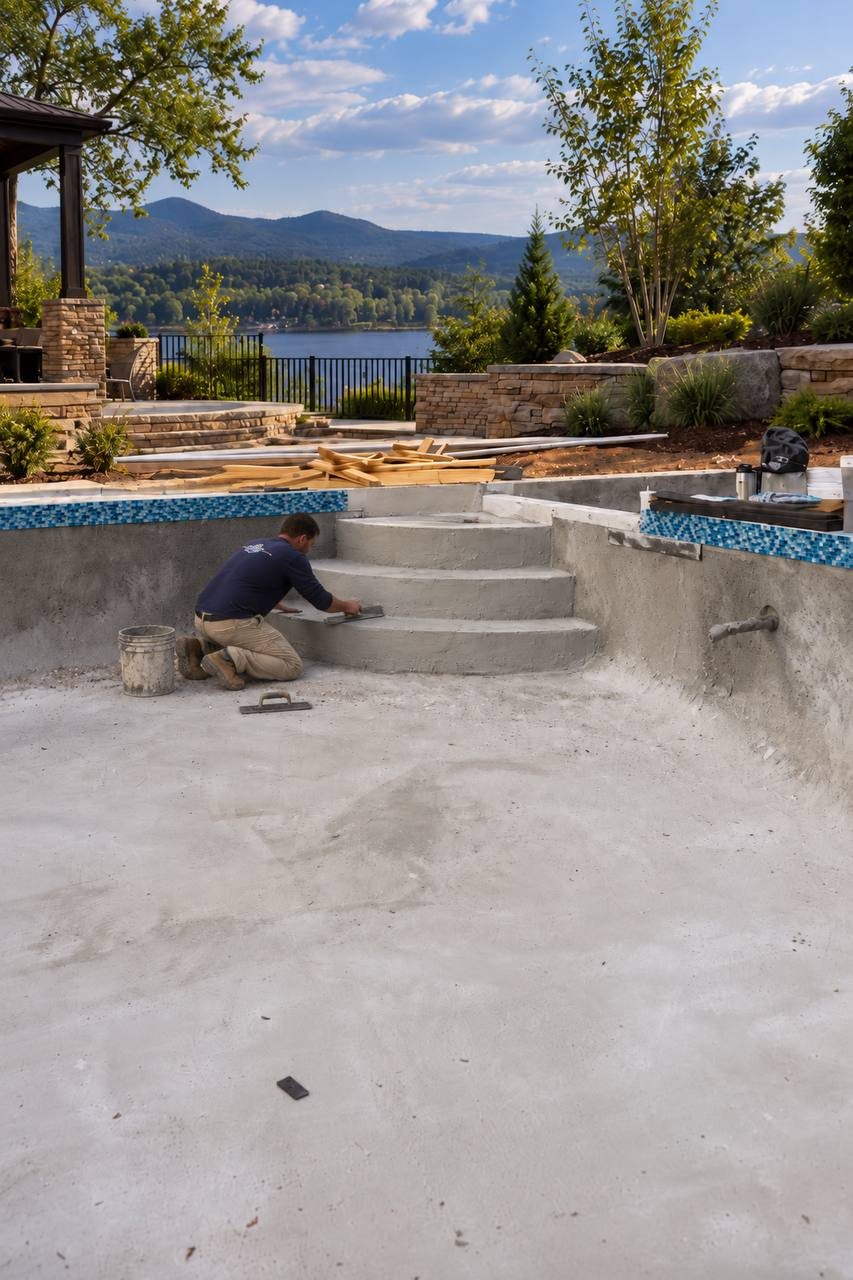
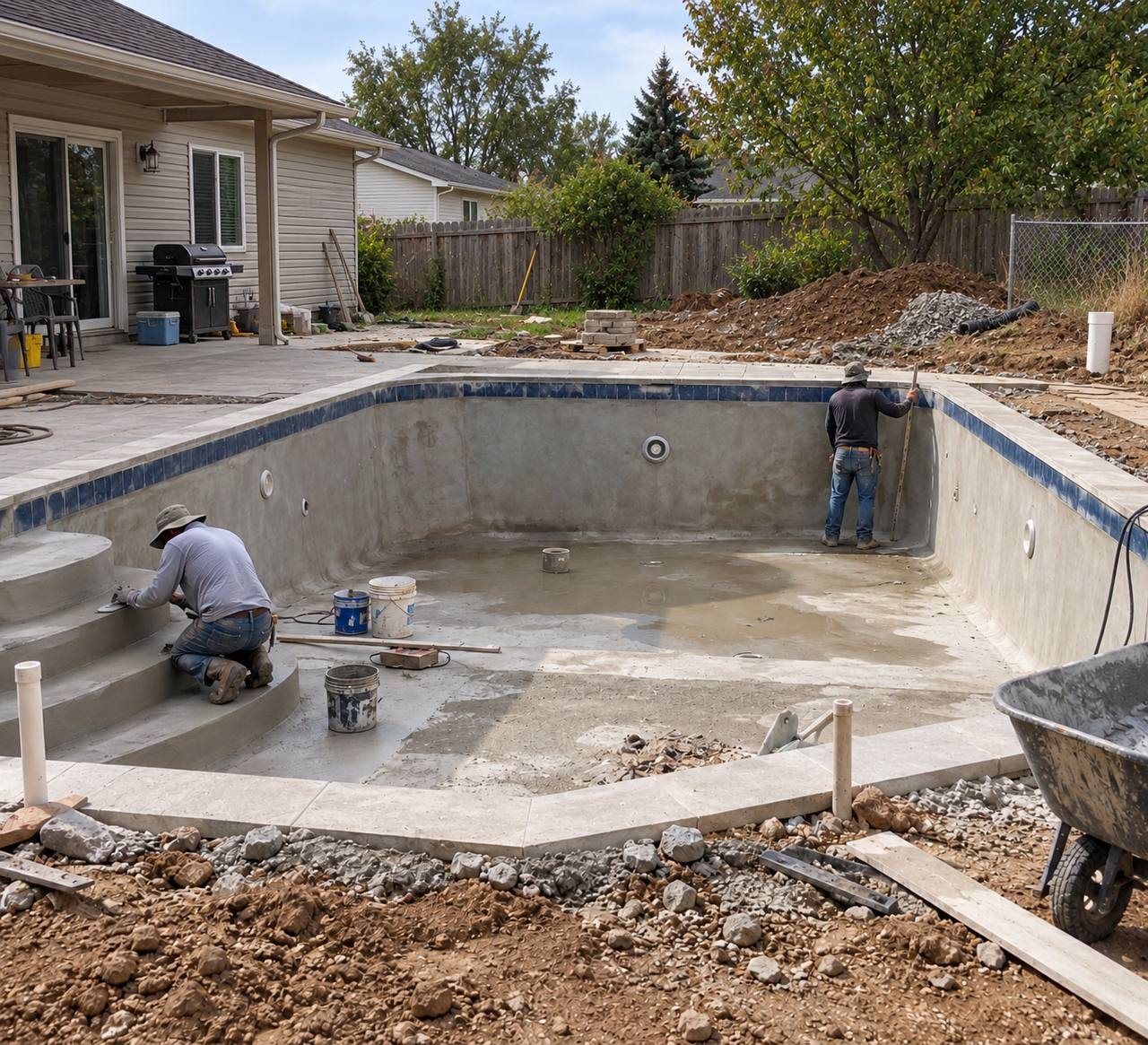
In a standard renovation, drain cover replacement happens at the open drain before any new plaster or finish goes down. The sequence that keeps a project on schedule:
- Shell inspection and sump measurement — after draining, the contractor confirms the main drain sump throat dimensions before ordering covers. A sump that has shifted or cracked needs repair before a new cover can seat correctly; this is common on older hillside pools where the shell has moved with the grade over decades.
- Cover selected to match pump output — the cover must be rated for the actual gallons-per-minute output of the installed pump, not a generic pool-size estimate. Upsizing the pump during the same renovation without updating the cover rating is a recurring compliance miss that requires a second drain to correct.
- Cover installed and torque documented — the VGB standard specifies fastener torque for tamper-resistant installation. Contractors should record this at installation, not reconstruct it from memory later.
- County building inspection (if applicable) — if the renovation includes electrical or structural work under a county permit, those inspections run in parallel. Coordinate the schedule so the inspector can see what needs to be seen while the pool is still open.
- Startup and file handoff — before refill, the contractor delivers the cover manufacturer's ASME listing, the flow-rate calculation, and proof of installation. Store it with your pool equipment records, accessible for the next resale or insurance inquiry.
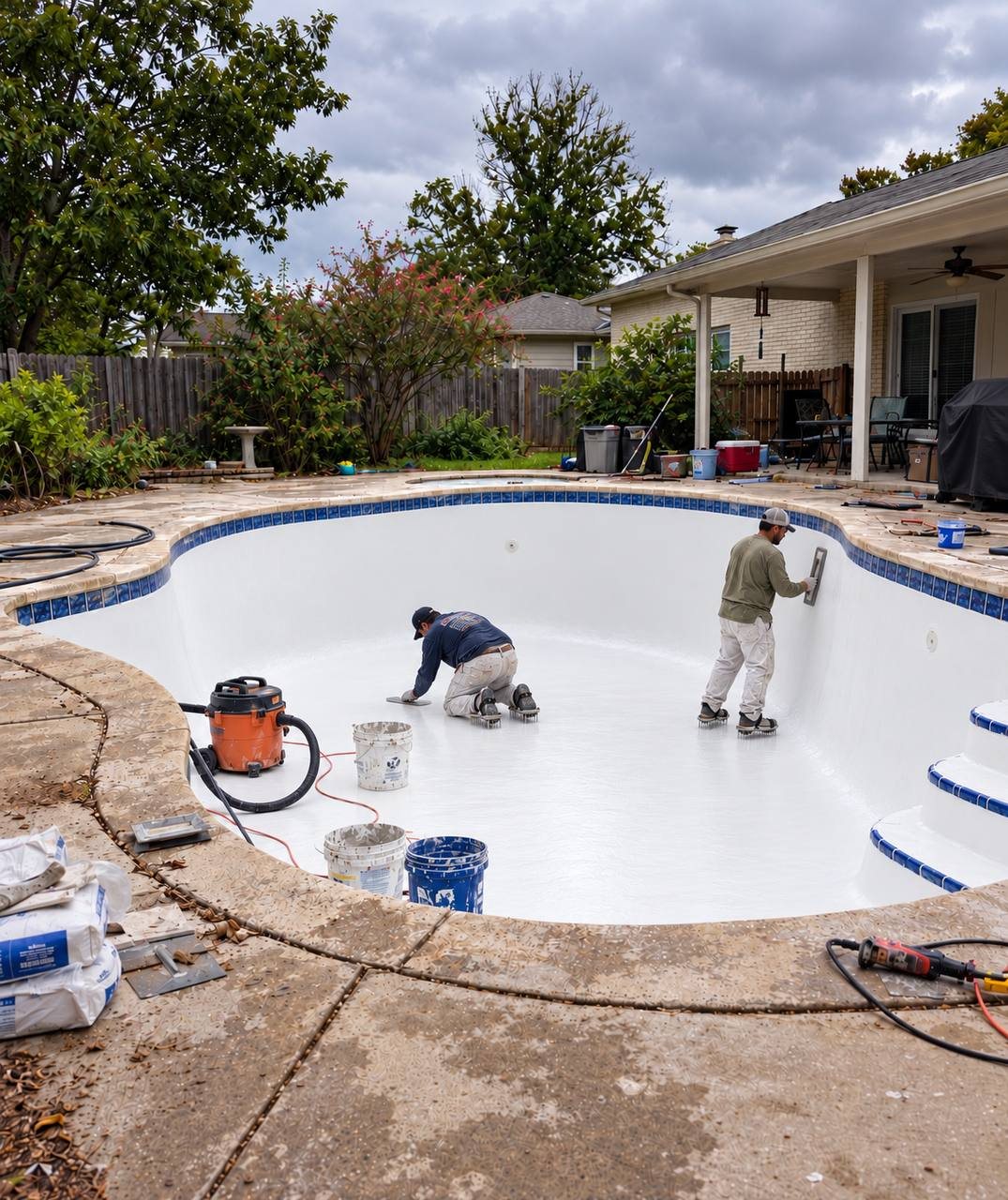
If your renovation also includes new plaster, coordinate the pool resurfacing timeline carefully — drain cover installation must be complete before the finish coat goes over the sump area. Reversing that sequence means draining the pool again to fix it.
What Non-Compliance Actually Costs in the Asheville Market
Three places that a non-compliant drain cover becomes expensive in Buncombe County:
Resale. A buyer's pool inspector will check drain cover certification as part of due diligence. A pre-2008 cover — or a cover installed without documentation — reopens negotiation at the moment the seller has least leverage. Asheville's real estate moves quickly, and a flagged pool safety item in due diligence is a concession a prepared buyer will use.
Insurance. Homeowner's policies with pool liability coverage increasingly ask whether the pool meets current federal safety standards at renewal. An entrapment incident tied to a non-compliant cover creates a complicated claims situation, and the civil liability exposure under the VGB Act is not bounded by your policy limit.
The replacement cost itself. Covers installed during an active renovation add roughly $50–$300 to total project cost when the pool is already open and labor is already on site. Replacing covers as a standalone compliance job — which requires draining the pool separately — typically runs $300–$700 per project once the drain-and-refill cost is included. The cheapest moment to address VGB compliance is always during the renovation that triggered the requirement.
The NC Department of Insurance Building Code Council maintains the state's residential building code standards, which work alongside VGB requirements for permitted renovation work. Both sets of rules apply; one does not satisfy the other.