Why Asheville's hillside lots reshape the permit path
Most of Asheville sits on grades. That single fact reshapes the pool permit conversation more than any other local variable: a renovation that clears inspections quickly on a flat Piedmont lot can attract grading plans, retaining wall reviews, and stormwater addendums when the yard pitches toward a ridge or hollow. Buncombe County Inspections and the City of Asheville's Development Services both enforce NC's residential building code, and the deck you're replacing or the equipment pad you're relocating may sit on terrain that pulls a second department into the process before the first permit is issued.
The statewide code authority is the NC Department of Insurance Building Code Council, which administers the NC State Building Code. For residential pools in unincorporated Buncombe County, enforcement sits with county inspections; properties inside Asheville city limits add a city review layer. Either way, the application, drawings, and fee schedule come from the local inspections office, not from Raleigh, so confirming jurisdiction-specific scope before mobilizing is the first real step. This matters most on the kinds of lots that define the Asheville market: older craftsman and mid-century homes built on terraced grades, where the pool may step down from the house, the deck may shoulder a retaining wall, and the fence line required under NC's pool barrier code may trigger its own grading review to install correctly. Running those permit threads in parallel saves weeks on a typical Asheville renovation schedule.
What triggers a permit — and what doesn't
The working rule across NC jurisdictions is structural versus cosmetic: work that changes the pool's shell, plumbing, electrical system, deck footprint, or barrier is structural and needs a permit. Work that replaces a surface layer over an unchanged substrate is generally cosmetic and usually permit-free. The line moves in practice, though.
| Work | Permit required? |
|---|---|
| New pool construction | Yes — full building permit, often with engineer drawings |
| Gunite shell structural repair | Yes — permit required; engineer stamp common in Buncombe County |
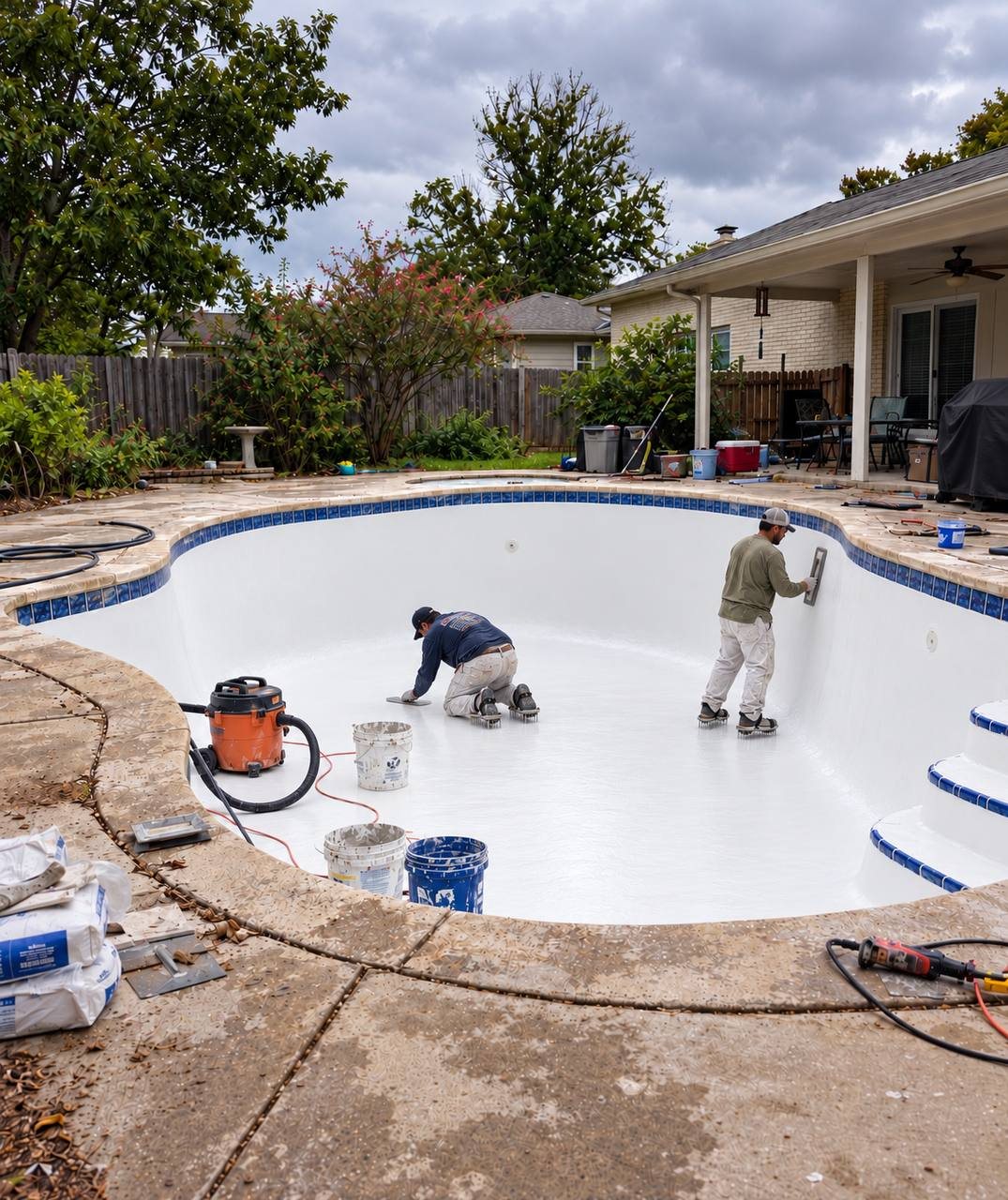
| Replaster or pebble finish over intact shell | Generally no — cosmetic surface only |
| Pool deck replacement (same footprint) | Yes — building permit; grading review likely on sloped lots |
| Pool deck expansion | Yes — building permit and typically a land-disturbance review |
| Coping replacement | Generally no, unless structural work is involved |
| Equipment replacement (pump, filter, heater) | Electrical or plumbing permit may apply — confirm with inspections |
| Pool barrier or fence installation | Yes — permit required |
| Pool light replacement | Electrical permit typically required |
One practical trap worth naming: if a plastering contractor discovers delamination or structural cracking mid-job and repairs it, the work crosses from cosmetic to structural. An amended permit at that point protects you; continuing without one creates the same exposure as skipping the permit from the start. For any electrical component of a renovation — pump replacement, bonding upgrades, new lighting — the separate requirements are detailed on the pool electrical bonding requirements page.
Who's licensed to do the work and who can pull the permit
NC law requires a licensed general contractor for projects over $30,000 (NC Licensing Board for General Contractors). Most structural pool renovations cross that threshold; most cosmetic resurfacing jobs don't. The licensing board maintains an online contractor lookup that takes thirty seconds to verify standing before you sign anything — use it.
Homeowners can pull owner-builder permits on their own primary residence in most NC jurisdictions, but structural shell repair and deck reconstruction typically require engineer-stamped drawings for permit approval. That stamp requirement is not universal, but on Buncombe County's sloped and terraced lots — where deck footings, retaining walls, and grading interact — inspections departments see enough structural complexity that stamped drawings appear on more permits here than in flat-county NC. Trying to save on the engineer to speed up the permit application rarely works out.
Owners of short-term rentals and HOA pools face a separate regulatory track. The NC DHHS Division of Public Health Environmental Health Section regulates semi-public and public pools under the state's Pool and Spa Rules, which require state-level plan review in addition to local building permits. Contractors experienced only with residential permits sometimes miss this second track entirely when renovating an Airbnb or vacation-rental property pool. Confirm which category applies before pulling permits. The Pool and Hot Tub Alliance (PHTA) maintains contractor certification standards that some property owners use alongside state licensing as an additional quality signal when comparing bids.
How the inspection sequence runs
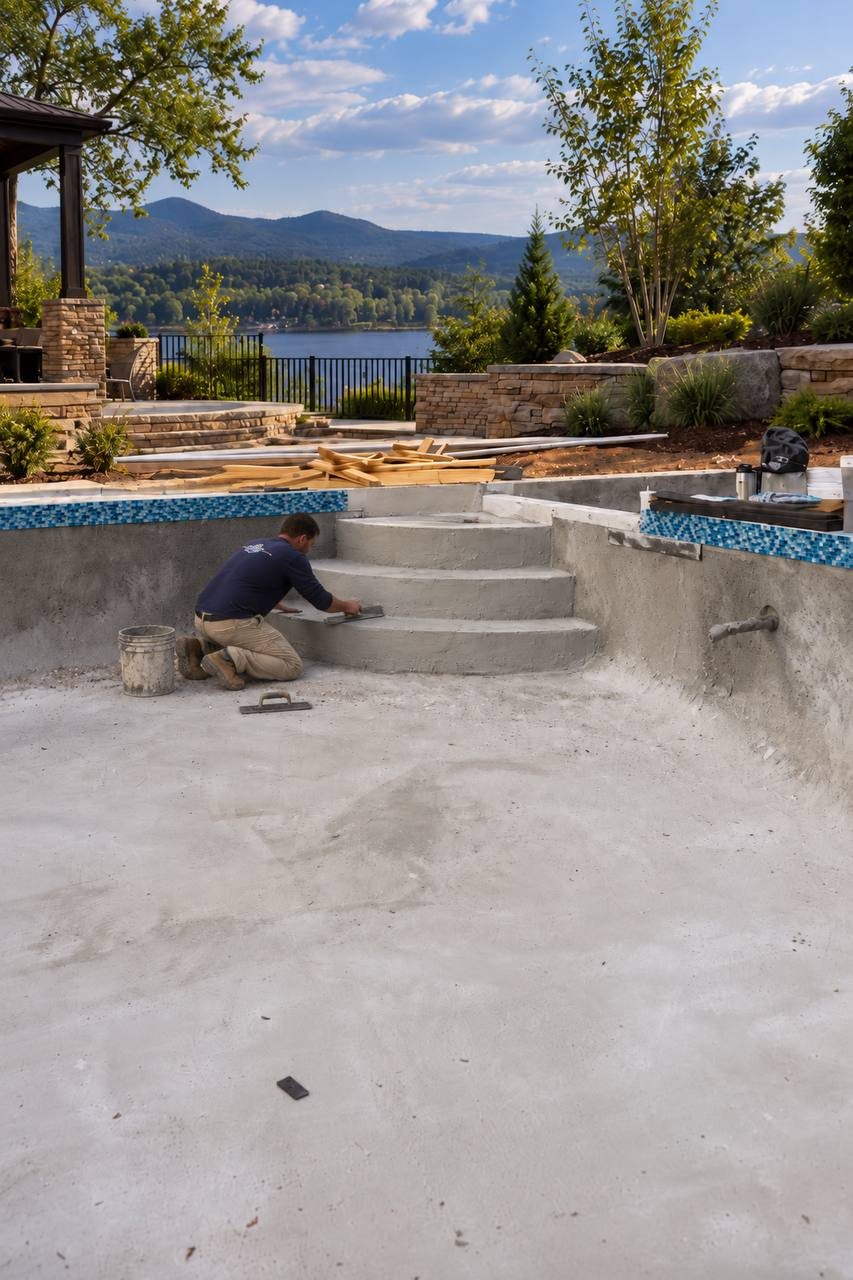
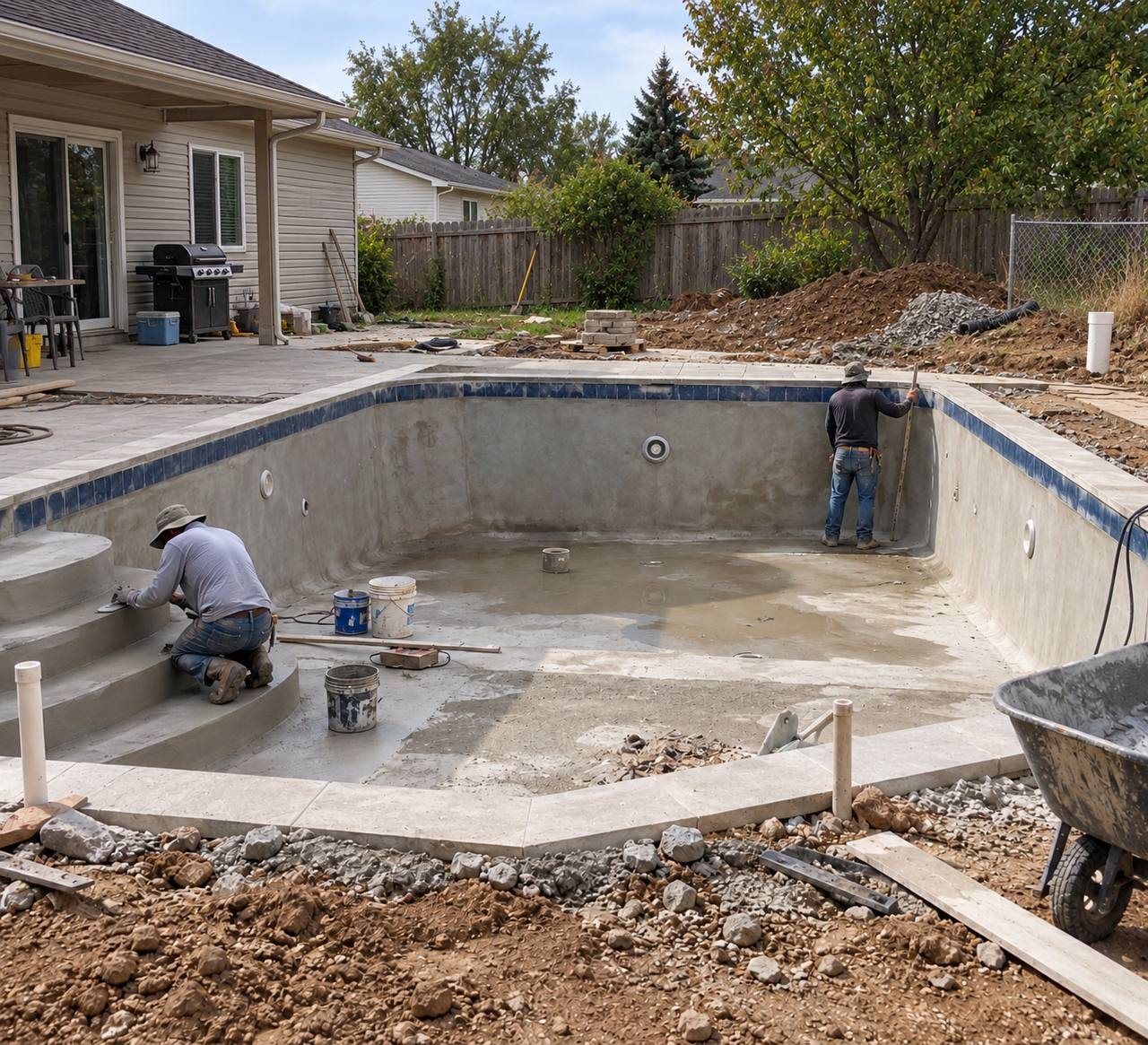
A permitted pool renovation in NC inspects at multiple stages depending on scope. Structural shell work inspects while the job is exposed — rebar visible, new plumbing rough-in in place — before plaster or finish surface closes the shell. Deck work inspects at footing before concrete pours. Electrical and bonding get separate rough-in and final inspections. None of this can be reordered: the inspector cannot approve what has been buried.
Buncombe County sits in a region with 19 federal disaster declarations recorded over 1973-2026, nearly all storm and flood events. Inspectors here have seen what saturated hillside soil does to pool shells, drainage systems, and equipment pads. Addressing stormwater management in the permit application — not improvising answers at the trench — is the difference between a clean inspection sequence and a stop-work order waiting on a revised plan.
Schedule the first inspection as soon as rough work is ready. In Asheville's busy renovation season, inspection queues run several days, and concrete standing by for an inspection that has been rescheduled twice costs more in contractor standby time than the permit fee. Your contractor should own the inspection scheduling; vague answers about when they plan to call for inspection are worth pressing on before work starts, not after.
What skipping the permit actually costs
Three places unpermitted pool renovation work resurfaces: resale, insurance, and refinance appraisals. A buyer's inspector who notices a new deck, fresh coping, or upgraded equipment with no permit record will flag it, and the negotiation reopens at the worst possible moment in the transaction. An insurance adjuster handling a storm or water claim on a pool recently modified without permits has grounds to limit or deny coverage. An appraiser evaluating an equity line will either exclude unpermitted improvements from value or flag them as deficiencies.
The permit and inspection record is also the owner's leverage against the contractor. A failed inspection is a deficiency on their license and a fix at their expense, not yours. Without a permit, there is no inspection, and without an inspection, there is no documented path to accountability when work fails a year later.
If work has already been done without a permit, most NC jurisdictions offer an after-the-fact permit path. Expect to expose enough of the completed work for the inspector to evaluate — on buried footings or a plastered shell, that means opening surfaces at your cost. Addressing it before listing the property is significantly less disruptive than addressing it under deadline during a buyer's due-diligence period. For a full picture of what renovation projects involve and how to scope them properly from the start, see the pool renovation guide.