The rental economy changes every Lake Lure renovation call
Lake Lure is not a town where pools sit behind primary residences waiting for summer. A substantial share of the properties around the lake are vacation rentals, and a pool in rough shape doesn't just disappoint the owners — it drops off short-term rental platforms or lands in a lower price tier where margins are thin. That economic pressure shapes renovation decisions in ways that suburban poolside jobs elsewhere in North Carolina rarely face.
A full remodel — new interior finish, tile, coping, resurfaced deck, and updated equipment — is often justified here by rental income math rather than personal enjoyment alone. Owners who have let a pool age through several seasons sometimes find that a renovation earns back its cost in a few peak rental seasons through higher nightly rates and stronger booking percentages. The right contractor asks about your rental calendar before writing a scope, not after. That calculus belongs in the conversation from the first site visit.
For a plain accounting of what each scope costs, the pool remodel cost breakdown has the full picture. For owners who haven't started yet, the pool renovation guide covers what a real first assessment looks like from first call to written scope.
What wears pool surfaces faster in mountain lake conditions
The mountain watershed that feeds Lake Lure funnels storm rainfall through a folded Appalachian corridor, and Rutherford County sits squarely in its path. The county has recorded 19 federal disaster declarations spanning 1978-2026, most tied to flood and storm events. Each major storm cycle that pushes water, debris, and sediment toward poolside decks, overflows pool walls, or leaves weeks of elevated humidity in an equipment enclosure accelerates the wear cycle on interior finish, tile grout, and coping mortar well ahead of what the materials' rated lifespans assume.
The visible results: plaster that pits and stains ahead of schedule, grout lines that crack along the waterline tile, and coping stones that shift after a saturated frost cycle at the higher elevations around the lake. Pools on hillside lots — common throughout the terrain above the shoreline — face additional pressure from surface drainage that routes under the deck during heavy rain events. Deck settlement and cracking follow predictably when that water has nowhere else to go.
Water chemistry adds another layer. Tannin-rich runoff from the surrounding forest changes the pool chemistry equation relative to a flatland municipal-water fill. Standard white plaster is the first finish to show staining; aggregate surfaces handle it considerably better, and equipment calibrated for the local source water holds efficiency longer than one sized for Piedmont conditions.
What pool renovation typically costs in Rutherford County
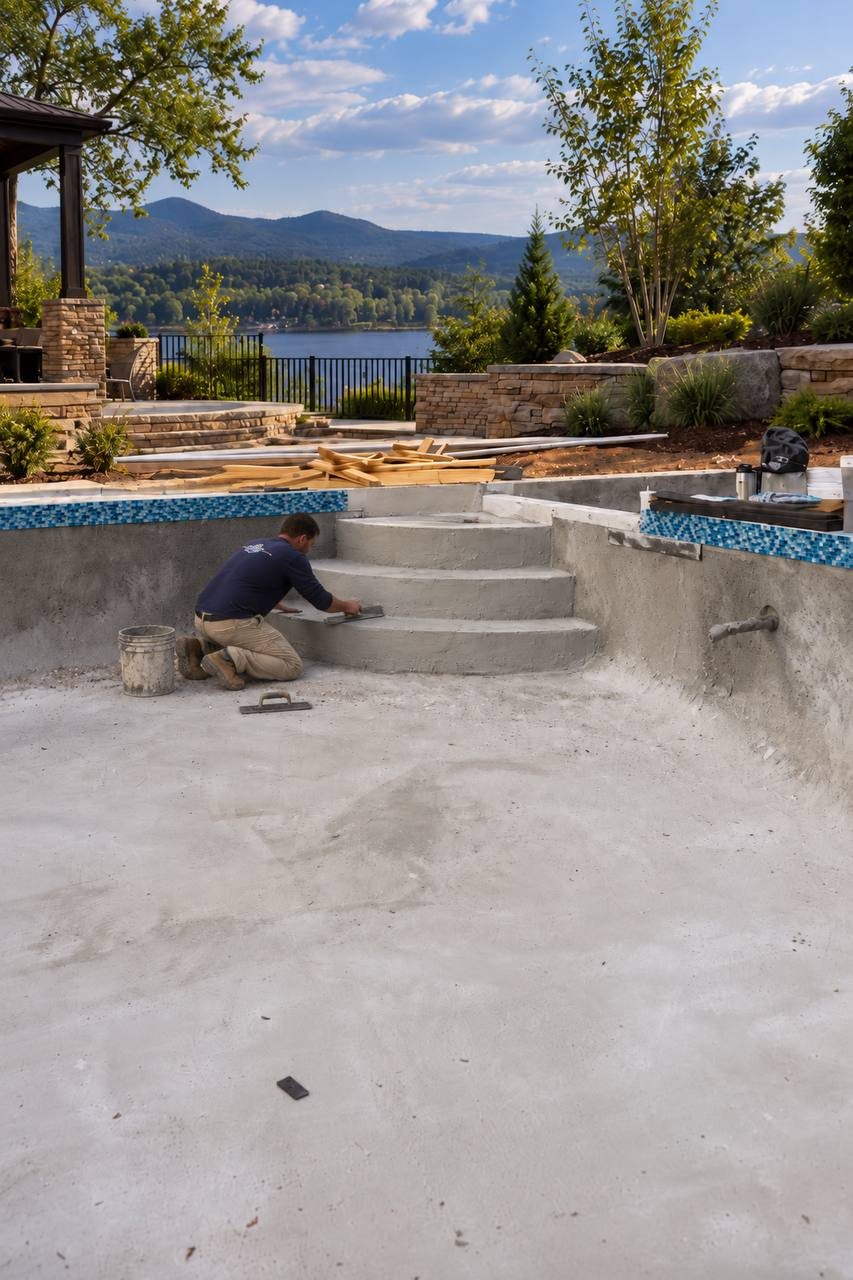
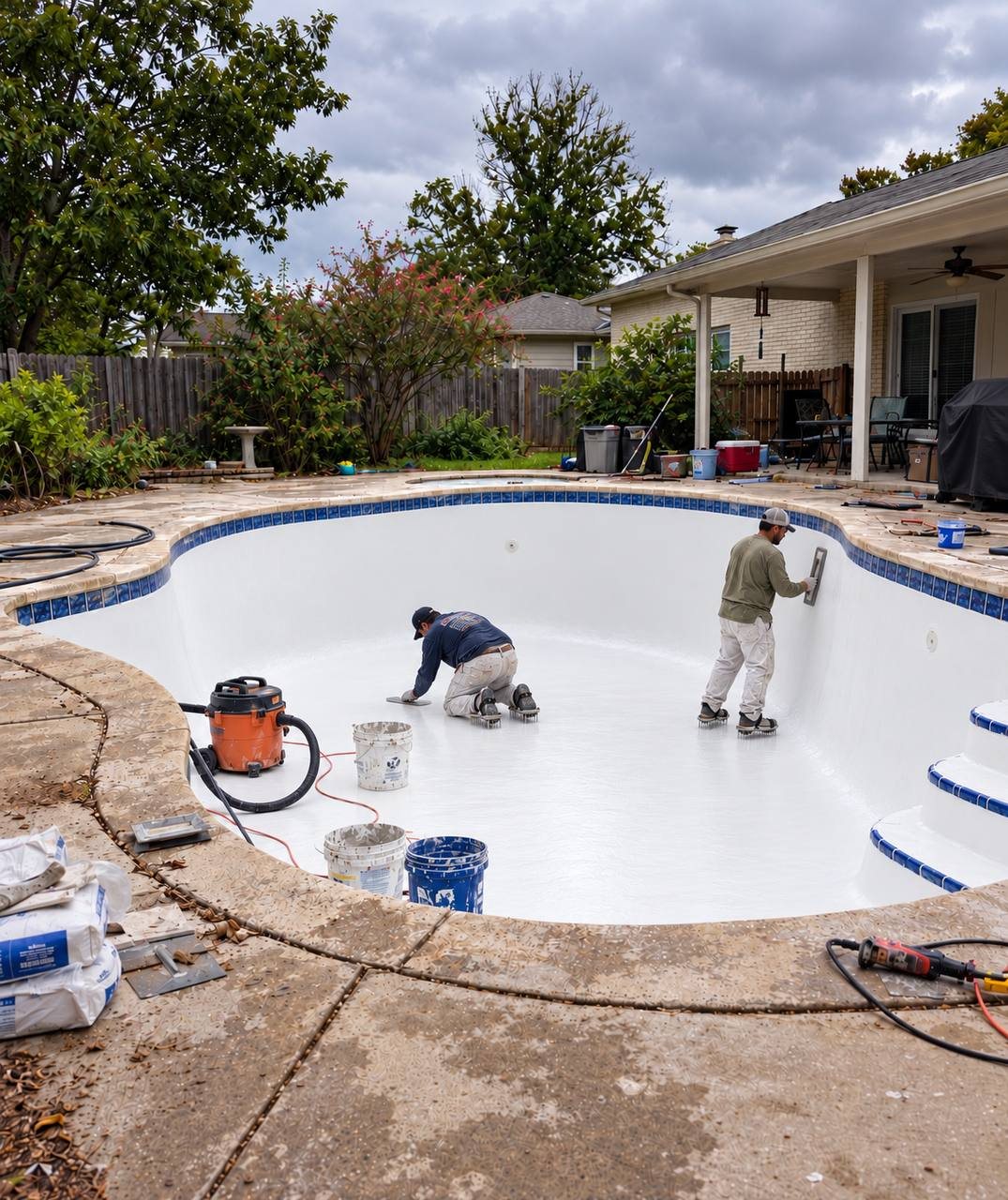
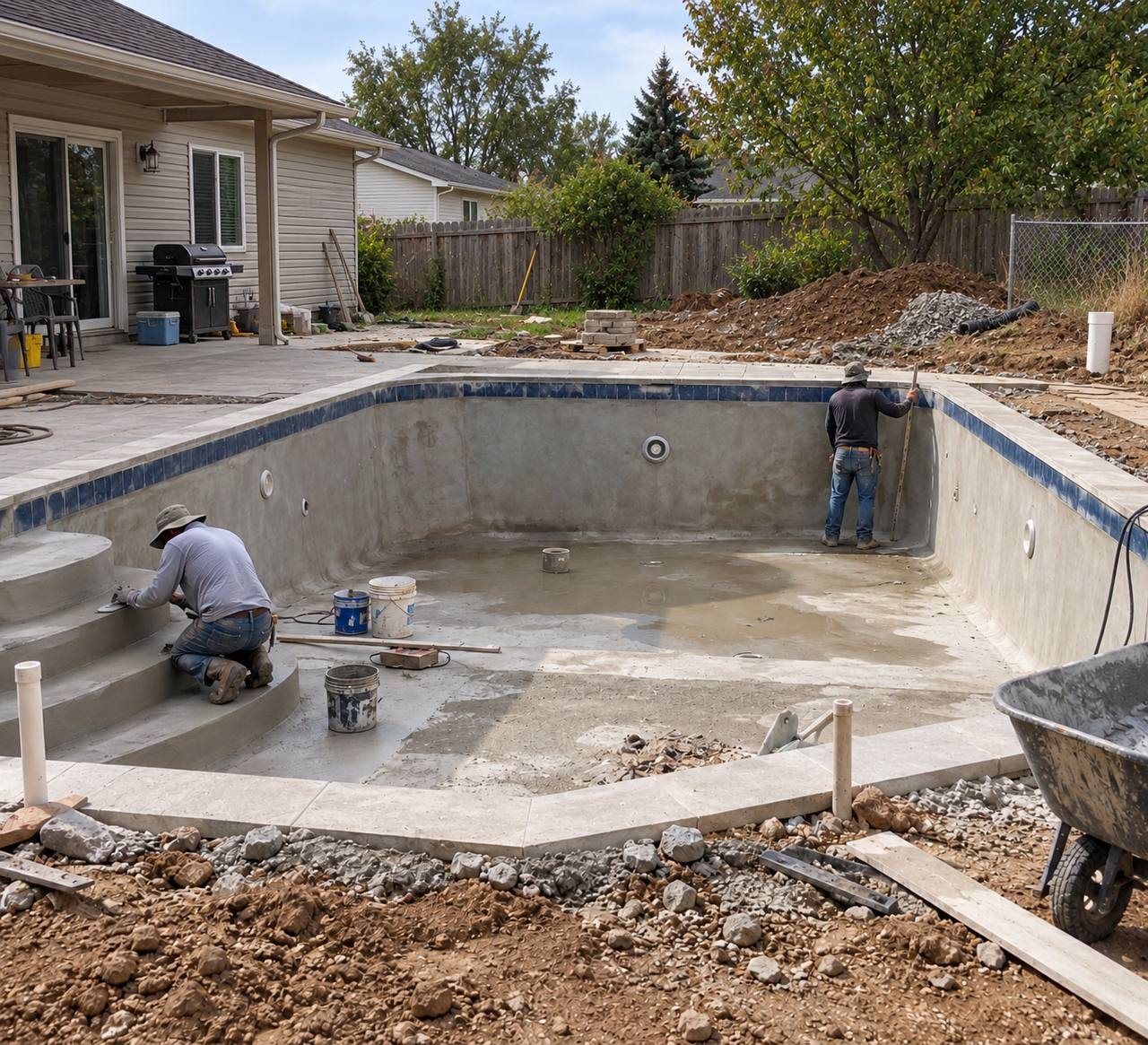
The table below reflects honest scope-level estimates for the Lake Lure market. A full remodel — every major component replaced in one mobilization — sits between $20,000 and $60,000; jobs toward the top of that range involve larger pools, hillside lots with drainage complications, or projects that include structural deck repair. Mountain terrain adds line items that poolside quotes in Raleigh or Charlotte never show: slope drainage, retaining work adjacent to the deck, and equipment pads on uneven ground. Any bid that leaves those out on a hillside lot is an incomplete number, not a competitive one.
| Scope | Typical Range |
|---|---|
| Interior resurfacing (plaster, pebble, or quartz finish) | $6,000 – $14,000 |
| Waterline tile replacement | $2,500 – $6,000 |
| Coping replacement | $3,000 – $7,000 |
| Tile and coping combined | $5,000 – $12,000 |
| Deck resurfacing or overlay | $4,500 – $12,000 |
| Equipment package (pump, filter, heater, automation) | $3,500 – $9,000 |
| Full remodel (finish + tile + coping + deck + equipment) | $20,000 – $60,000 |
Bundling scopes into one mobilization almost always saves money — a contractor who drains the pool once for resurfacing can replace tile and coping in the same drain cycle at lower combined cost than two separate visits. For a deeper look at how these line items stack, the cost guide has the full breakdown with notes on where vacation-rental owners in this market commonly over- or under-scope.
Permits, pool rules, and what the county requires
Public pools — including those at vacation rentals that meet the state's threshold for "public" use — fall under the NC DHHS Environmental Health Section rules for pool and spa operation. Whether a rental property clears that threshold depends on how the rental is structured and how many unrelated guests use the pool; the Rutherford County health department and your contractor are the authoritative sources for your specific situation, not a general estimate from the internet.
Renovation permits for residential pools run through Rutherford County's building department. Work that touches the pool shell, structural deck, or electrical systems — lights, pump circuits, heaters — requires permits and inspections under the standards the NC Department of Insurance – Building Code Council sets statewide. Cosmetic resurfacing may qualify for a simpler over-the-counter permit; structural work does not.
Equipment replacements carry a federal layer as well: the DOE dedicated-purpose pool pump efficiency standard requires that replacement pumps meet current efficiency thresholds. A contractor quoting a pump replacement below that standard is pricing hardware that cannot legally be installed new — ask specifically whether the quoted pump meets the current requirement before signing. For the tile and coping scope specifically — the component that most often triggers permit questions on a renovation — the tile and coping guide walks through what the inspection covers.
Choosing a contractor in a smaller resort market
Lake Lure's pool market is smaller than Asheville's or Charlotte's, which means fewer contractors work it regularly and fewer still understand the intersection of hillside terrain, vacation-rental timelines, and mountain water chemistry. Three questions reliably separate the ones that do from the ones that don't.
First, ask whether the crew has worked hillside pools in mountain terrain. Drainage and deck work on a sloped lot is genuinely different from a flat suburban backyard, and the answer reveals whether a bid reflects the actual site in front of them or a templated estimate carried over from the last job.
Second, ask how they sequence drainage relative to surface work. A pool that resurfaces over an unresolved drainage problem will show cracking and lifting within a few seasons. Crews that fix pools for good answer this question without hesitation; crews that sell surface work and move on will hedge or pivot.
Third, ask about rental-season scheduling. For vacation rental owners, a renovation that runs into peak booking weeks costs real money in lost revenue — not a minor inconvenience. Contractors who work the Lake Lure market plan mobilization around rental calendars as a matter of course; those who don't will treat it the same as a primary-residence job. When you're ready to compare scopes, the pool renovation guide covers exactly what a proper first visit and written scope should include before any deposit changes hands.