What 2,000 feet of elevation does to a pool finish
Asheville sits at roughly 2,100 feet above sea level, and that elevation gap from coastal NC translates directly to more freeze-thaw cycles per year. Those repeated cycles are the mechanism that pops coping stones loose, opens plaster cracks, and works grout lines free on waterline tile. A finish that holds up 12–15 years in Wilmington may surface problems in 8–10 years in Buncombe County. That gap is the first thing an honest renovation estimate here should account for.
The terrain compounds it. Most residential lots in Buncombe County carry meaningful grade, and a slope that drains toward the pool deck builds hydrostatic pressure and repeated moisture exposure that accelerates wear on the shell and surrounding concrete. Buncombe County has recorded 19 federal disaster declarations over 1973-2026, and significant rain events in this region are exactly when marginal deck drainage and aging coping reveal themselves as renovation drivers rather than cosmetic complaints.
An honest assessment here starts with the deck and the drainage, not just the finish. Resurfacing a pool whose coping is failing or whose deck routes water toward the equipment pad is an expensive way to solve the wrong problem first. A full scope and cost conversation begins with what the water is doing, then addresses what the interior looks like.
What renovation work actually involves, scope by scope
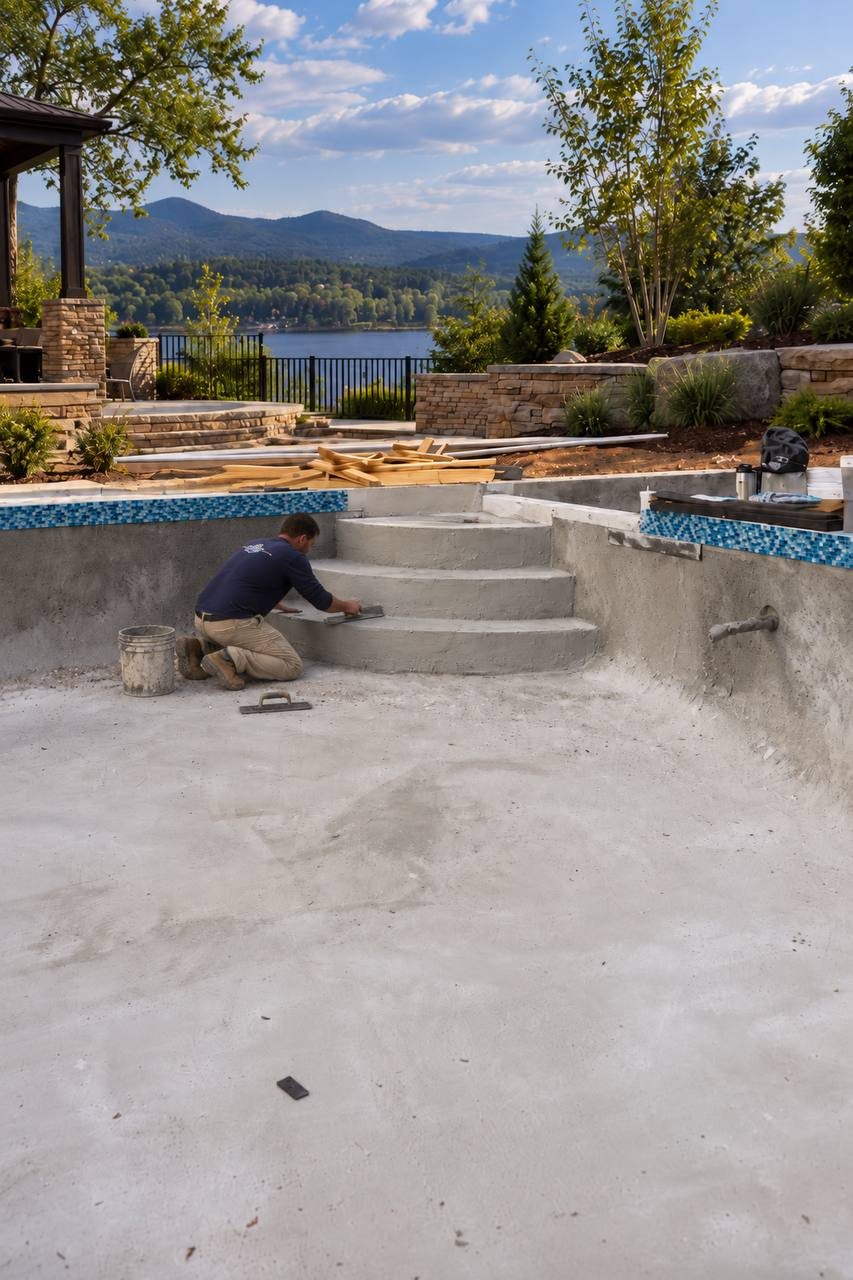
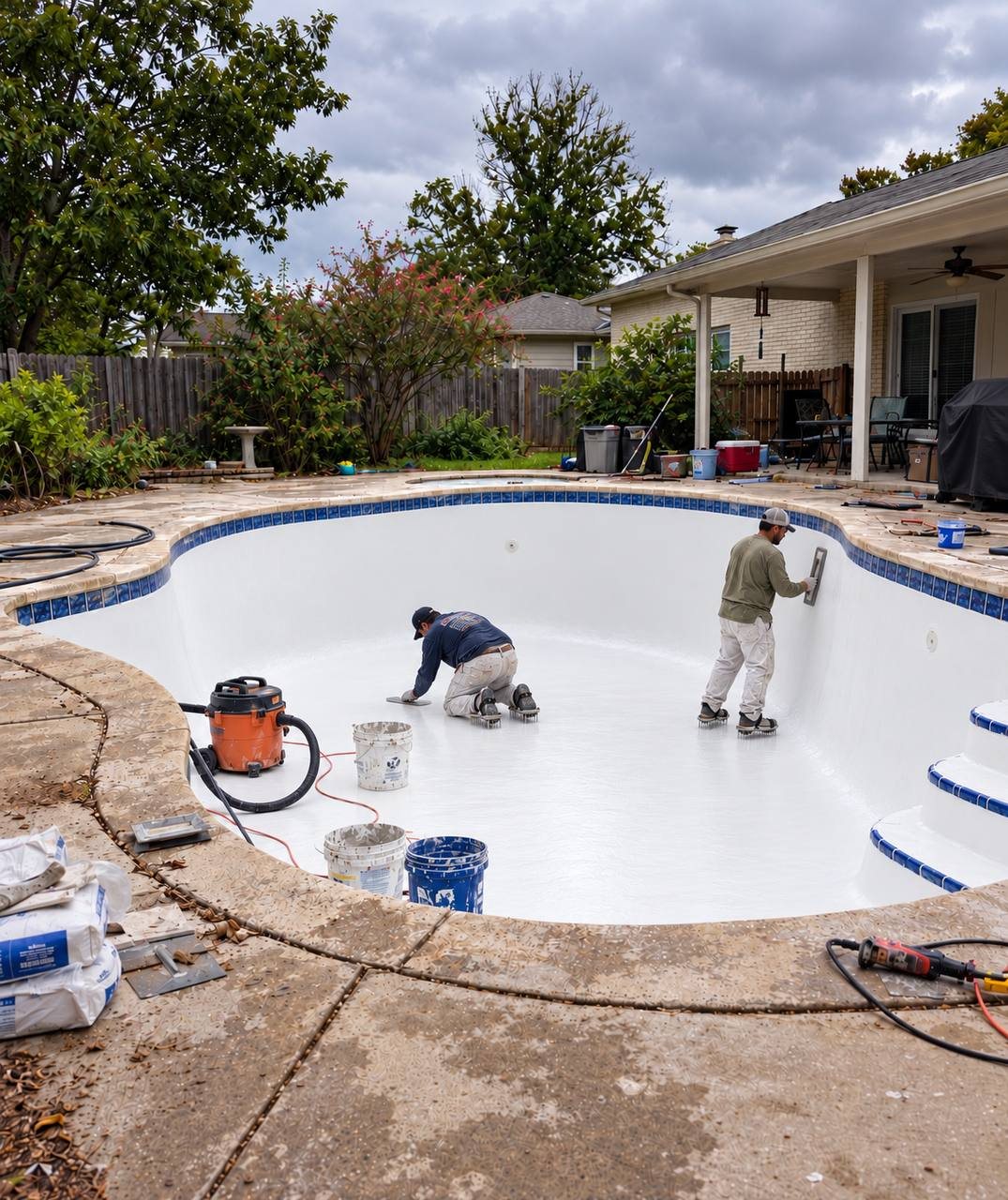
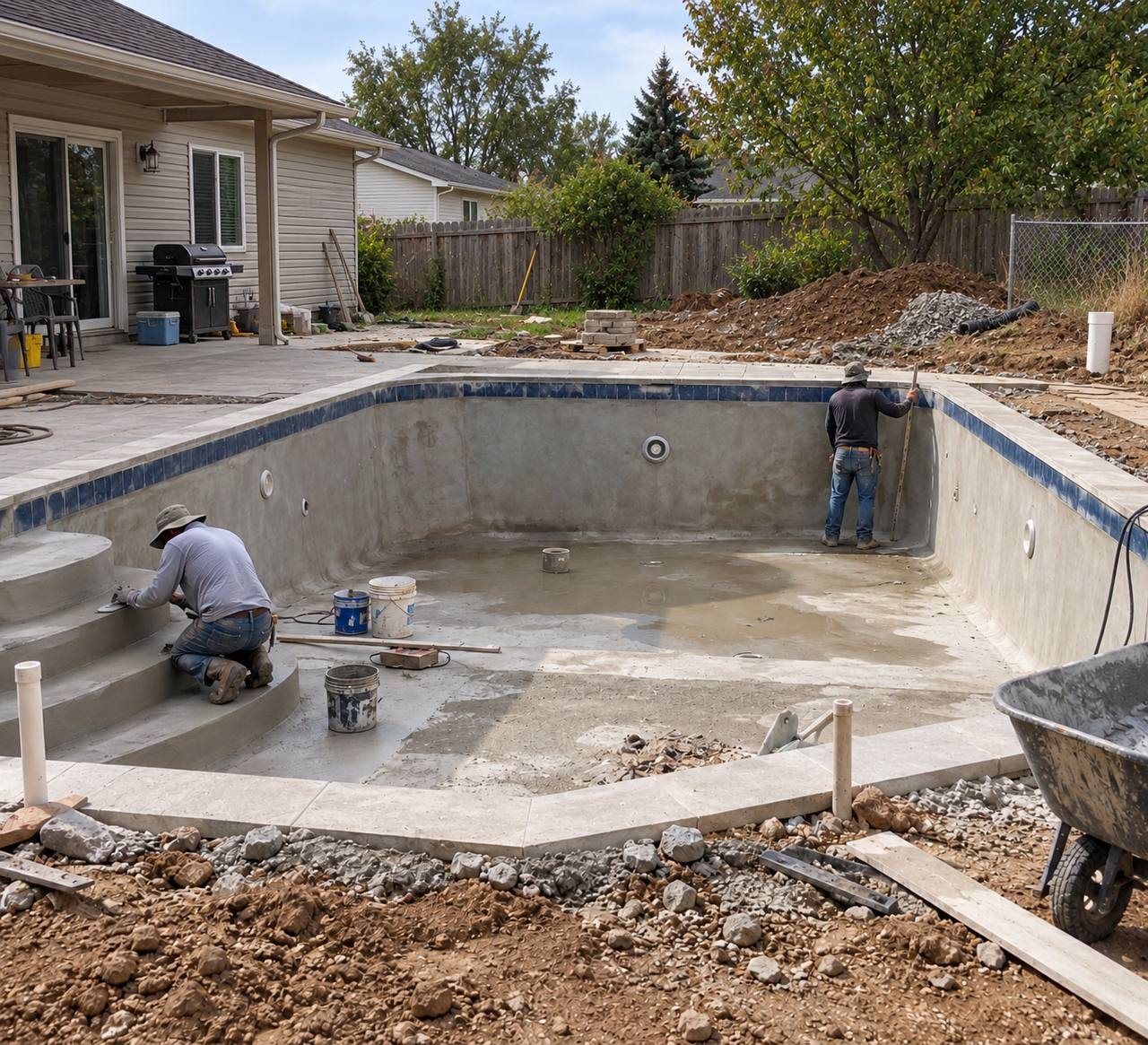
Most renovation projects are layered, and homeowners often discover during assessment that the scope runs broader than expected. A realistic breakdown:
- Interior resurfacing. Plaster, quartz aggregate, or pebble finishes. The old surface is ground down, the shell is prepped, and the new coat is applied. This is the core of most renovation budgets and the most visible result.
- Waterline tile replacement. The tile band sits in the most abusive zone: calcium scale, UV exposure, and the freeze-thaw line all converge here. Cracked or hollow tile is a structural warning as much as a cosmetic one. Waterline tile and coping often need to happen together because they share a grout joint at their boundary.
- Coping repair or replacement. Coping is the cap that separates the pool shell from the deck and takes freeze-thaw load directly. Loose or cracked coping affects both safety and waterline integrity and is a common finding on Asheville-area pools that have not been touched in a decade.
- Deck resurfacing or replacement. An aging deck holds standing water, creates trip hazards, and undercuts an otherwise-renovated pool. Deck resurfacing options range from overlay coatings on structurally sound concrete to full tearout, with the lot's slope and drainage profile driving which approach makes sense.
- Equipment upgrades. Pump, filter, heater, and automation systems have their own replacement cycles, and equipment swaps are often bundled with structural renovation. The US Department of Energy's dedicated-purpose pool pump rule now requires variable-speed pumps on most new and replacement installations, which enters the conversation on any renovation that touches the mechanical system.
A renovation that bundles finish, tile, coping, deck, and equipment into one mobilization saves both time and cost compared to staging those scopes across separate seasons, though the right combination depends on what the pool's actual condition warrants.
What renovation costs and what moves the number
Renovation cost in this region is driven by scope, material choice, and on mountain lots, the complexity of the site. The ranges below reflect typical installed costs in Buncombe County; more detail lives at /pool-remodel-cost/.
| Scope | Typical Installed Range |
|---|---|
| Resurface only (plaster finish) | $6,000–$12,000 |
| Resurface + waterline tile replacement | $10,000–$18,000 |
| Resurface + tile + coping replacement | $14,000–$24,000 |
| Full renovation (finish, tile, coping, deck) | $25,000–$45,000 |
| Full remodel + equipment replacement | $35,000–$60,000 |
What moves the number within those ranges:
- Finish material. Standard plaster sits at the low end; quartz aggregate is mid-range; pebble and glass bead finishes approach the top.
- Pool size and shape. A small rectangular pool prices differently from a freeform design with an attached spa, and labor per square foot rises with complexity.
- Site grade. Sloped lots in the Asheville area require additional concrete work, drainage management, and sometimes retaining components that flat lots do not need.
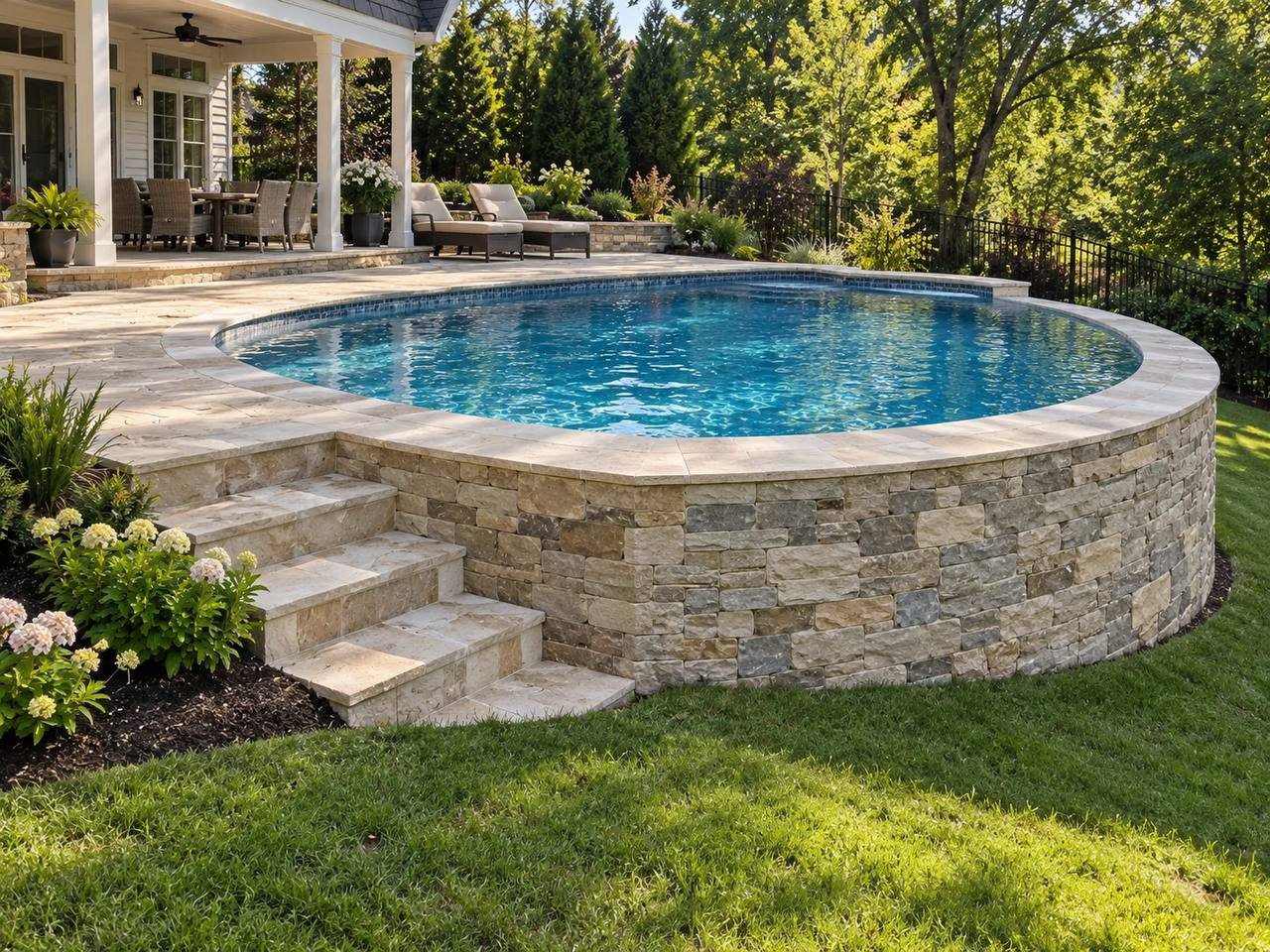
- Coping material. Concrete coping is the standard; natural stone carries a premium and is popular in this market given the regional aesthetic.
- Equipment generation. Entry-level pump and filter vs. variable-speed pump, automation controls, and an efficient heater represent a meaningful spread at the equipment line item.
The questions that keep a renovation bid honest
"What is the scope you're proposing, and why?" A renovation quote without a written scope is an invitation for change orders. Tile, coping, deck, and equipment upgrades can each be in or out; you need to know which line items are included before the number means anything.
"What material are you specifying and why?" On a mountain pool that sees real freeze-thaw cycling, material choice is a durability decision, not a cosmetic preference. Pebble and quartz finishes outlast standard plaster in repeated freeze-thaw environments. Ask for the product name. The Pool and Hot Tub Alliance publishes industry standards for residential pool construction and renovation that specify material and installation performance expectations.
"How will the deck drain after this job?" On a sloped Buncombe County lot, a deck that drains toward the pool equipment or the home's foundation is a recurring renovation driver. The scope should include a grading and drainage plan, not just new surface material.
"What permits does this scope require?" Pool renovation in NC may require building permits depending on scope. Structural changes, new coping, and equipment replacement each carry their own thresholds under NC building code, administered through the NC Department of Insurance Engineering and Building Codes division. A contractor who calls a structural renovation permit-exempt is worth pressing on before the job starts.
Timing a renovation in a mountain climate
Pool renovation in western North Carolina has a tighter scheduling window than many owners expect. Plaster and concrete cure schedules require temperatures above freezing in the days following application, which limits the practical working season to roughly late March through early October in this county. That compression pushes demand toward spring, and booking windows for full renovation projects fill earlier than the calendar suggests they would.
For a pool that needs significant work — full resurface, new coping, and deck replacement — a spring start often means scheduling a consultation in winter. A pool that enters the swim season with a compromised finish faces chemistry challenges and continued surface deterioration throughout the season, making the cost of delay real rather than theoretical.
Asheville's shorter effective season also changes the equipment efficiency math. Cooler ambient temperatures at elevation extend the cold period relative to Piedmont NC, and a pool that runs fewer months per year in cooler conditions benefits proportionally more from a variable-speed pump and an efficient heater. Operational savings over the equipment's service life add up even with a compressed season.