What mountain elevation does to a pool
Waynesville sits at roughly 2,600 feet in the Blue Ridge — high enough that a pool here ages differently than one in Charlotte or Raleigh. Freeze-thaw cycles work plaster finishes loose from the inside, pull coping off bond beams, and drive grout out of tile lines over successive mountain winters. When a Haywood County homeowner calls about a renovation, the first question is not how dated it looks — it is how many unprotected winters have passed since anything was touched.
The pools most in need of work in this market tend to be gunite pools built during the 1980s and 1990s, when Waynesville's vacation and retirement growth was driving construction in the hills around town. Many were finished with standard marcite plaster that was never engineered for sustained freeze exposure at altitude. By the time a surface reads rough or heavily stained, the bond coat underneath has often been compromised for several seasons already. Renovating at this elevation means reading what the cold actually did before deciding what the fix includes — cosmetics applied over a structural problem just begins the cycle again.
The full renovation overview covers the inspection-forward process in detail. At this elevation, the inspection step carries more weight than it does anywhere on the NC piedmont.
Scope categories and the cost behind each one
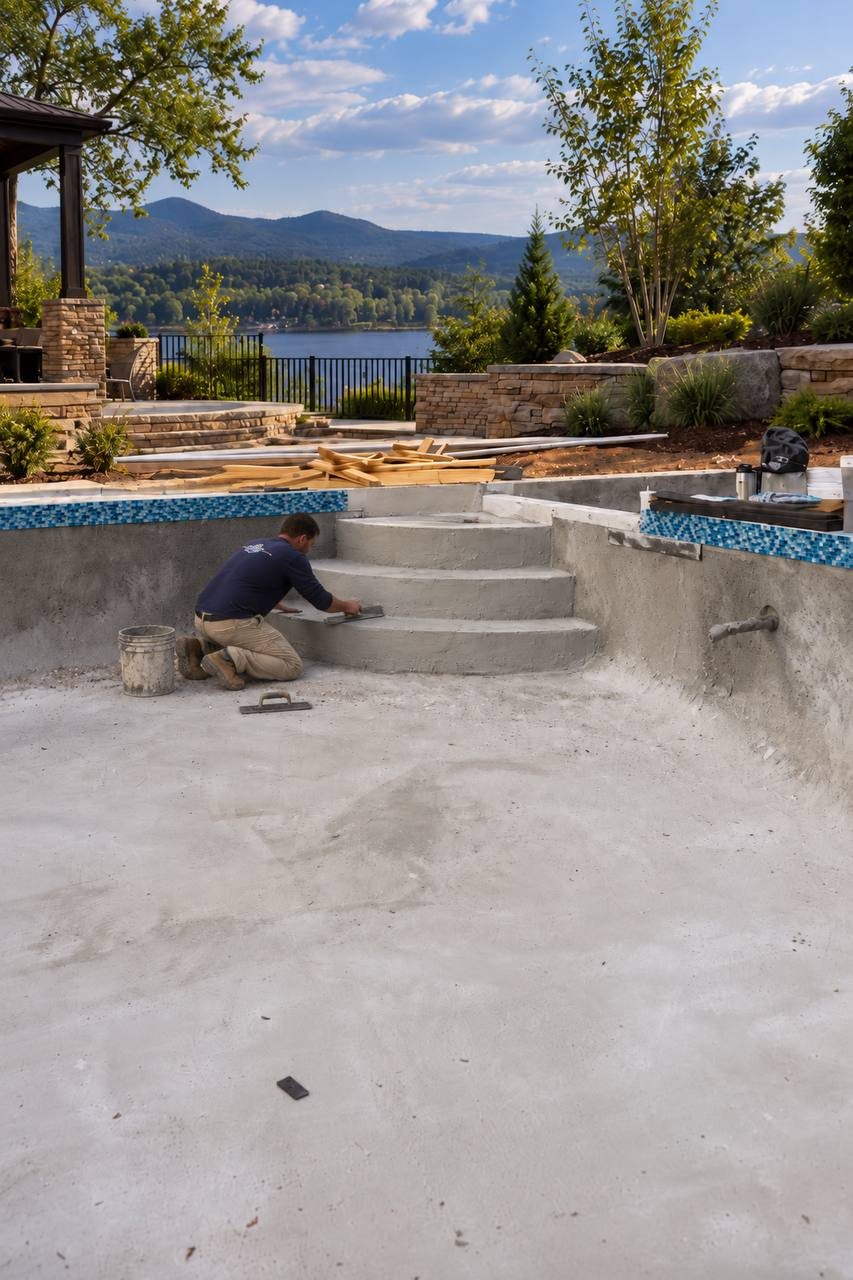
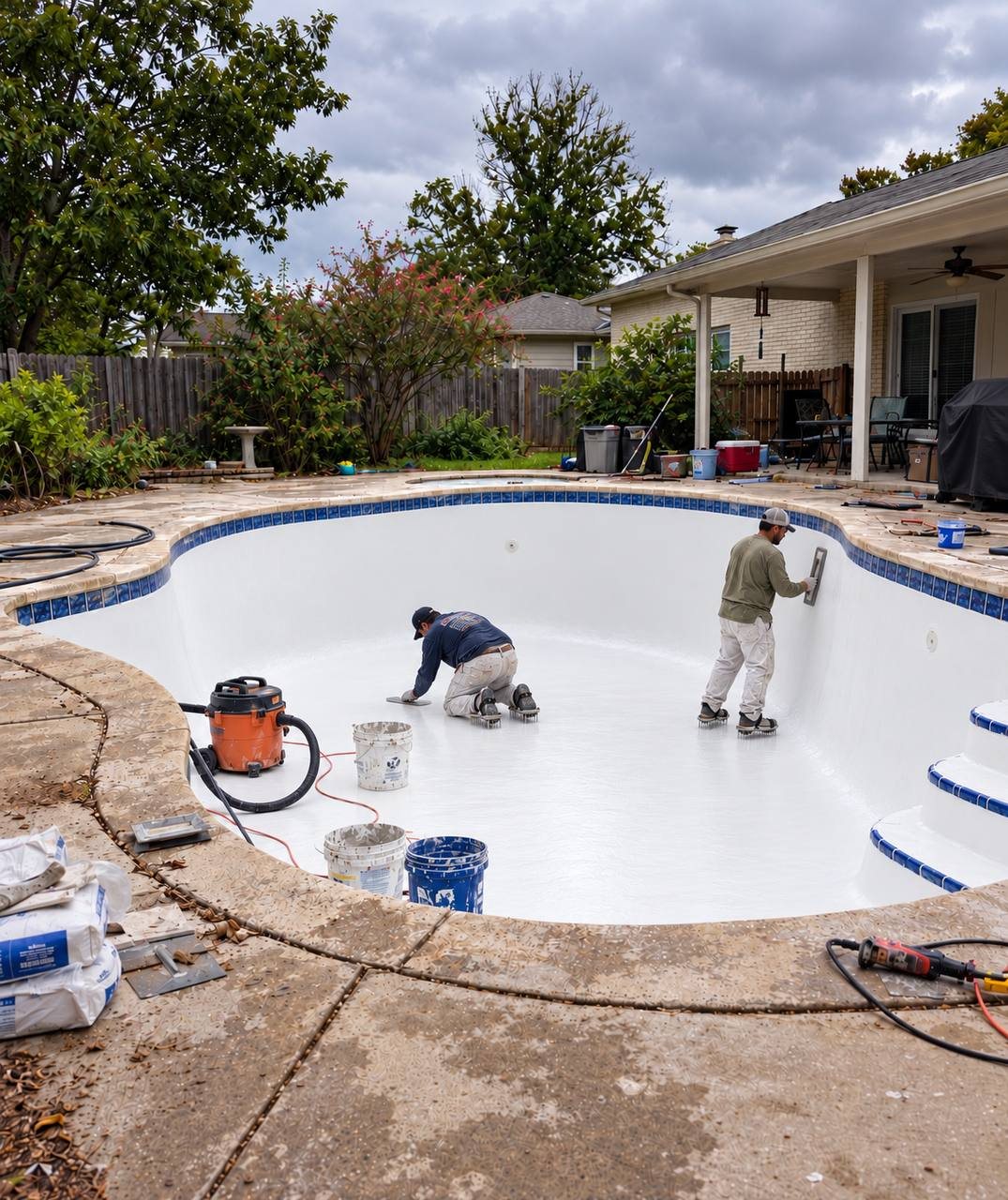
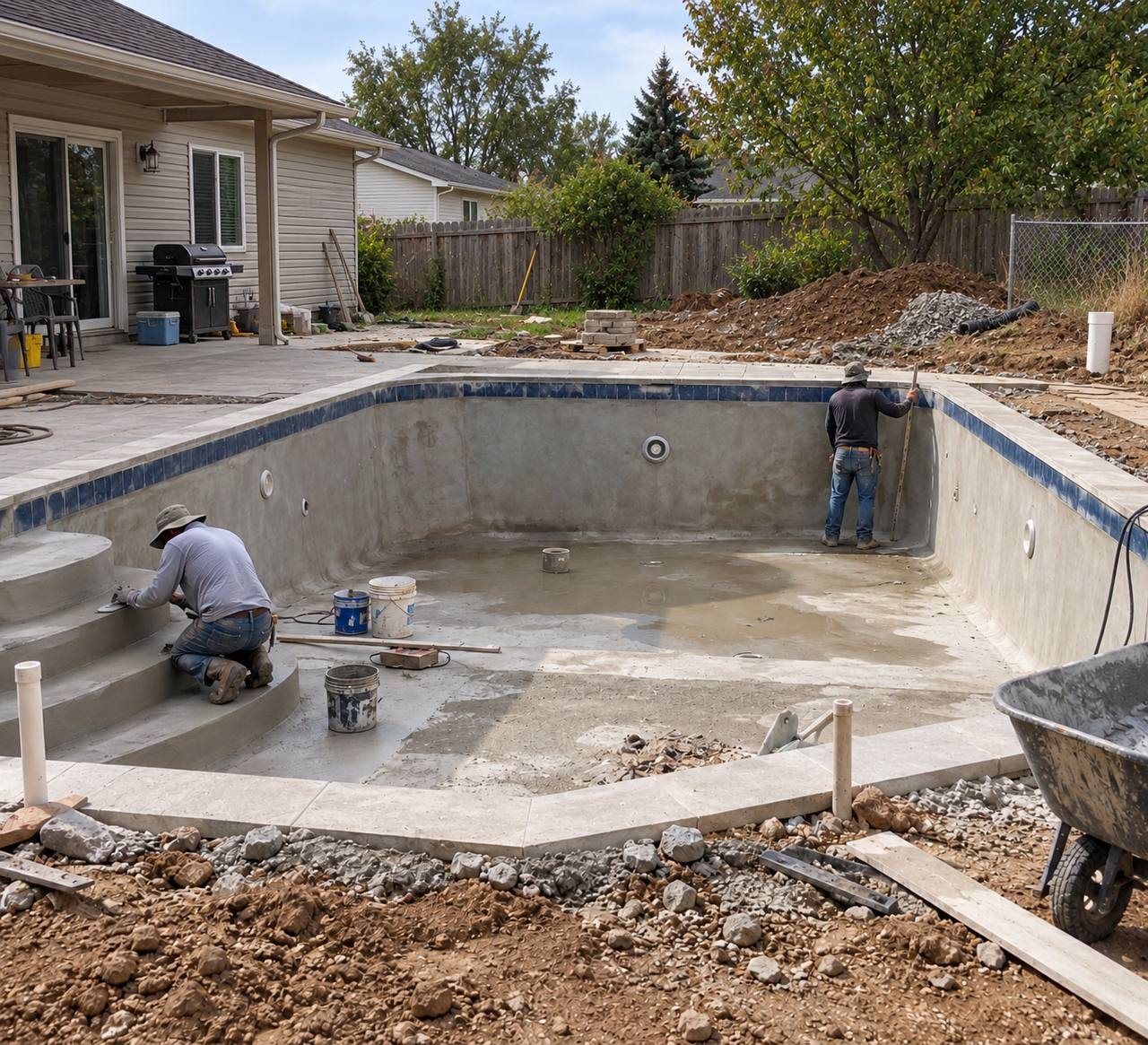
Haywood County renovation jobs span a wide range because the work is rarely one thing. A pool that looks like it only needs a new finish often turns up damaged bond beam or cracked returns once a crew gets inside. The table below maps honest scope categories to the price ranges you should expect when getting quotes around Waynesville. The full cost guide has the line-item breakdown behind each row.
| Scope | Typical Range | Haywood County Notes |
|---|---|---|
| Interior resurface only | $6,000 – $12,000 | Pebble and quartz finishes hold better at altitude than standard plaster |
| Tile and coping replacement | $4,500 – $14,000 | Freeze damage to grout lines is the most common driver of this scope item |
| Deck resurfacing or replacement | $5,000 – $15,000 | Slope lots add drainage and retaining work that flat lots skip |
| Equipment upgrade (pump, heater, controls) | $3,500 – $10,000 | Federal variable-speed pump standards now apply to most replacements |
| Full renovation (all of the above) | $20,000 – $60,000 | Upper end on slope lots with structural deck work and full equipment replacement |
The federal variable-speed pump mandate — codified in the 2023 DOE efficiency standard — now applies to most pool pump replacements. Any renovation that touches equipment should account for the cost of a compliant variable-speed unit, which pays for itself especially at mountain elevations where pools are heated rather than ambient-temperature swum. Tile and coping work is often the line item that surprises homeowners most: mountain winters push water into grout joints, which expand and crack, which lets more water in. A full tile and coping replacement with frost-rated materials breaks that cycle instead of patching it.
Storm history and what it means for the deck under your feet
Haywood County has been touched by 19 federally declared disasters over 1973-2026, most of them in the storm and flooding family that the Blue Ridge channels rather than deflects. Those events matter to pool owners because every major rain event that moves soil around a pool shell moves the deck with it. A deck that has heaved and settled is not just a cosmetic problem — it is a drainage failure that will crack the next finish coat the same way it cracked the last one.
Before any surface work begins, the ground around the pool needs to tell its story. Settled decking on the downhill side of a pool, a crack running along the bond beam rather than across a tile, and soil that has washed away from a return fitting are all symptoms of water that went somewhere it was not supposed to go. The NC DHHS Environmental Health Section oversees pool construction and renovation standards statewide — those rules exist in part because a poorly drained pool site is a structural and safety problem, not just an aesthetic one.
Permits, safety rules, and what triggers each one
Structural pool renovations in Haywood County require permits. Any work that touches the shell, deck footings, drainage, or mechanical systems falls into that category. A resurface-only job with no structural work typically does not trigger a full permit, but adding a heater, regrading drainage, or replacing a deck slab almost always does. Work done without a required permit can void a homeowner's insurance claim and create title problems at resale — that risk belongs to the homeowner, not the contractor who suggested skipping it.
The NC DHHS Environmental Health Section rules govern barrier requirements, drain cover specifications, and electrical bonding standards for any renovation that changes a pool's configuration. The Virginia Graeme Baker Act drain cover requirements apply to residential pools that undergo renovation — if a renovation opens the pool's plumbing, the drain cover must be brought into compliance. Any contractor who does not raise this point during a scope conversation is either unaware of it or choosing not to mention it.
The Pool and Hot Tub Alliance publishes the ANSI/APSP standards that most NC building departments use as their technical reference. Asking a bidding contractor which PHTA certifications their technicians hold is a reasonable quality screen, particularly for structural and equipment work.
Hiring the right crew for a mountain-market job
Three questions separate qualified from underqualified in this market: whether the crew has worked slope lots in Haywood County before (drainage and retaining work on a hillside pool is not something a piedmont crew picks up on the first job); whether they carry the NC contractor licensing required for structural work; and how they handle the permit conversation. Crews that offer to skip permits in exchange for a lower price are transferring legal and insurance risk directly to the homeowner.
The swim season at Waynesville's elevation runs shorter than it does two hours east — typically late May through early September for unheated pools, potentially April through October with a heat pump. A renovation that includes equipment upgrades should address that math. A variable-speed pump paired with a modern heat pump changes the economics of the pool meaningfully over its next decade of useful life, and the DOE mandate means you are replacing the pump anyway.
References matter more in a small market. Waynesville is the county seat of Haywood County, and a contractor who works regularly here will have homeowners you can call. Ask specifically for references on jobs that involved deck work on a slope lot or structural repairs following freeze damage — those are the two scenarios this market produces most, and a crew without that experience will be learning on your pool.