Mountain finish work takes a harder hit
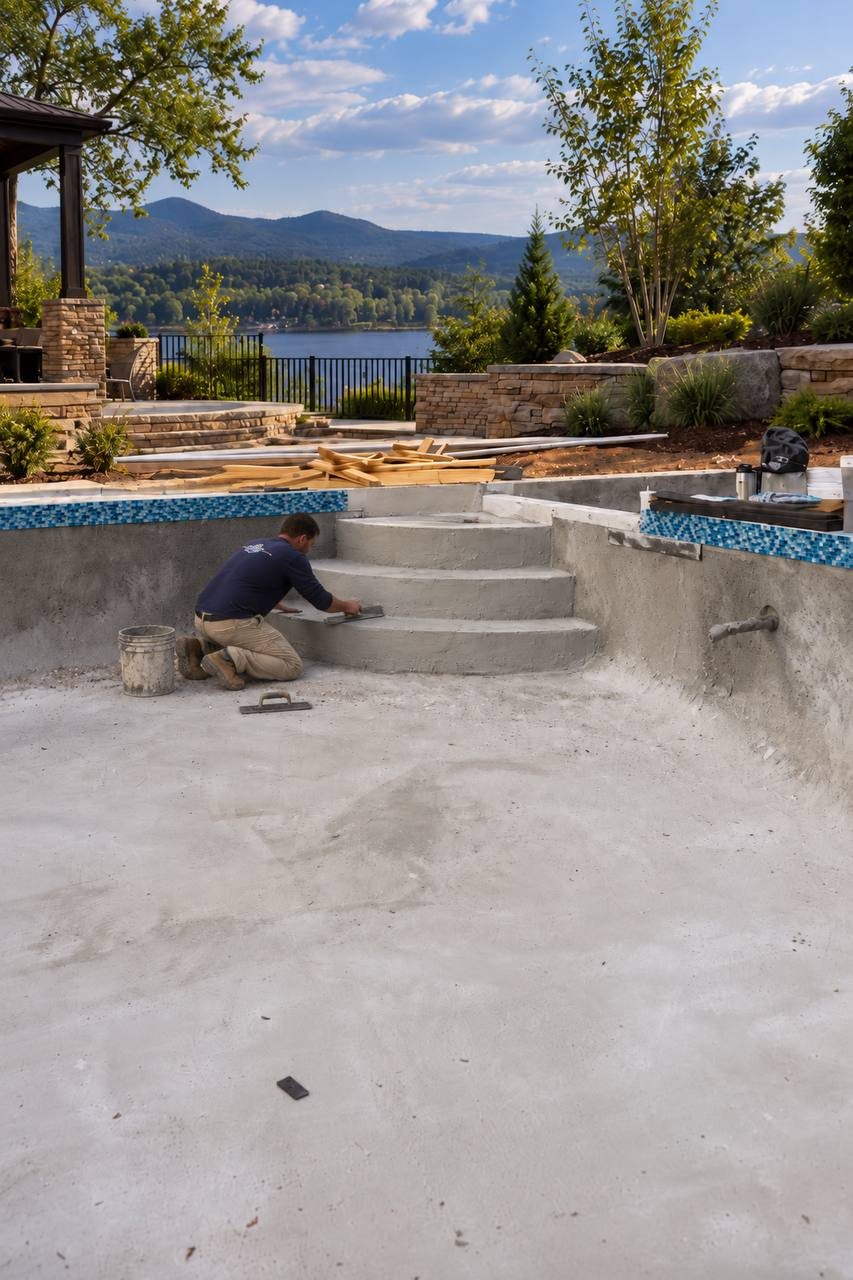
Asheville pools face stresses that Charlotte or Wilmington pools rarely encounter. Freeze-thaw cycling through January and February pries open coping joints that would hold for years on the Piedmont. White oak and tulip poplar drop tannin-heavy leaves that stain fresh plaster darker and faster than the pine loads most renovation guides assume. A pool carved into a ridge lot off Merrimon Avenue or along Elk Mountain Scenic Highway sits on cut-and-fill ground that shifts differently than flatland clay, loading deck and coping joints in ways that compound season over season.
None of this is unusual for Buncombe County — it is just honest context for why pools here often need more than a resurface when renovation time arrives. If your coping is lifting, waterline tile rows are popping loose, and the plaster surface feels like sandpaper, that pattern reflects how mountain seasons accumulate stress on a shell, not necessarily a single installation failure. The pool renovation overview explains how to read those patterns before any scope is written.
What renovation typically covers — and what it costs here
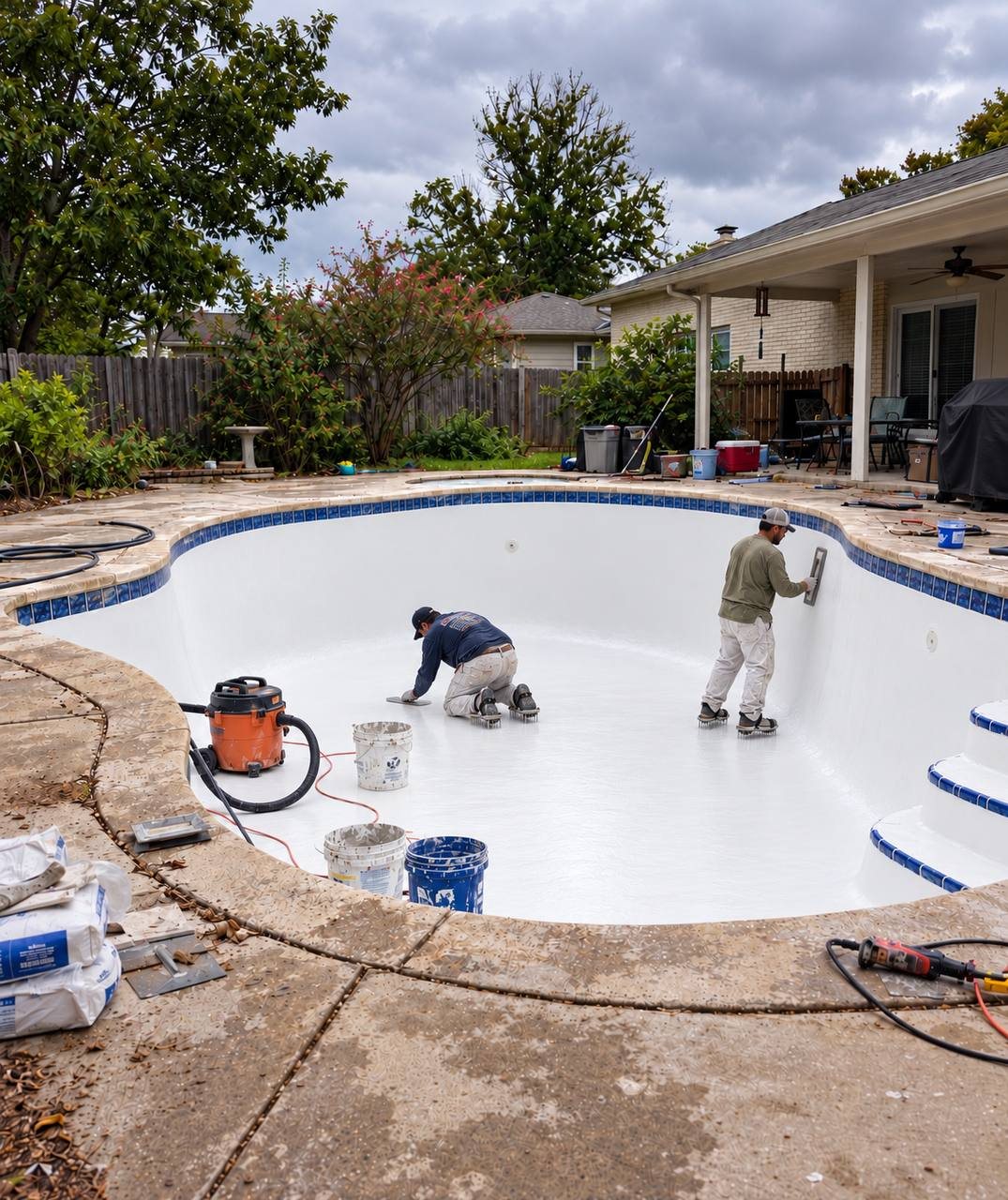
The scope that makes sense depends on which components have actually deteriorated. A resurface-only job is the right call when tile, coping, and deck are still sound and watertight. When freeze cycles have already pried coping off the bond beam and tile rows have crept away from the waterline, doing the surface alone without addressing those components typically means repeating the same work within a few seasons. The full pool remodel cost breakdown factors in every component for that reason.
| Scope | What's Included | Typical Asheville Range |
|---|---|---|
| Resurface only | New plaster or pebble aggregate finish | $6,000–$14,000 |
| Resurface + waterline tile | New interior finish plus tile strip and reset | $10,000–$20,000 |
| Tile, coping, and deck refresh | Above-water scope; existing interior retained | $15,000–$30,000 |
| Interior finish + tile + coping | Full surface scope; existing deck kept | $20,000–$40,000 |
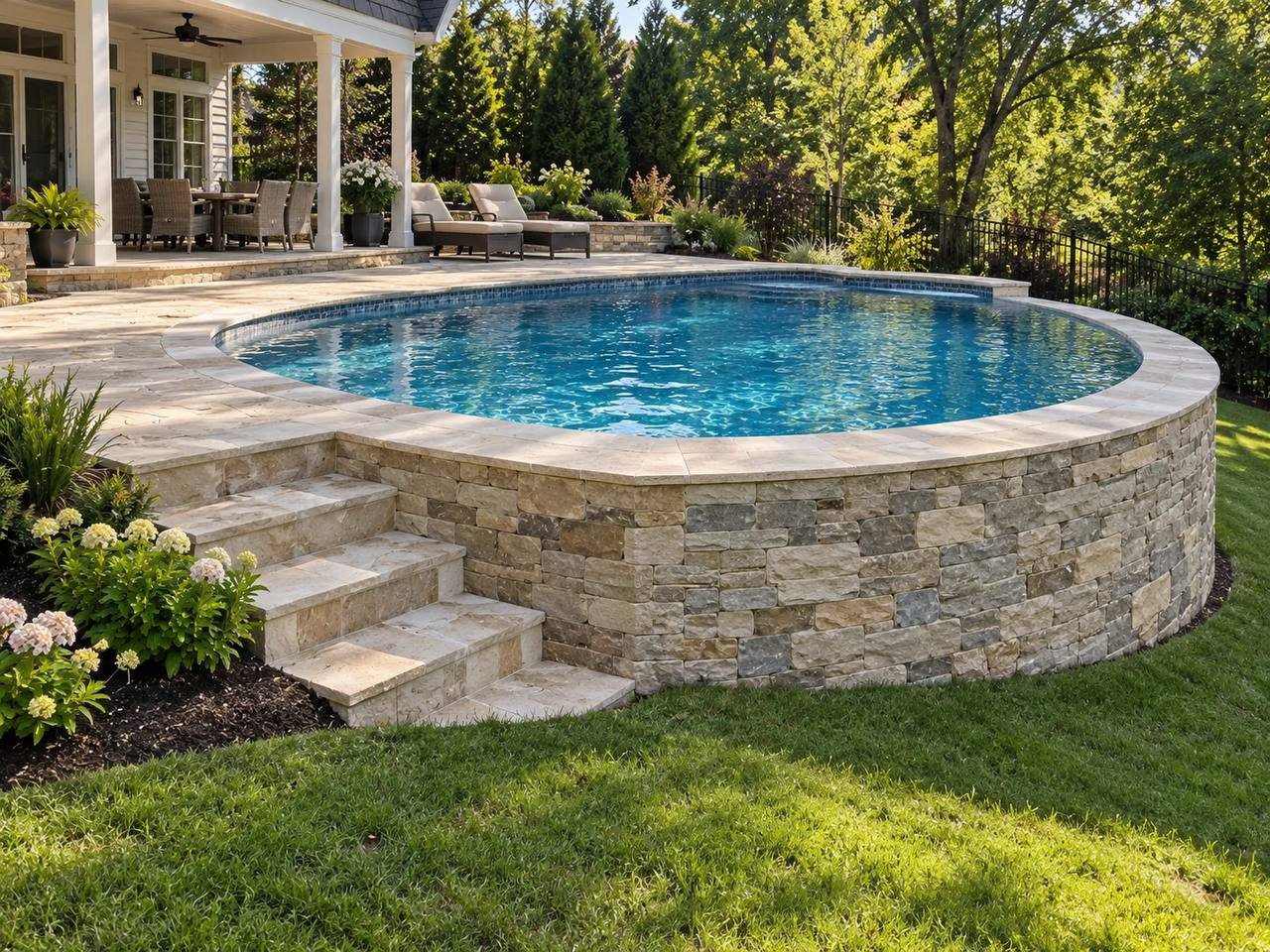
| Full renovation | Interior, tile, coping, deck, and equipment | $35,000–$60,000 |
Mountain lots add deck complexity that flatland quotes never show: a sloped patio on a grade lot may require additional drain runs or retaining adjustments that appear as explicit line items on a Buncombe job and never surface in a Mecklenburg bid. Any quote that skips drainage provisions on a sloped lot should be treated as incomplete rather than competitive.
Water routing before the plaster goes in
Buncombe County's storm history explains a meaningful share of the pool renovation calls we see. 19 federal disaster declarations have touched this county over 1973-2026, the large majority of them storm- and flood-family events. Heavy rainfall against a pool on a cut slope can push hydrostatic pressure against a shell that was already stressed from the outside. Replastering into an unresolved drainage problem means the new surface absorbs the same forces as the old one — the calendar just resets.
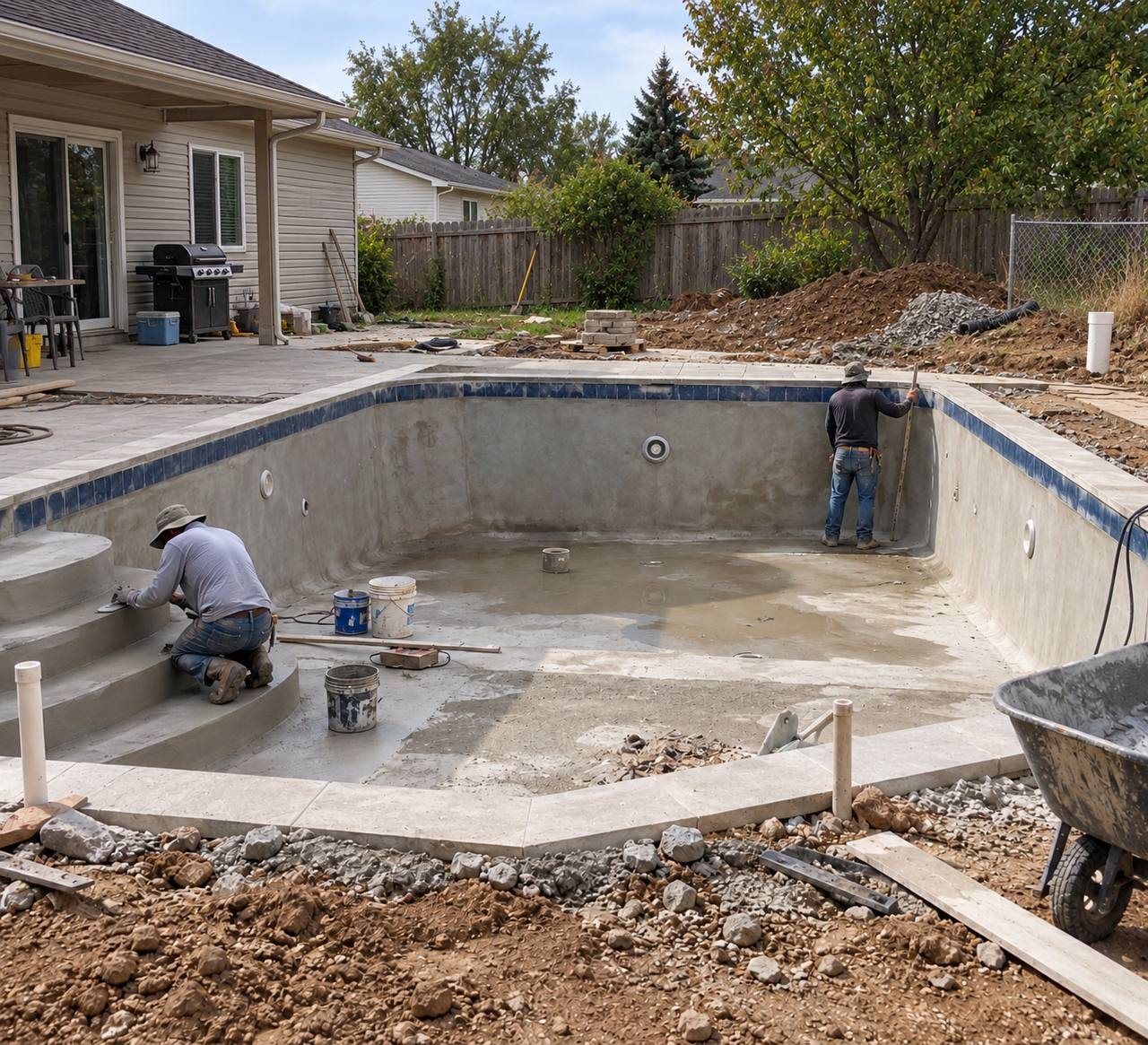
Before new plaster or tile goes in, the right first question is where the uphill runoff is going. Proper deck drainage, coping that sheds water rather than traps it at the bond beam, and a clear path off the decking are baseline structural requirements. The NC DHHS Environmental Health Section pool and spa rules treat drainage as a first-class requirement because sustained water intrusion is a structural failure mode, not a cosmetic one. Getting this right before surface work is a fraction of the cost of diagnosing shell damage after.
Equipment: efficiency standards and safety compliance
Pool equipment gets replaced during a renovation for two different reasons: it is at end of life, or it no longer meets current standards. The US Department of Energy dedicated-purpose pool pump efficiency standard means replacement pumps must meet minimum efficiency requirements. Upgrading to a variable-speed pump during an open renovation — when labor is already mobilized — is a one-time savings worth planning around rather than returning to separately.
On the safety side, the Pool and Hot Tub Alliance maintains current compliance guidance on anti-entrapment drain covers, bonding and grounding standards, and barrier requirements that apply to residential pools undergoing substantive work. A renovation that replaces the main drain assembly triggers those checks by default. Contractors who build safety compliance into scope from the start are not charging more — they are avoiding the callbacks that come from discovering it at inspection.
Choosing the right crew in Buncombe County
Three questions separate a careful Asheville renovation contractor from a capable-but-wrong one. First: have they worked on a pool with your deck configuration? A sloped lot with a poured concrete deck on fill is a different job than a flat suburban rectangle, and deck detailing on a ridge lot is where corner-cutting becomes expensive. Second: do they pull permits through the county themselves, or hand that to you? A contractor who manages their own permitting knows the job must meet inspection, not just look complete. Third: how do they sequence drainage and equipment against surface work? Addressing structural and drainage concerns before plaster is the correct order for an Asheville lot — the answer to that question separates renovation contractors from resurfacing contractors.
See the tile and coping replacement guide for what to expect from that part of the scope specifically — it is often where freeze-cycle damage appears most clearly and where the Buncombe County job departs most sharply from a generic renovation checklist.