Freeze-thaw at 3,000 feet changes the resurfacing calculus
Pools at Lake Toxaway sit above 3,000 feet in Transylvania County — one of the wettest and highest private lake communities in the eastern United States. At that elevation, night temperatures in March and October can drop below freezing while afternoons stay mild enough to tempt an early swim. That shoulder-season temperature swing forces water into micro-cracks in plaster surfaces with a mechanical regularity that flatland price sheets never account for. A plaster job that holds eight years in Raleigh may begin to spall and delaminate after five at this altitude, simply because the surface has been through more contraction-and-expansion cycles.
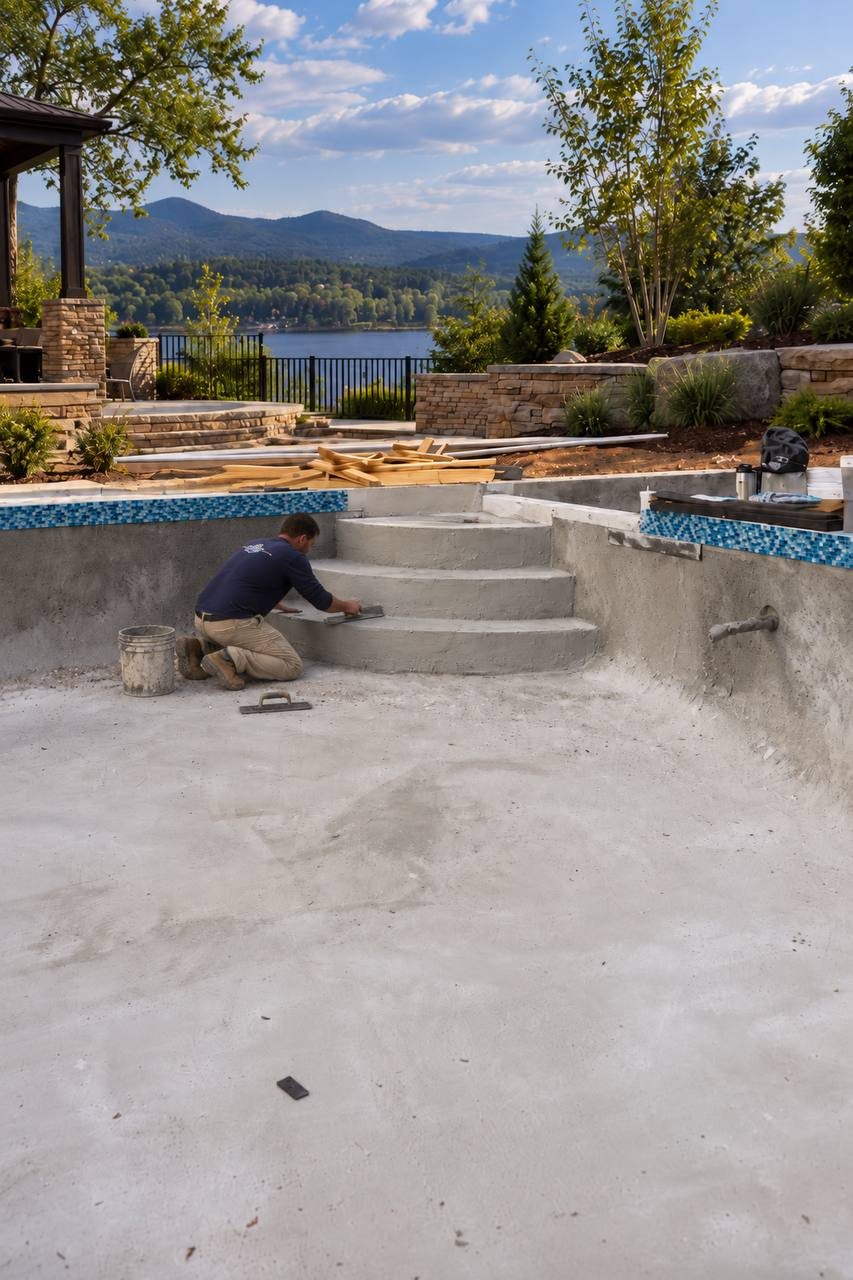
The second factor that sets this market apart is access. The roads serving Lake Toxaway Estates and the surrounding hillside communities were designed for residents, not for the flatbed trucks and concrete sprayers that a resurfacing crew needs to move. Gatehouse check-ins, narrow switchbacks, and steep residential drives all add time and staging complexity to every job. A contractor who quotes this community from a piedmont baseline without accounting for those logistics is giving you an incomplete number. The full picture of what resurfacing means for any pool in this area starts at our service overview, which covers scope types and how a job is sequenced from drain to refill.
The Lake Toxaway price picture
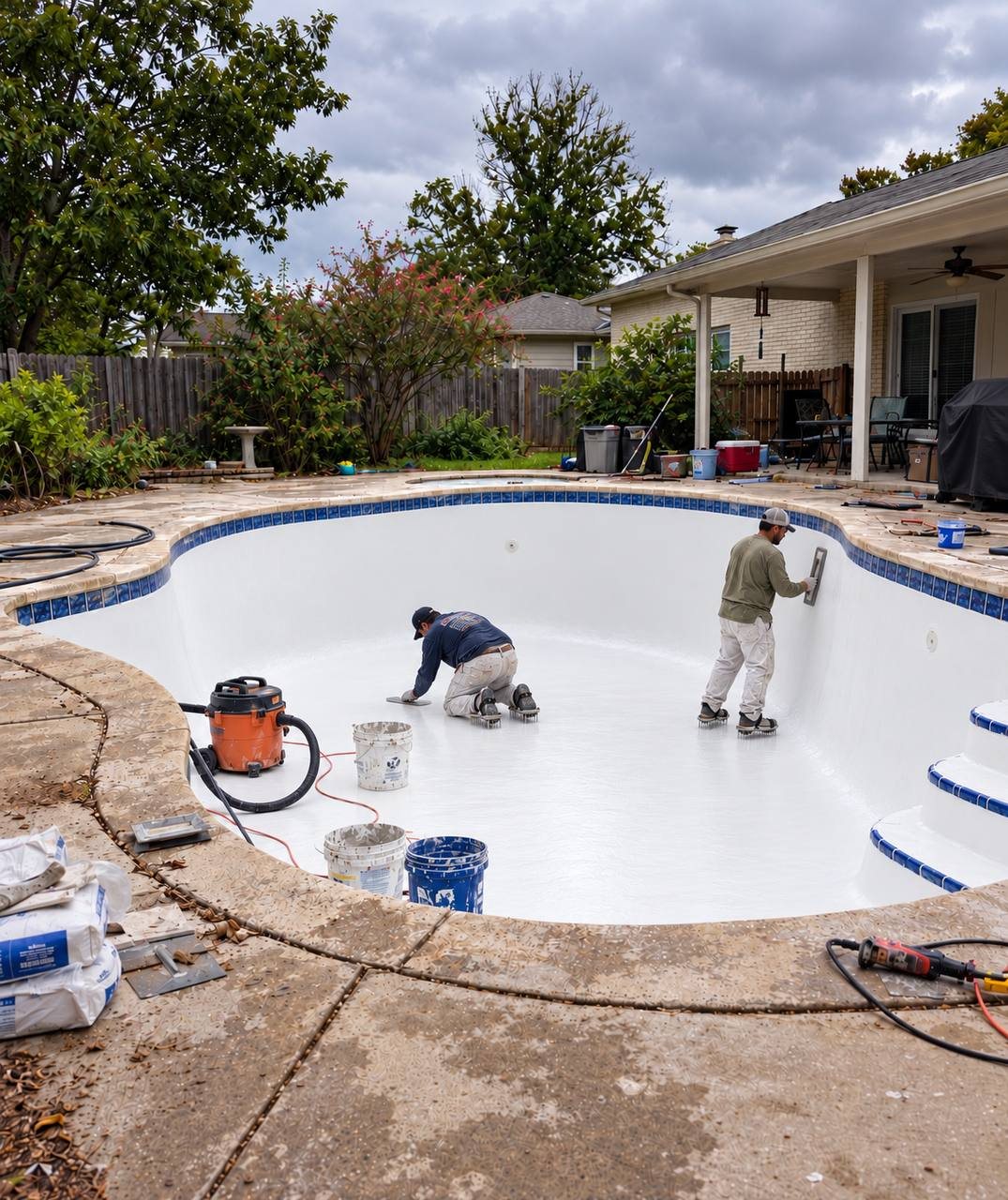
A standard white plaster replaster on a typical 1,000 sq ft gunite pool in the Lake Toxaway area runs $6,000 to $8,500. Quartz and pebble finishes sit higher — and for reasons that go beyond aesthetics at this elevation, they are usually the more defensible long-term choice. The full line-item breakdown for Transylvania County jobs lives at our cost guide; the table below shows the working ranges by scope.
| Scope | Typical Range |
|---|---|
| White plaster replaster (per 1,000 sq ft gunite pool) | $6,000 – $8,500 |
| Quartz aggregate finish | $8,500 – $12,000 |
| Pebble finish | $10,500 – $15,000 |
| Tile band replacement (per linear foot) | $25 – $60 |
| Coping repair or replacement (per linear foot) | $80 – $150 |
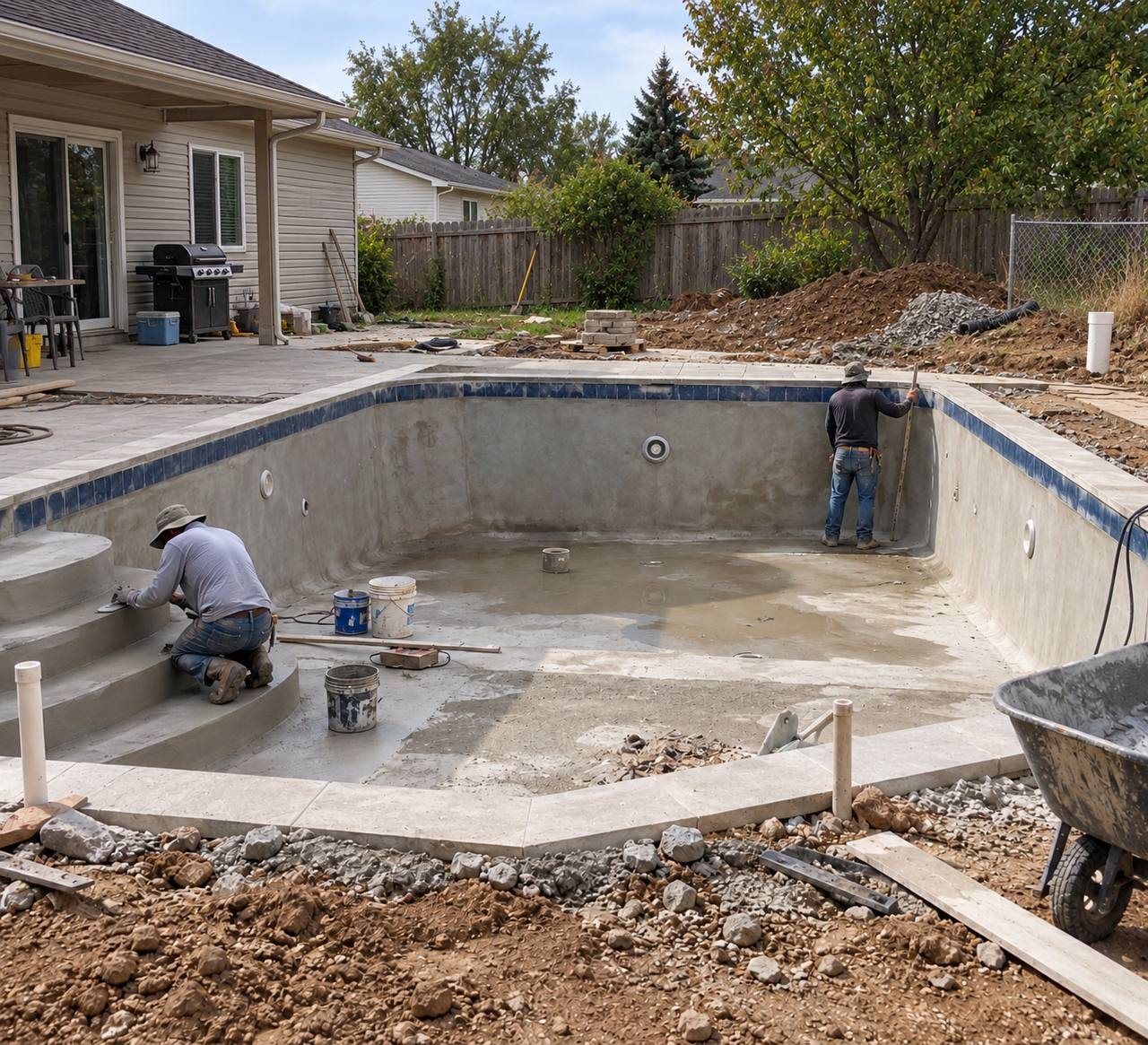
Slope, lot access, and finish choice are the three price movers here. A pool on a flat pad with easy drive access quotes differently from one hanging on a hillside terrace above the lake, and both quote differently depending on whether the existing surface is lifting in whole sections or just spot-failing around the tile band. An honest inspection before a number is the standard for any scope in this range — treat any quote that skips the inspection as incomplete rather than cheap.
Finish options that hold up in a mountain lake climate
Plain white plaster was the industry default for decades and still works well in warmer, drier climates. In Transylvania County, where pools are routinely closed for a hard winter and reopened in spring, the full contraction-and-expansion cycle between those two states matters more than it does in Charlotte or the piedmont. Quartz aggregate and pebble finishes resist that cycle better — the aggregate matrix handles micro-expansion without the surface porosity that straight plaster develops over time, and greater surface hardness slows the etching that soft, slightly acidic mountain source water causes in the first few seasons after installation.
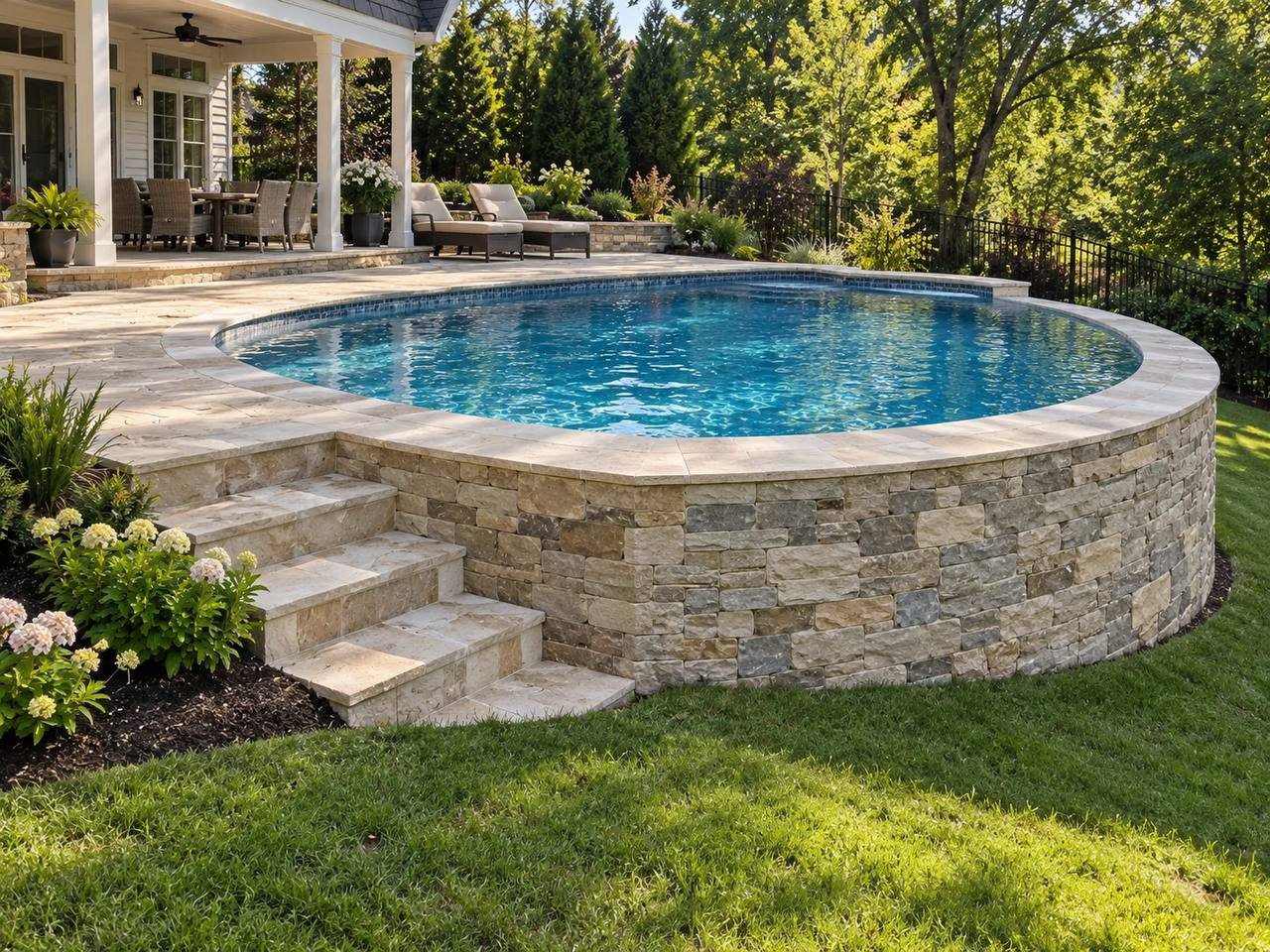
The aesthetic case is equally real for this community. Lake Toxaway pools typically sit on wooded lots with sight lines to the private lake or surrounding ridge, and most owners here want a finish that reads natural rather than institutional. The material families — quartz blends, exposed aggregate pebble, and colored plaster options — each make different trade-offs between texture, hardness, and appearance over time. The pebble and quartz guide covers what each finish family actually looks like after a few seasons and how installation differs between them, including the startup chemistry protocols that protect new aggregate surfaces from early etching.
Rainfall, water chemistry, and the rules that follow
Transylvania County records some of the highest annual rainfall totals in the eastern United States, and that fact runs directly through every pool resurfacing decision made here. 16 federal disaster declarations span 1993-2026 in this county, the majority of them flood and storm events. A pool deck that drains onto a slope above a natural runoff channel is not just a cosmetic nuisance — it is a substrate problem that multiplies the cost of any interior resurfacing job if the drainage grade is not corrected first. Before any crew touches the shell, the slope and gutter routing around the pool pad deserves a careful look.
On the regulatory side, pool and spa rules for North Carolina residential properties fall under the NC DHHS Division of Public Health Environmental Health Section. Residential pools carry a lighter inspection burden than public pools, but any scope that modifies main drain covers or suction fittings needs to meet current Virginia Graeme Baker Act standards — the Pool and Hot Tub Alliance maintains a plain-language residential summary. Ask your contractor directly which items their scope brings into compliance and which it leaves unchanged before signing anything.
Finding a contractor who has actually worked this terrain
Not every pool contractor operating out of Brevard or the piedmont has worked a gated mountain community job before. The questions worth asking before signing: Have they resurfaced pools at this elevation, or do all their references come from flatland jobs? How do they handle gatehouse access and equipment staging at a private lake community? What is their water chemistry protocol for the first thirty days after a plaster or aggregate install? And if the scope triggers a permit or inspection under Transylvania County's building authority — administered through the state framework overseen by the NC Department of Insurance Building Code Council — do they manage that process or hand it back to the homeowner?
One more item worth factoring in if a pump replacement is bundled into the project: the federal efficiency standard finalized in September 2023 (Federal Register, September 2023) applies to variable-speed replacement motors. A variable-speed pump is the right choice for a seasonal pool anyway — the energy savings on a six-month operating window still add up — and complying with the standard now avoids a retrofit later. A contractor who scopes the surface work, drainage correction, fittings compliance, and equipment in one coordinated sequence is the one who produces a number you can build a real project budget around.