The wettest corner of the Carolinas and what it does to a pool
Transylvania County ranks among the wettest spots in the eastern United States. The mountains east of Brevard sit at the foot of the Blue Ridge escarpment, where orographic uplift wrings moisture out of every weather system that moves through. That distinction drives a renovation reality that no flatland contractor will explain upfront: pools here face sustained moisture stress year-round, not just during swim season. Water works on tile joints in January, wicks through coping mortar in March, and pools at equipment pads after a July storm before anyone opens the gate.
Most of the pools coming up for renovation in this part of Transylvania County were built for summer use — vacation properties, retirement retreats, and residential lots carved into hillsides east and west of downtown Brevard. They were not designed for the moisture exposure this landscape delivers. A full pool renovation here almost always starts with a drainage conversation: where does runoff go when the deck sheds water, and is it moving away from the shell or along the bond beam?
What a Brevard renovation scope typically includes
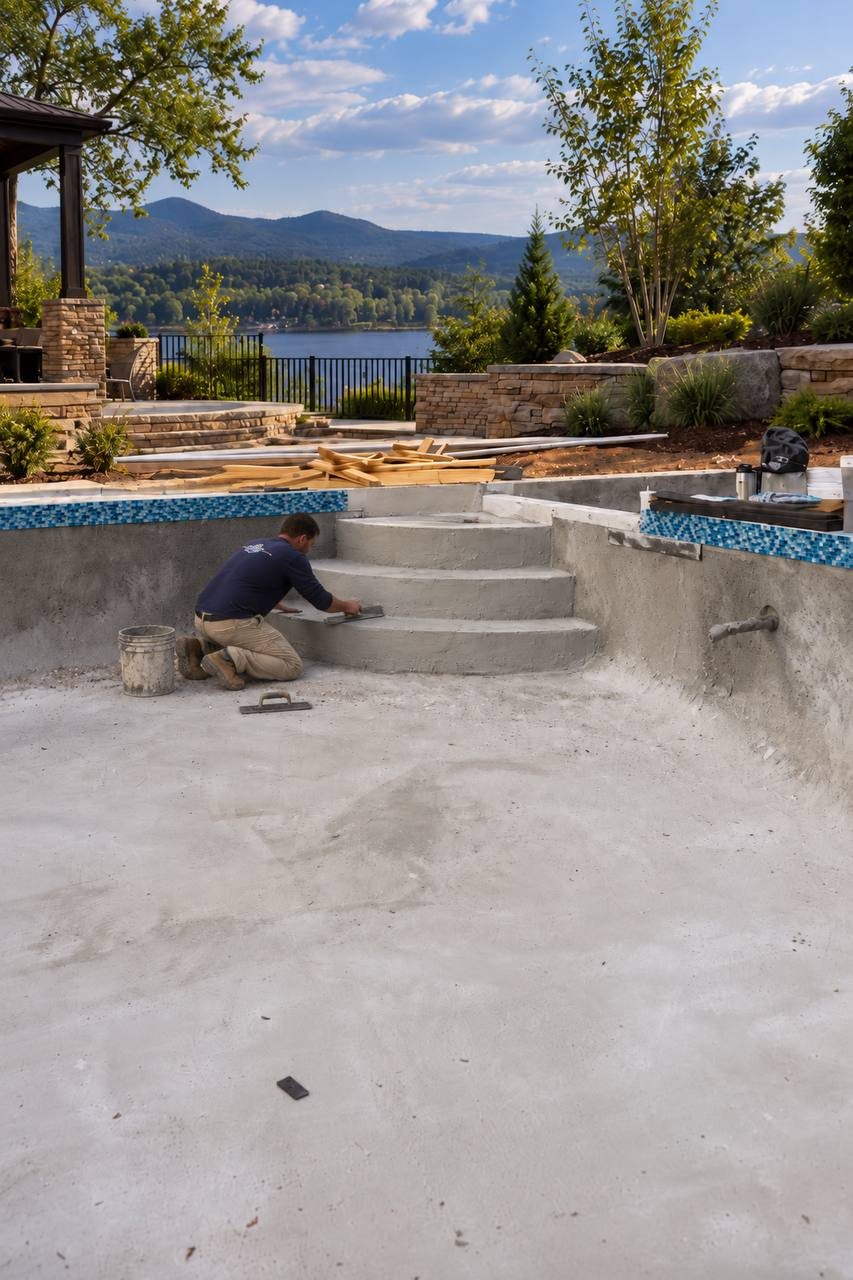
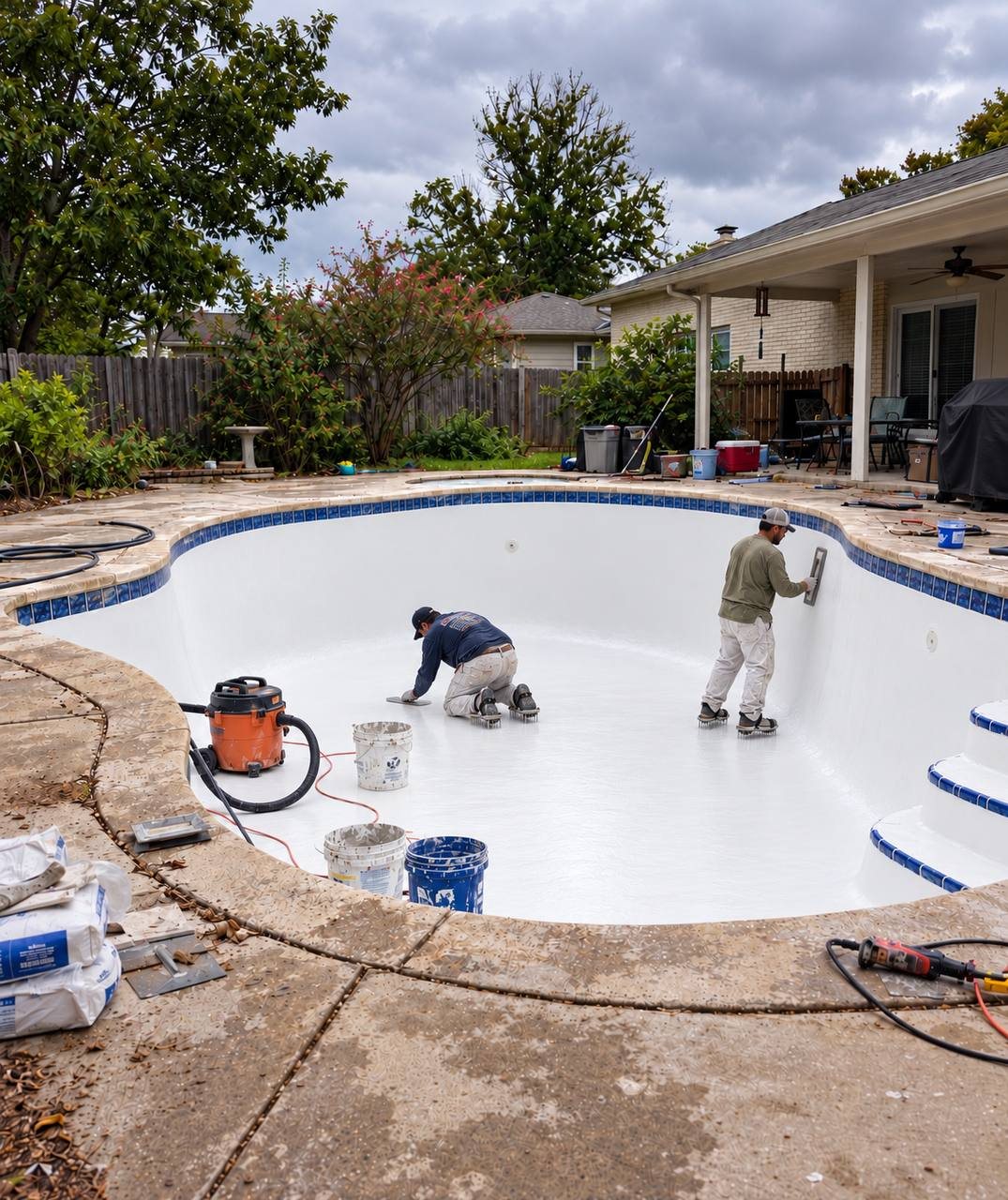
The interior finish on a plaster or pebble pool from the 1970s or 1980s has usually absorbed enough mineral scaling and organic staining at this elevation that resurfacing is functional, not cosmetic. Chalking, blistering, or delaminating plaster has lost its waterproofing role, and the water chemistry problems that follow accelerate shell deterioration faster than the surface wear alone would predict.
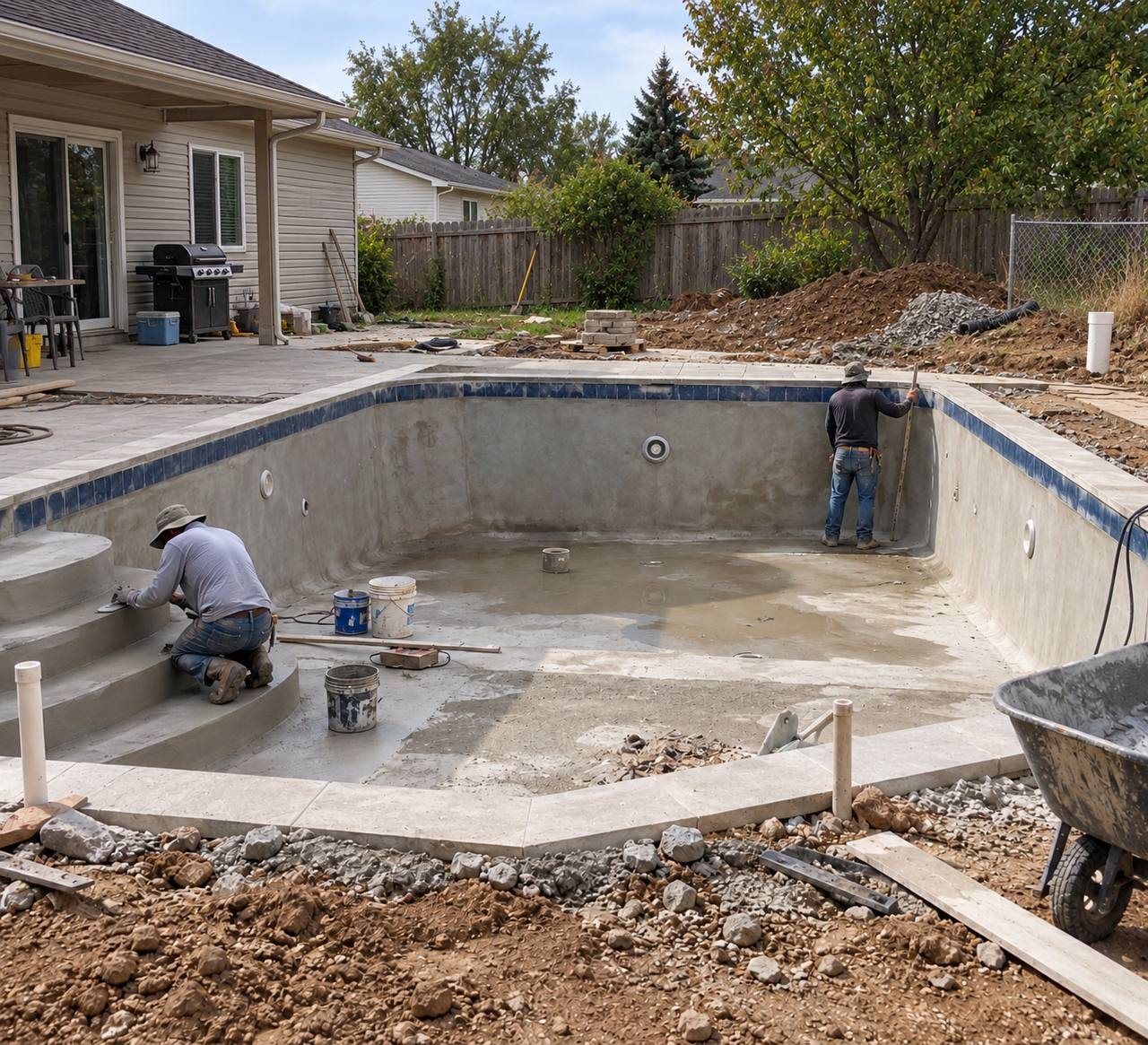
Above the waterline, tile and coping tell the freeze-thaw story. Brevard sits high enough that frost cycles are a regular winter event, and tiles that have popped or coping stones that are cracked or rocking signal that the bond beam has been moving. Replacing tile without addressing that movement is a repair that will repeat within a season or two. The tile and coping replacement guide explains what a proper evaluation of bond beam movement looks like before any surface work begins.
The deck around a mountain-sited pool takes its own form of punishment. Tree roots from the hardwoods and pines that cover most Transylvania County lots, frost heave, and persistent surface moisture degrade concrete faster than calendar age suggests. On sloped lots common east of Brevard and along the roads climbing toward Pisgah National Forest, deck drainage slope is an engineering question that belongs at the top of the scope conversation, not the bottom.
What renovation costs in this market
A resurface-only job starts around $6,000 for a standard residential pool. A full remodel addressing interior finish, tile, coping, deck, and equipment typically runs $20,000 to $60,000 depending on pool size, material selections, and what the inspection finds under the deck surface. See the full cost breakdown for line-item ranges by scope.
Slope-lot drainage correction, structural crack repair, and equipment pad relocation are line items that appear on mountain pools far more often than flatland quotes prepare homeowners for. Treat any bid that omits them on a sloped Brevard lot as incomplete rather than competitive.
| Renovation scope | Typical range |
|---|---|
| Plaster or pebble resurface only | $6,000 – $12,000 |
| Resurface with tile and coping replacement | $10,000 – $22,000 |
| Full remodel (finish, tile, coping, deck) | $20,000 – $45,000 |
| Full remodel with equipment replacement | $28,000 – $60,000 |
| Deck replacement only | $8,000 – $20,000 |
Storm history and what it means for your pool deck
Transylvania County has recorded 16 federal disaster declarations over the 1993-2026 record, the majority tied to storm and flooding events. This part of the Blue Ridge sits at the convergence of several drainage basins, and when major weather systems stall over the mountains the ground stays saturated for days. A pool deck that is not properly graded, or a bond beam that is already compromised, does not survive those episodes intact.
The practical implication for any renovation project: drainage correction is not a line item to cut. A contractor who scopes the finish before asking where the water goes after a heavy rain is prioritizing what they sell over what the site needs. A complete renovation checklist for a Brevard pool includes grading verification, equipment pad elevation on sloped lots, and deck joint condition before the resurfacing crew ever shows up.
State rules, equipment standards, and hiring well in Transylvania County
North Carolina pool work that affects circulation, plumbing, or water features falls under the framework administered by the NC DHHS Division of Public Health Environmental Health. The rules are most comprehensive for public and semi-public pools — HOA pools, vacation rental properties, and campground facilities all fall into that category. If your Brevard property carries any of those classifications, confirm permitting requirements with Transylvania County before work begins, not after a permit inspection flag lands mid-project.
On the equipment side, pump replacement is no longer a simple swap. The US Department of Energy efficiency standard for dedicated-purpose pool pump motors sets a minimum efficiency floor that effectively requires a variable-speed unit on most residential installations. This closes off the low-cost single-speed path and makes energy performance part of the renovation conversation whether you planned for it or not. A variable-speed pump also delivers meaningful operating savings over a mountain pool season, which runs longer than owners often expect.
Three questions separate contractors worth hiring from those worth skipping. Have they worked mountain lots with drainage problems on sloped, heavily vegetated sites? Do they assess drainage and structural condition before scoping the finish, or quote the resurface first? Are they current on installation standards published by the Pool and Hot Tub Alliance? Those standards govern everything from finish material compatibility to equipment sizing, and contractors who follow them are applying current best practice rather than dated habits.