The private lake standard that changes the scope
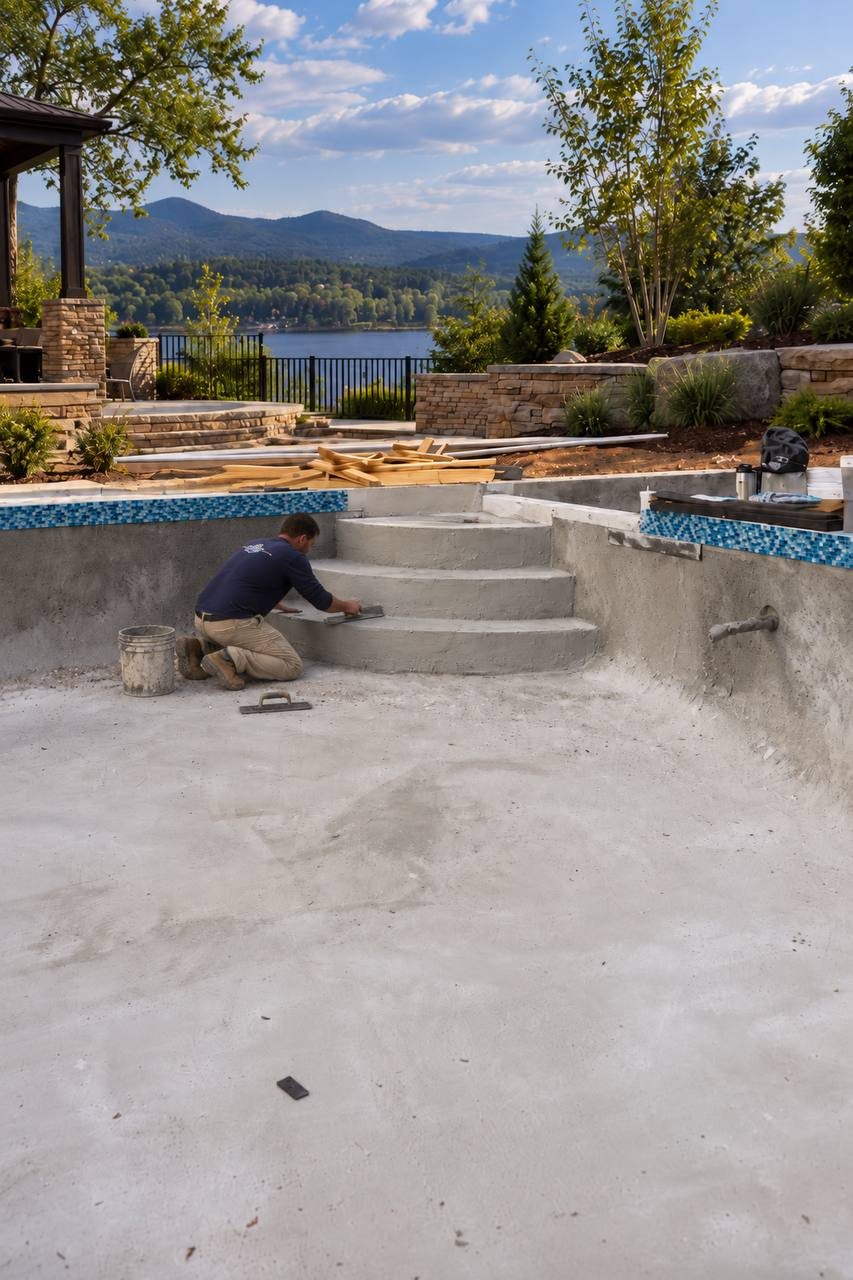
Lake Toxaway is a private mountain lake community in southern Transylvania County — elevation around 3,000 feet, terrain is Blue Ridge hardwood and stone, and the estates lining the shoreline represent some of the highest-value vacation and second-home properties in western North Carolina. That context shapes a pool deck resurfacing job in ways a standard flatland quote never captures.
Properties here have long leaned on natural materials in construction and hardscape. A plain broom-finished concrete deck that meets code and passes inspection elsewhere reads out of place against cedar-clad lodges, fieldstone retaining walls, and mountain landscaping. The freeze-thaw cycle at this elevation is real — hard freezes arrive weeks earlier than in the valley, morning ice persists well into spring, and any surface that absorbs moisture without adequate sealing will spall and delaminate within a few seasons. Most lakeshore lots also sit on grades that add a drainage variable flatland bids routinely ignore.
Any honest scope for resurfacing a pool deck at Lake Toxaway starts three questions before materials come up: What is the grade and drainage condition of the existing slab? What does the substrate look like underneath any existing coating? And what aesthetic standard will both the community and the property owner accept?
What resurfacing costs at this elevation
The cost to resurface a pool deck across western NC already skews toward the upper portion of state-wide ranges; material freight to Transylvania County, mountain access logistics, and the finish quality expected in this community push most jobs further toward the top of any bracket. The working ranges for the Lake Toxaway area:
| Scope | Typical range | Primary price drivers |
|---|---|---|
| Concrete overlay on existing deck | $3–$10 per sq ft | Substrate condition, overlay thickness, texture finish |
| Stamped or textured concrete | $8–$20 per sq ft | Pattern complexity, color layers, slope prep |
| Travertine or natural stone pavers | $15–$27 per sq ft installed | Stone grade, mortar bed on grade, edge detail, drainage work |
Sloped lakeside lots commonly push jobs toward the upper end of each range — drainage prep, grade correction, and access add cost that flat-deck bids omit entirely. Treat any quote that doesn't address those items as incomplete rather than competitive. See the full pool deck resurfacing scope guide for how these line items build on each other.
Surface materials for a mountain lake setting
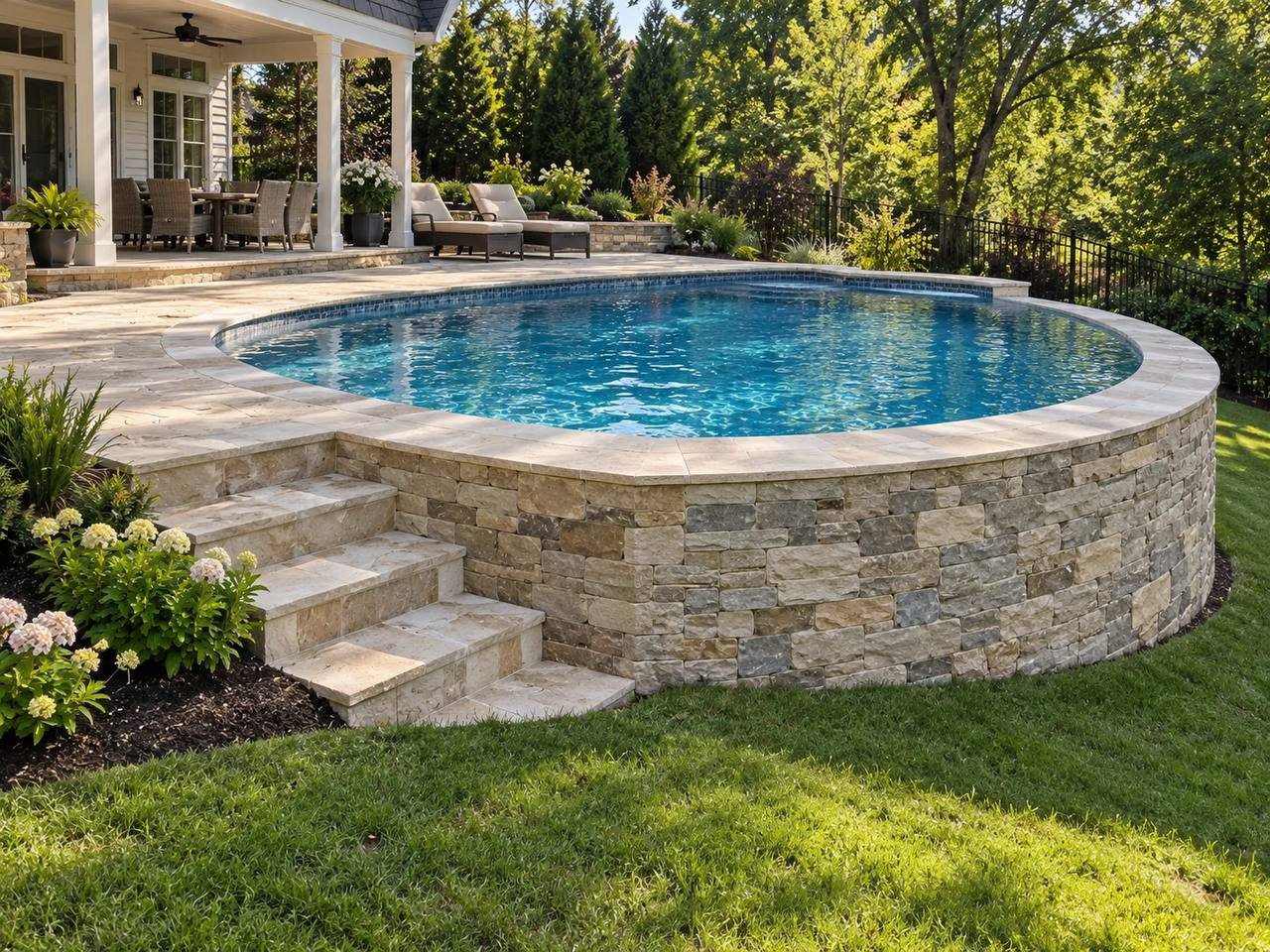
Three materials dominate well-executed decks in this community. Travertine is the regional default for estate properties — its natural color variation suits the wooded lakeside setting, it stays cooler underfoot than solid concrete in afternoon sun, and there is a sufficient installer base in the region to support ongoing maintenance. The tradeoff is care: travertine must be sealed on a regular schedule to resist the moisture that comes off the water and accumulates during mountain winters. One neglected season creates a foothold for freeze-thaw damage at the grout joints.
Concrete overlays are the value play when the existing slab is structurally sound — a knockdown or microtopography finish can approximate stone texture at a fraction of the travertine cost and typically lands in the lower portion of the range. Interlocking pavers sit between them in installed cost and carry one practical advantage on sloped lots: individual units can be reset if frost heave lifts a section, without tearing out the entire deck surface.
The Pool and Hot Tub Alliance publishes installation standards that reputable contractors follow regardless of material — ask for the relevant standard by name when reviewing bids and confirm that the proposed substrate prep meets it.
Mountain drainage and your deck's lifespan
Transylvania County carries 16 federal disaster declarations spanning 1993-2026, most tied to severe storm and flooding events that push through the southern Blue Ridge. The county sits at the headwaters of several river systems, and when storms stall over the mountains, water moves fast and in volume. A pool deck at Lake Toxaway is not isolated from that pattern — if surface drainage directs runoff toward the pool area rather than away from it, the slab absorbs it, and surface failure follows a predictable sequence: subsurface saturation, freeze-thaw expansion, cracking, delamination.
Before any resurfacing material goes down, the pitch away from the pool edge needs to be confirmed adequate — minimum drainage slope is a code requirement for a reason — and any existing cracks in the substrate should be chased, routed, and sealed rather than overlaid. Covering a crack that channels water accelerates the failure it hides. The NC DHHS Environmental Health Section rules for pool areas address deck drainage as a distinct safety and maintenance requirement, and the NC Department of Insurance Building Code Council sets the underlying construction standard. Both are worth reviewing if a contractor proposes skipping a drainage assessment to reduce upfront cost.
Permits and the Brevard building office
Pool deck work in Transylvania County — whether a full demolition and repour or a substantial resurfacing — may require a building permit depending on the scope and value of the work. The county's building inspection function operates out of Brevard, the county seat. For projects that cross the material alteration threshold, a permit ensures that drainage and structural elements are inspected before work is covered over. Skipping that step can complicate a property sale or an insurance claim if the deck shows problems later. Confirm permit requirements with Transylvania County before work begins rather than assuming a surface-only job falls below the threshold — the answer depends on scope, and it is faster to ask upfront than to unpermit work after the fact.
Hiring well for this market
Three questions to establish before any contractor starts work at Lake Toxaway: Have they completed sloped, mountain-terrain pool decks before — not just flat suburban lots? Can they show a current North Carolina contractor's license? And how do they sequence the drainage and substrate assessment relative to surface selection? The last question is the most useful filter. Contractors who lead with material choices before inspecting the slab and drainage are building toward a call-back job. Persistent surface failures on mountain lake decks almost always trace to water that was not managed before the finish went down.
When you're ready to scope the full project, the pool renovation page outlines how a deck resurface fits into a broader pool refresh and which items need to be addressed first to keep the surface choice from becoming a short-term decision.