What mountain elevation does to pool surfaces
Asheville pools age differently than pools fifty miles east on the Piedmont. The elevation means real winters — temperatures that drop well below freezing for stretches long enough to stress pool plaster from the inside out, working through surface pores, expanding and contracting with each cycle. A plaster surface that might last twelve to fifteen years in Wilmington starts showing map cracking and delamination in eight to ten years in Buncombe County.
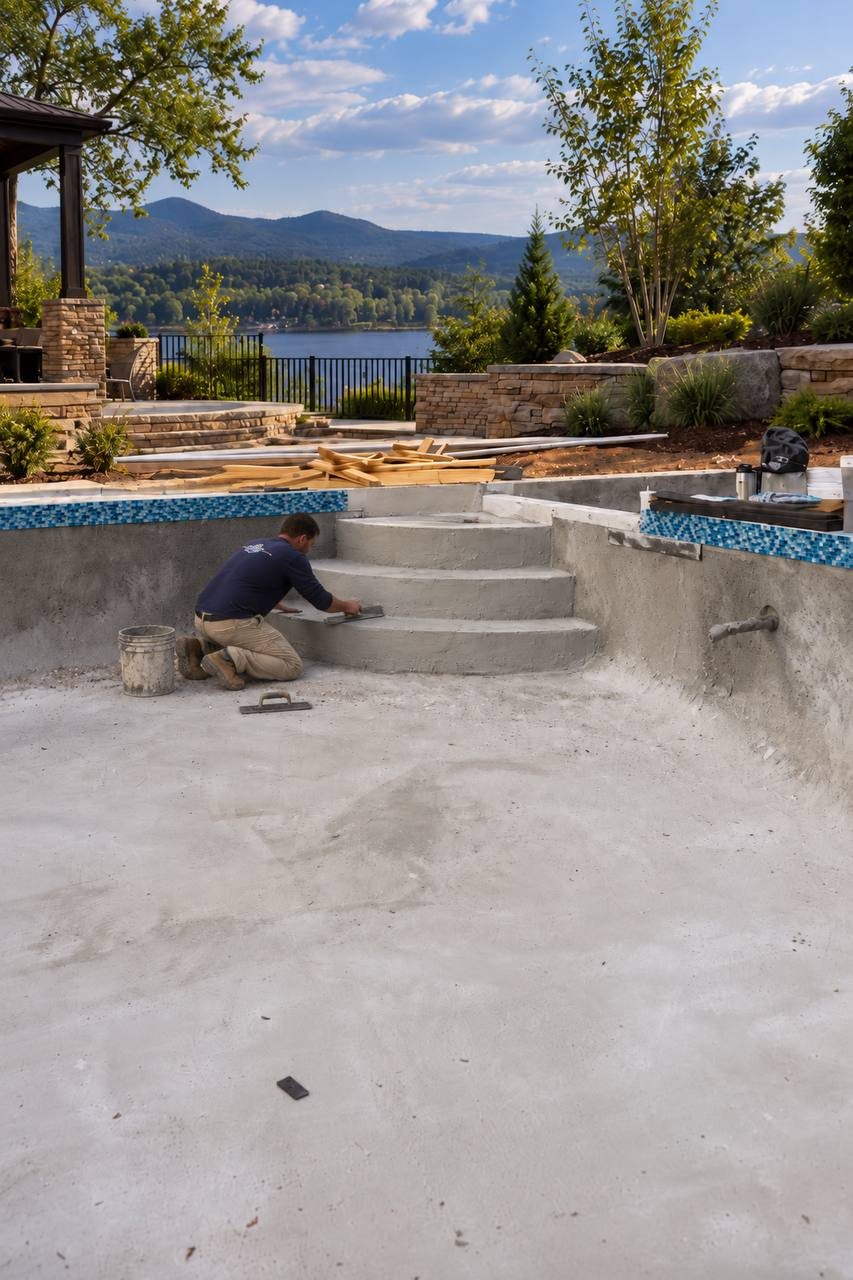
The housing stock adds another layer. Grove Park, Kenilworth, and the Chunns Cove neighborhoods hold pools built in the 1960s through 1980s on lots that already required cut-and-fill grading — gunite shells on slope angles that shift slightly over decades. A replaster on a flat suburban lot is a routine surface prep job. The same job on a steep ridge lot in North Asheville involves equipment staging, longer hose runs, and sometimes hand-mixing where a pump truck cannot reach. That access cost is real and should appear on every honest quote before you sign.
The combination — cold winters and steep terrain — is what makes pool resurfacing in Asheville NC a distinct trade from pool work anywhere else in the state.
The Asheville price picture
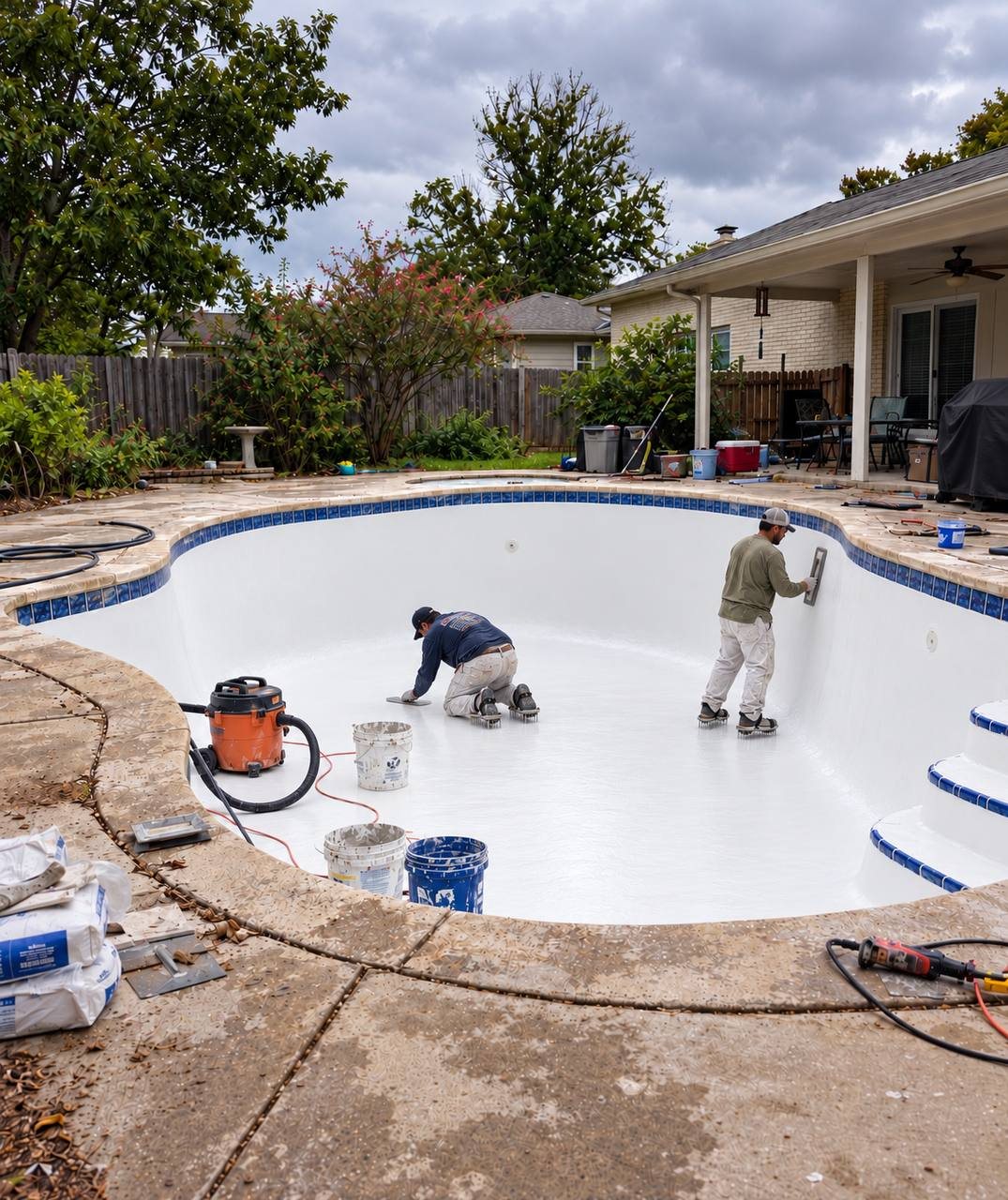
A standard replaster on a typical gunite pool in Buncombe County runs $6,000 to $15,000, with finish type and lot access as the two biggest price movers. The full line-item breakdown lives in the pool resurfacing cost guide; the table below covers the most common Asheville scopes.
| Scope | Typical Range | Notes |
|---|---|---|
| Standard white plaster replaster | $6,000–$8,500 | Entry finish; shortest lifespan in freeze-thaw climate |
| Quartz aggregate finish | $8,000–$12,000 | Better durability through mountain winters |
| Pebble finish (glass or stone aggregate) | $10,000–$15,000 | Longest lifespan; standard on exposed ridge lots |
| Crack repair added to replaster | $8,500–$13,500 | When stress fractures require structural prep before finish |
Steep-lot access — narrow gates, long equipment runs, deck areas a pump truck cannot reach — adds cost reflected in the upper end of each range above rather than as a separate line item. Any quote that comes in flat regardless of site conditions was not scoped in person.
Finish durability in a freeze-thaw climate
Standard white plaster is the entry price point, and it earns that price — softer surface, shorter lifespan, more maintenance in climates that cycle below freezing. In the mountains, it starts showing its age quickly. Quartz aggregate and pebble finishes resist the freeze-thaw expansion that eats plaster surfaces, and their color stability outlasts plaster by a wide margin.
The pebble and quartz finishes guide covers the specific product families and what each looks like after a decade of mountain weather. The practical rule for Buncombe County pools: if your pool sits on an exposed lot with full sun and full winter, the upgrade cost from plaster to quartz pays back at resurfacing time. Replastering in plaster and doing it again in eight years costs more than upgrading once. The pool resurfacing overview covers how finish choice factors into the full project scope from drain to cure.
Rules, inspections, and storm history
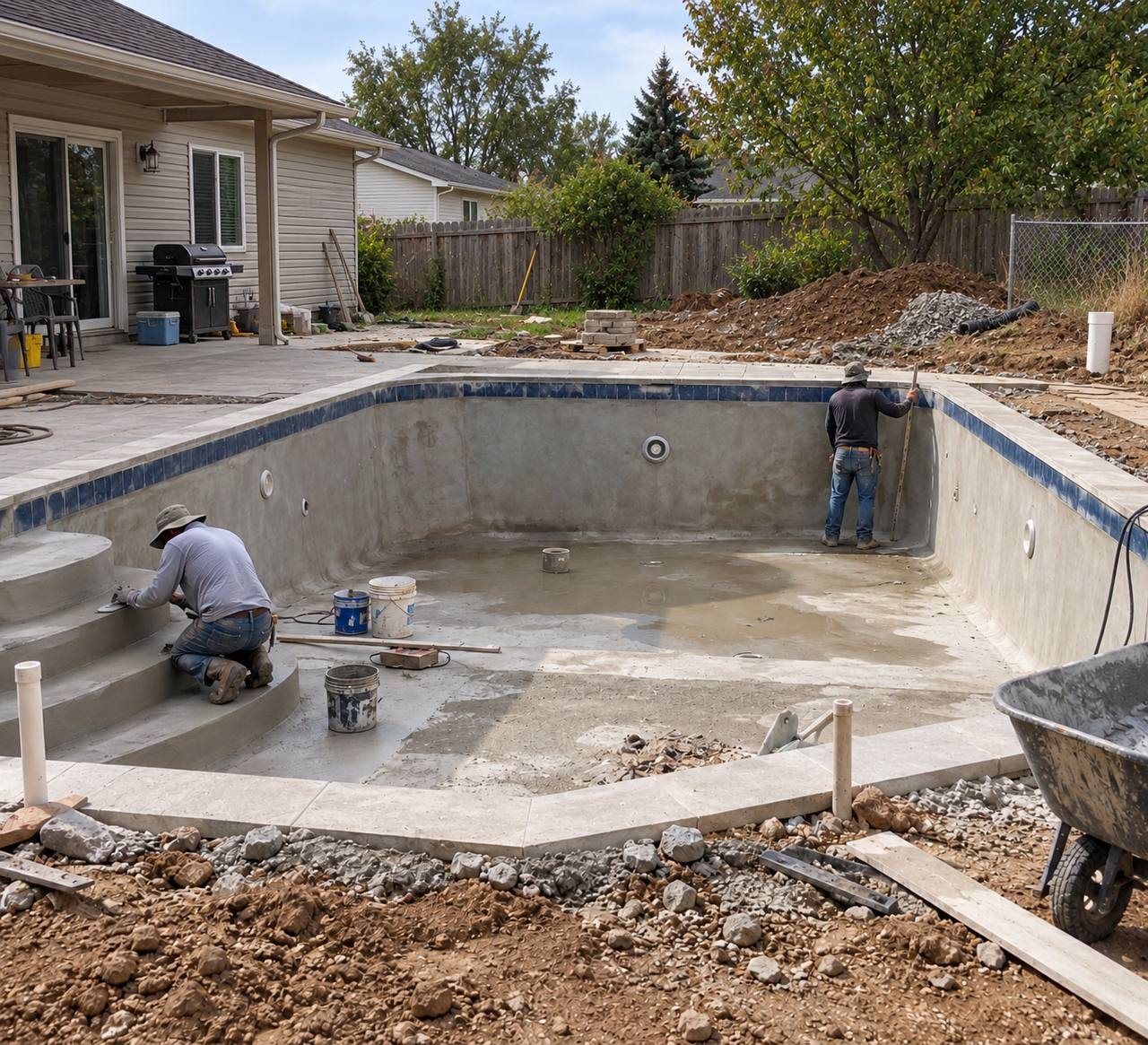
North Carolina regulates residential pool renovation through the NC DHHS Environmental Health Section rules, which set minimum requirements for pool water chemistry, circulation systems, and barrier conditions that can come into play when resurfacing triggers an inspection. A standard replaster typically does not require a building permit, but coping replacement, plumbing work, or equipment upgrades pull county permits — confirming scope with your contractor before work starts avoids mid-project stops.
Storm history matters to surface condition. Buncombe County has seen 19 federally declared disaster events over the 1973-2026, most involving storm and flood conditions. Storm-driven debris loads, tree falls on equipment, and extended periods of pool chemistry running unchecked all accelerate surface aging in ways that do not always appear as obvious damage — the surface roughens, pitting starts, and the next freeze-thaw season does the rest. If your pool came through a major storm event, a condition assessment before resurfacing is worth the visit.
Finding the right crew in Buncombe County
Three Asheville-specific checks before you commit: ask whether the crew has worked gunite pools on sloped lots in this county (the staging and access logistics are meaningfully different from flat-site work); ask what prep they do for pools showing stress cracks versus cosmetic surface wear (the answer separates surface contractors from structural ones); and ask for a warranty that specifically covers finish delamination — not just a general labor warranty. Delamination is the dominant failure mode in cold climates, and a crew that does not name it is not quoting the right job for this market.
The Pool and Hot Tub Alliance publishes contractor certification standards worth checking against any crew you are considering — PHTA-certified applicators carry training in surface prep and water chemistry that directly affects how long a mountain-climate finish holds.
Timing a mountain pool resurfacing
Asheville's climate creates a real scheduling constraint. New plaster and aggregate finishes need to cure and be filled within a specific temperature window — too cold and the curing chemistry stalls; too warm and it accelerates in ways that compromise adhesion. Most crews working in Buncombe County schedule resurfacing jobs between late April and early October to stay inside that window, with peak demand running May through July.
Booking in late winter for spring work gets you on the schedule before the season rush. It also allows time for coping or tile work to be completed before the resurfacing crew arrives — those trades sequence first, and delaying them delays the fill date. If you are planning a finish upgrade for next season, the conversation with a contractor starts now.