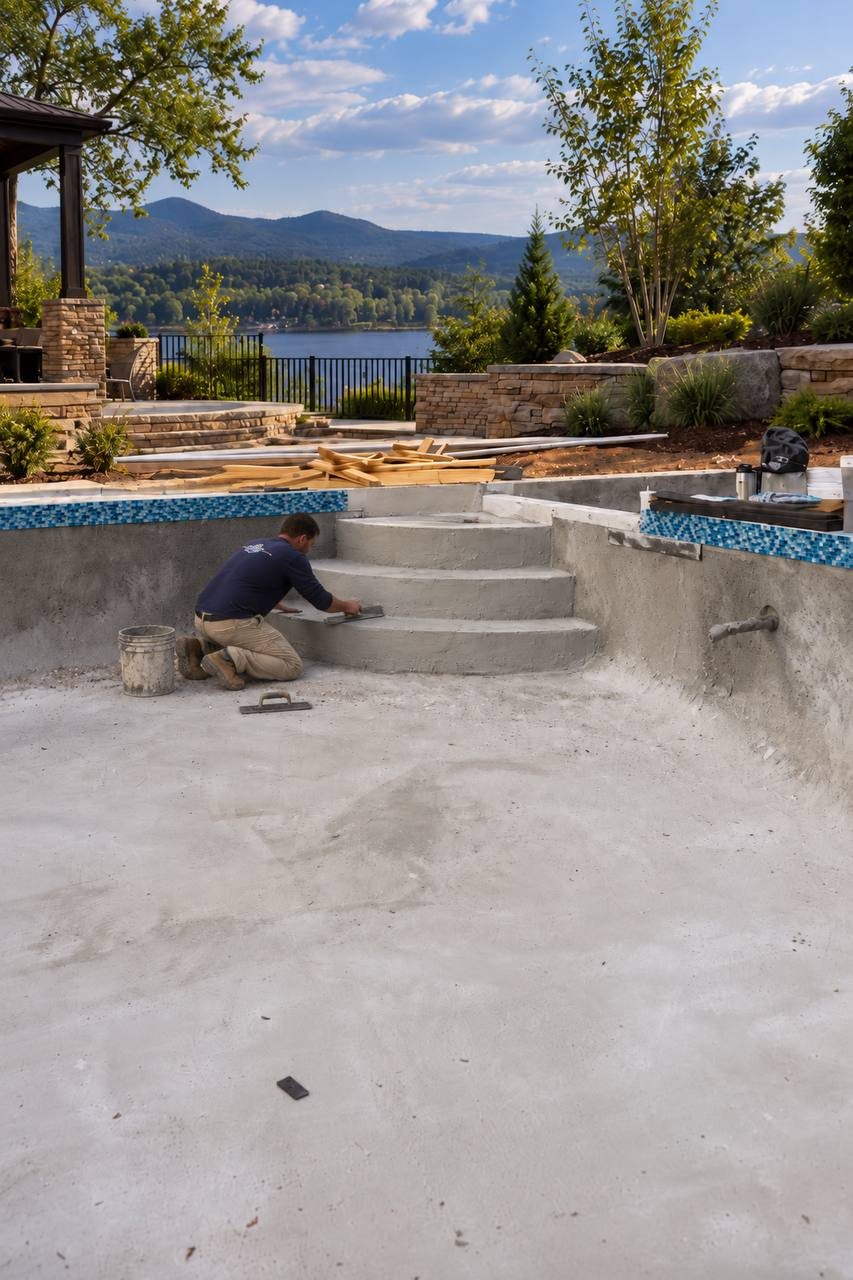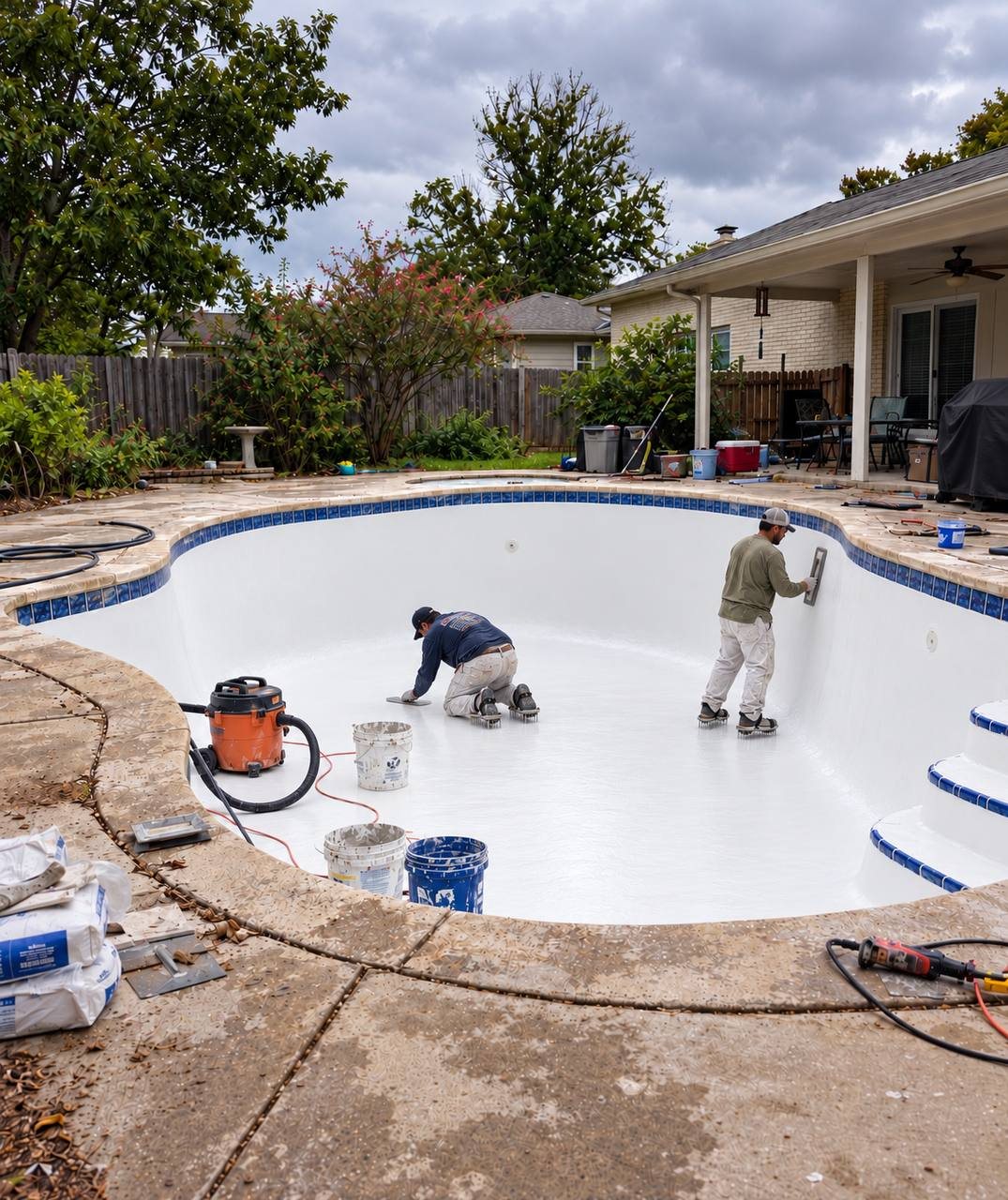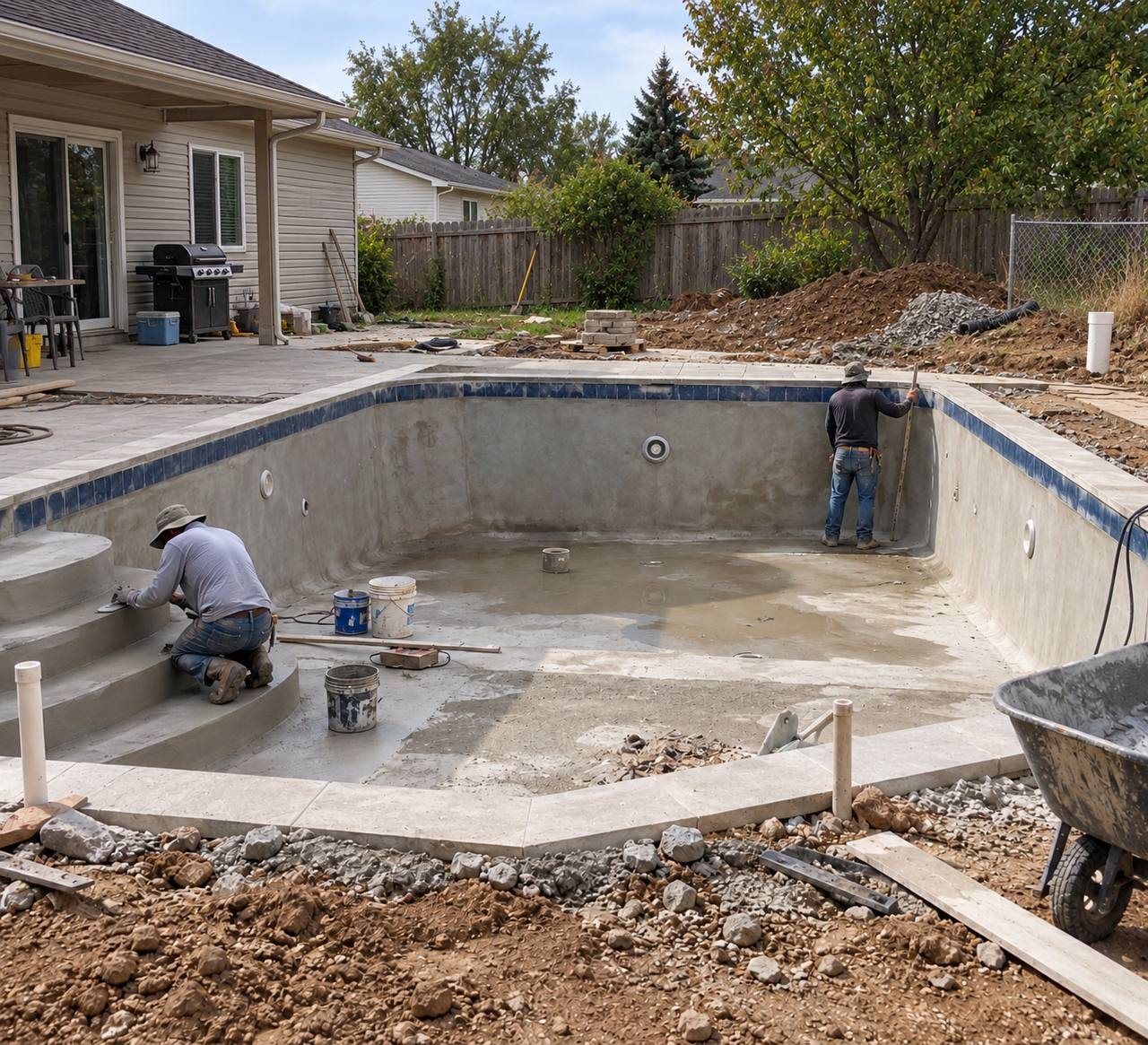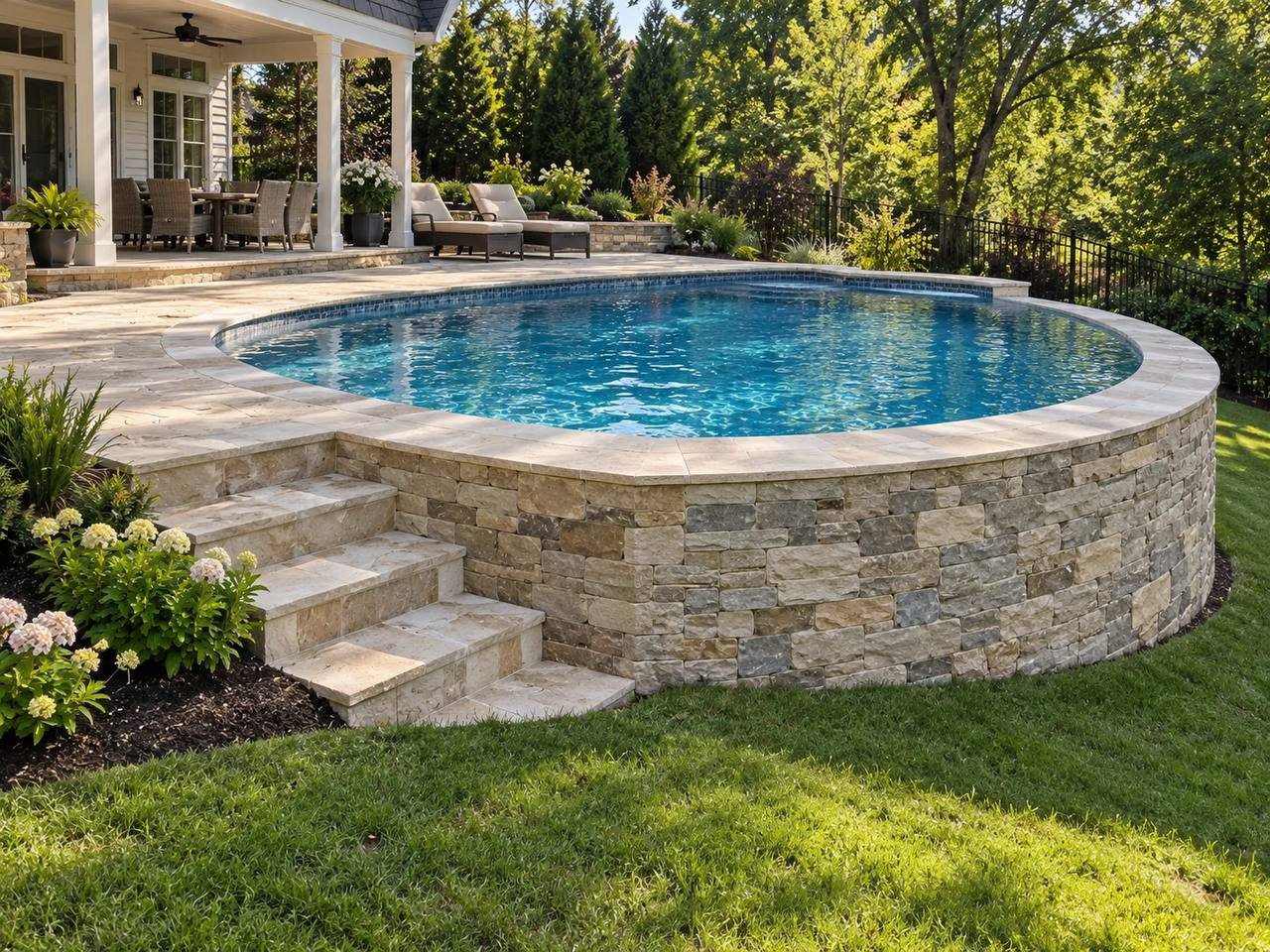
Sloped lots and aging hardscape in Polk County
Tryon occupies the foothills edge of the southern Appalachians, where Polk County properties — many of them set on terraced acres built for equestrian use — often have pools positioned against a hillside or on a carved-out shelf of land. When those pools were installed, the grade around them was assumed to stay put. On a mountain lot, it rarely does. Decades of seasonal freeze and runoff have settled coping, lifted deck sections, and worked grout out of waterline tile on pools that otherwise have sound shells.
The rural, estate character of much of the Tryon area adds another layer: pools here frequently went without regular professional service for stretches of years, which means deferred work compounds. A shell that looks sound at a casual glance has often been signaling through cracked grout lines, rising calcium deposits, and a light niche that stopped seating properly years ago. A renovation scope on a property like this is less a checklist and more a negotiation between what is worth saving and what needs to be rebuilt.
What that means at the estimate stage: a job that starts as a resurface frequently expands once a contractor walks the deck and finds cracked cantilever coping, a skimmer that no longer sits flush, or bond beam exposure caused by deck migration. Getting that picture early is the difference between a scope that holds and a bid that grows. The full renovation overview covers what a proper first site visit should document and flag.
What a renovation scope actually includes
A complete pool renovation combines trade categories that can also be addressed separately depending on condition. The interior finish (plaster, aggregate quartz, or pebble blend) is the most visible starting point when a pool has aged past its surface life. Tile at the waterline protects the shell and sets the look; coping caps the bond beam and transitions the pool to the deck surround. For an older pool on a slope lot, both deserve close inspection before any other scope is written. The tile and coping replacement guide walks through material choices and what removal and reinstallation realistically involves.
Equipment is the functional core: variable-speed pumps, updated filtration, and modern sanitizing controls can reduce monthly operating costs and simplify maintenance. The deck is where Polk County properties most often carry the largest added line item — whether the scope is resurfacing an existing concrete surround, repairing displaced pavers, or rebuilding a tiered deck with drainage correction built in from the start. When all of these scopes are combined, the order of operations matters as much as the quality of each individual trade: drainage and deck work come first, surface and equipment last, so the finished interior survives the construction around it.
What the work costs around Tryon
Renovation costs track the combination of scopes being addressed. The ranges below are honest starting points; access on a sloped lot, existing deck condition, and equipment age are the variables most likely to push a job toward the upper end. Any bid on a sloped lot that omits drainage correction should be treated as incomplete — that scope returns as a callback if it is skipped at renovation time. For a full line-item breakdown and guidance on reading competing proposals, see the pool remodel cost guide.
| Scope | Typical Range |
|---|---|
| Interior resurface only (plaster, quartz, or pebble) | $6,000 – $14,000 |
| Tile and coping replacement | $4,000 – $10,000 |
| Deck resurfacing or replacement | $5,000 – $18,000 |
| Equipment upgrade (pump, filter, automation) | $3,000 – $9,000 |
| Full renovation (finish, tile, coping, deck, equipment) | $20,000 – $60,000 |
Tryon properties on larger lots sometimes include spa attachments, water features, or tanning ledges added in an earlier renovation that now need attention alongside the main pool scope. Those elements add line items without changing the per-square-foot cost of the core work, and they are worth noting during the initial walkthrough rather than discovering mid-project.
Water, drainage, and the storm record
Polk County's position against the southern Appalachian front means storm events arrive with genuine force. Federal disaster declarations for this county — 20 since records begin (1978-2026) — are driven overwhelmingly by precipitation events, and poolside hardscape absorbs the consequence in the seasons that follow. Settled coping, shifted deck panels, and waterline tile that fails to stay bonded are often traceable to runoff moving around a pool structure for years without a managed path away from it. That history is also why renovation inquiries in Tryon often open with a structural question rather than a cosmetic one — the pool and the land around it have been in a slow conversation, and the renovation is the point where that conversation gets resolved properly.
Before committing to an interior renovation, the drainage picture needs an honest look: where does water shed from the yard and the surrounding grade? Are downspouts discharging near the equipment pad? Does the deck slope toward the bond beam or away from it? These questions cost nothing during a site visit, but ignoring them carries a real price tag in the seasons after the renovation is done.
Permits, state rules, and equipment standards
Pool renovation in North Carolina sits inside two regulatory layers. Local building departments issue permits for structural and mechanical work. The NC DHHS Environmental Health Section administers statewide pool and spa rules covering recirculation requirements, safety equipment, and barrier provisions — all of which apply to existing residential pools when renovation work modifies covered systems. Skipping the permit step is not a cost savings; it surfaces as a title problem when the property changes hands.
Equipment replacement falls inside a federal standard as well: the Department of Energy's dedicated-purpose pool pump motor rule (Federal Register, 2023) sets minimum efficiency thresholds for replacement pumps sold in the United States. Contractors working in compliance source qualifying hardware; ask for the specific model on any pump in your scope and confirm it meets the current standard. The Pool and Hot Tub Alliance maintains renovation practice standards covering surface preparation tolerances, coping installation, and equipment bonding that credible contractors follow as a minimum baseline.
Hiring well in a small market
Tryon's pool market is small enough that crews with direct Polk County slope-lot experience are not guaranteed. Three checks matter here: ask whether the contractor has managed slope drainage correction as part of a renovation scope, not just interior work on level lots; ask for the permit record on a comparable recent job in Columbus, Tryon, or the surrounding area; and ask how they sequence deck and drainage work relative to the interior surface. A new plaster or quartz finish is harder to protect when demolition and grading work happen around it after the surface is already down.
Ask for at least two local references and ask those references specifically about slope and drainage work, not just whether the pool looked attractive when finished. A contractor whose recent references are all from flat suburban lots may have excellent craft but the wrong experience profile for a Tryon estate pool. The answer to the sequencing question and the quality of local references together separate crews that manage a complete renovation from those that manage only their own trade within one.