What pool renovations actually cost in Buncombe County
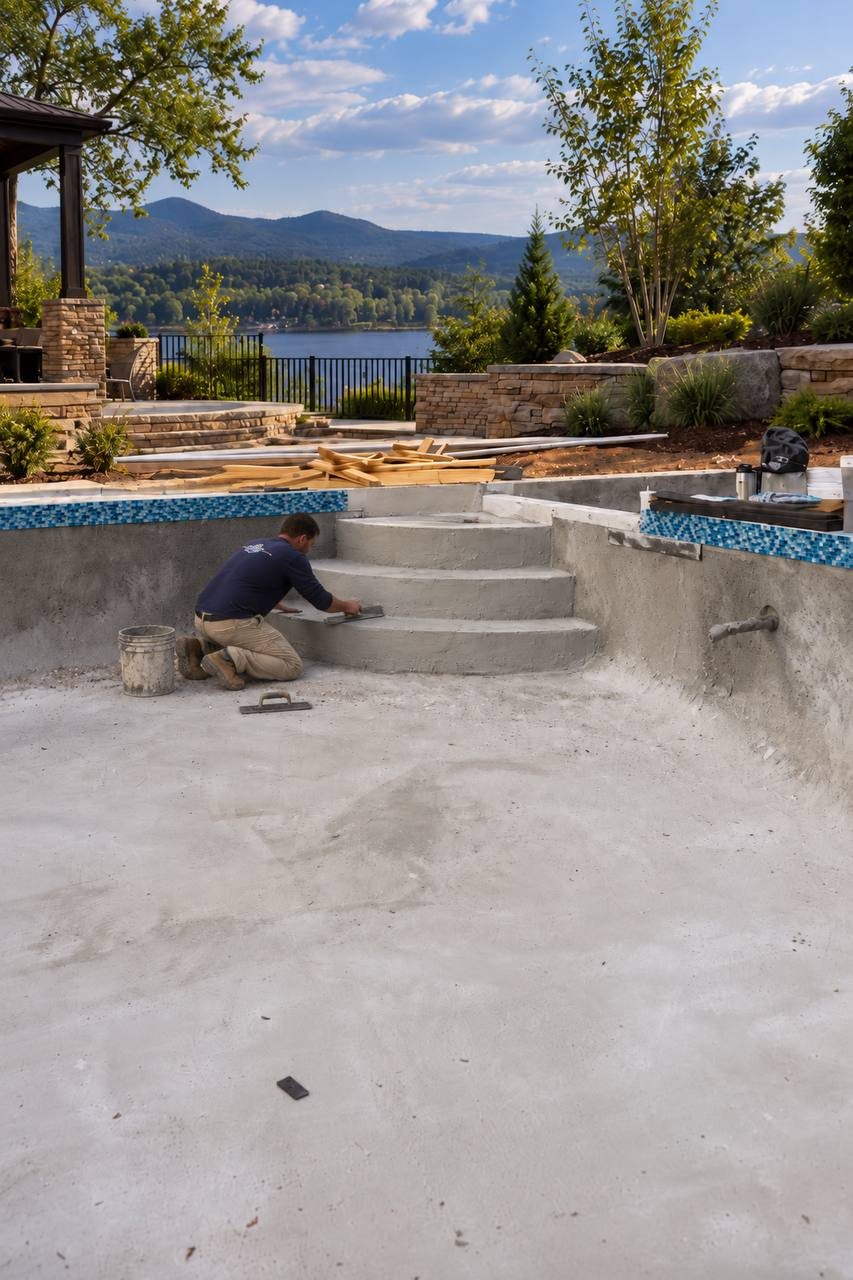
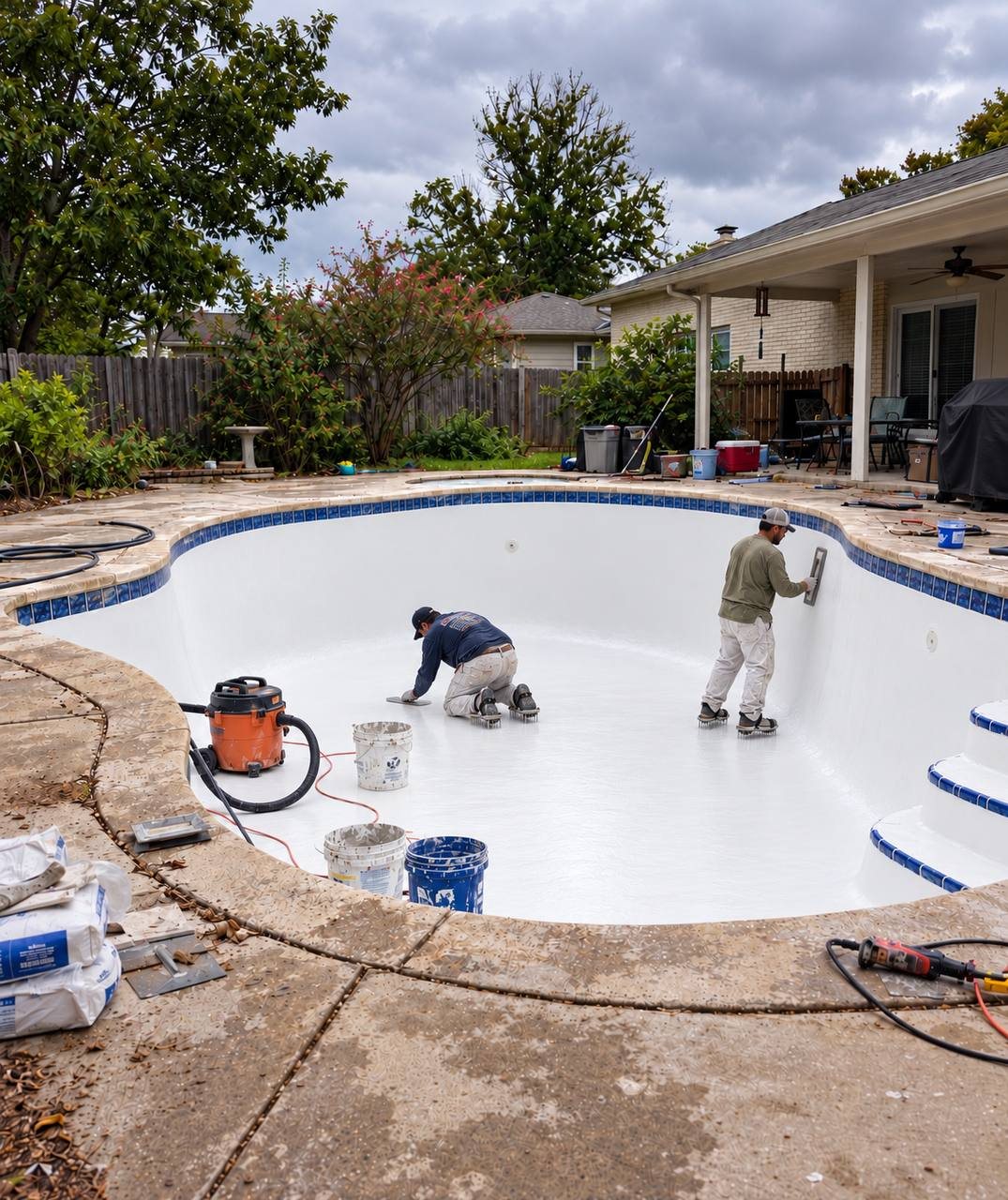
The first thing that surprises Asheville-area homeowners is how quickly a "just resurface it" conversation expands into a more complete renovation. Buncombe County sits mostly above 2,000 feet, and that elevation comes with winter freeze-thaw cycles that flatland NC pools rarely see. Plaster and older aggregate finishes absorb moisture through their pores; when that moisture freezes and expands, it blisters and spalls. A finish that might have held another five years in Wilmington or Raleigh can fail in two or three Asheville winters. By the time a Western NC homeowner calls for a quote, the resurface that seemed purely cosmetic has often become structural — and the scope grows accordingly.
| Scope of work | Typical Buncombe range | What drives it |
|---|---|---|
| Resurfacing (plaster, quartz, or pebble) | $6,000 – $14,000 | pool size, finish grade, shell condition |
| Waterline tile replacement | $1,500 – $5,000 | linear footage, tile grade, existing bond coat |
| Coping replacement | $3,000 – $8,500 | perimeter length, material (concrete vs. travertine) |
| Deck replacement or overlay | $6,000 – $18,000 | square footage, material, slope and drainage |
| Equipment package (pump, filter, heater) | $3,500 – $10,000 | heater type, variable-speed pump requirement |
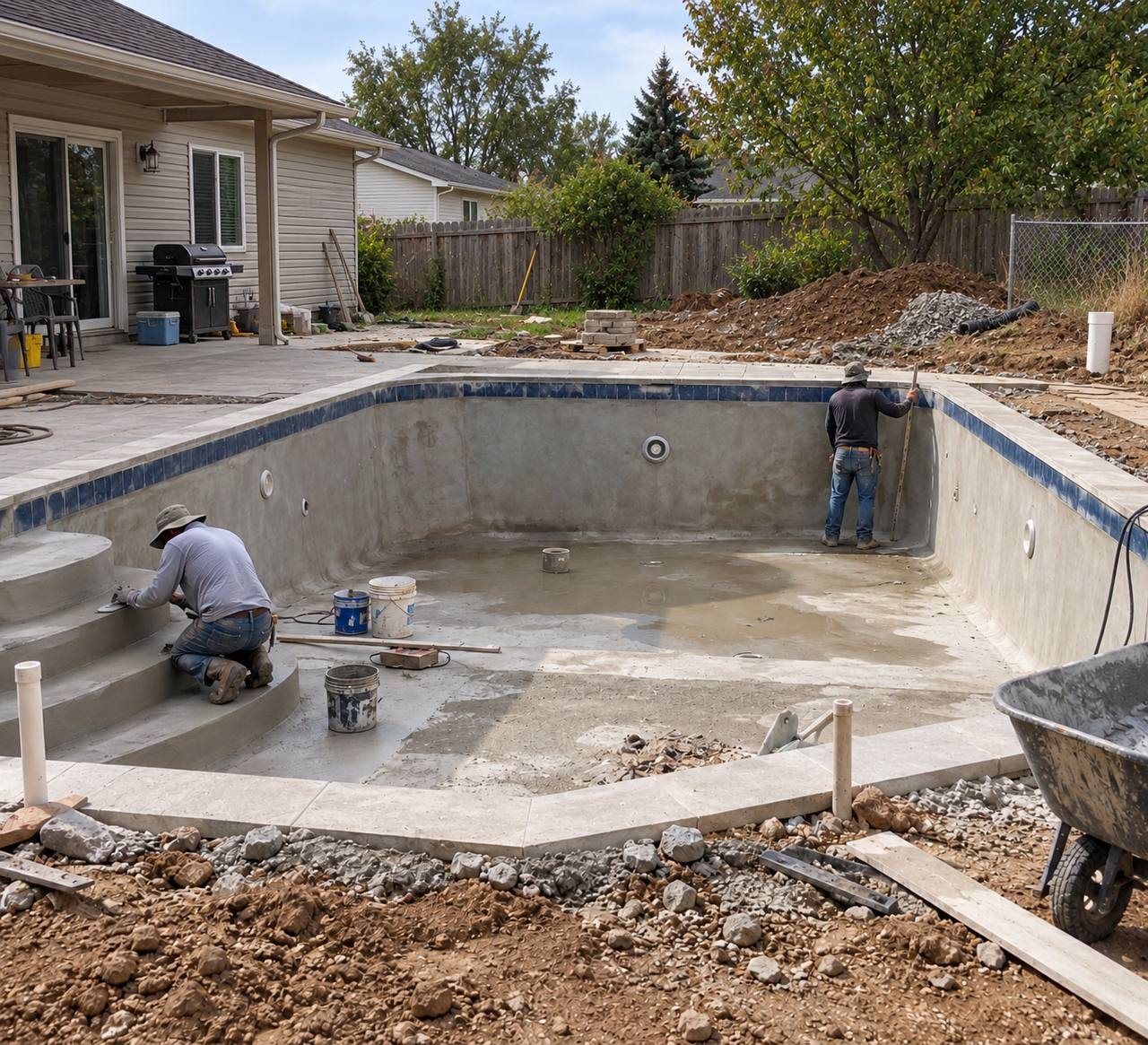
| Full renovation (all of the above) | $20,000 – $60,000 | scope combination, finish tier, site access |
These are working ranges for typical residential pools in the 400–600 square-foot footprint. A pool cut into a steep lot in the Kenilworth neighborhood prices differently than a similarly sized pool on level ground in Black Mountain — equipment and material access on a grade adds to labor cost before a single tile is touched.
Why mountain winters accelerate pool wear
Freeze-thaw damage extends well beyond the pool surface. Coping stones set in mortar absorb water and shift when ground temperatures swing; deck expansion joints that held through mild winters crack open after a run of nights in the low twenties. Buncombe County sits in the Blue Ridge's orographic belt, where passing weather systems deposit more precipitation than most of North Carolina. 19 federal disaster declarations touch this county across 1973-2026 of record, the majority tied to storm and flood events — and that water history shows up directly in renovation bids as deck drainage work that lower-elevation projects skip entirely.
The slope factor compounds it. Many Asheville-area pools are cut into hillsides, which means uphill runoff collects against the pool shell and under the deck after every significant rain. Renovation contractors who work this terrain regularly build a drainage component into their scopes; those bidding from outside the mountain region often miss it and return with change orders once the deck is lifted. The practical check: ask every bidder what happens to water when it lands on the uphill side of your pool. How they answer tells you whether they have worked these lots before.
Budgeting for a Buncombe County renovation therefore means budgeting for the site, not just the pool. A flat-lot quote that carries no drainage line item or note on access logistics was written for a different market.
Permits and codes that govern pool renovation in NC
Residential pool renovation in North Carolina sits under two separate regulatory frameworks. The NC DHHS Division of Public Health – Environmental Health Section sets state standards for pool construction, renovation, and water quality; the complete rule set is published at ehs.dph.ncdhhs.gov/rules.htm. Private residential pools carry lighter requirements than commercial or semi-public facilities, but a renovation that alters the pool shell, replaces decking, or modifies the mechanical room generally requires a local building permit before work begins.
The NC Department of Insurance Building Code Council adopts the state's residential building code, which includes provisions for pool barriers (self-closing, self-latching gates and fencing), electrical bonding, and grounding. Any renovation touching new electrical runs, equipment connections, or barrier modifications triggers those provisions. The barrier and bonding rules exist to prevent drowning and electrocution events — a contractor who recommends skipping the permit on work touching those systems is describing their standards, not offering a shortcut.
The Pool and Hot Tub Alliance (PHTA) publishes contractor certification programs and installation standards that NC renovation contractors may voluntarily carry. North Carolina does not require PHTA certification by statute, but it is a useful data point when comparing bidders with otherwise similar references.
Equipment costs and the federal pump efficiency rule
Equipment is the budget line that most surprises homeowners who planned only for surface work. If the pool runs a single-speed pump installed before the mid-2010s, federal regulation now enters the estimate: the US Department of Energy's energy conservation standards for dedicated-purpose pool pump motors set minimum efficiency requirements that effectively require variable-speed design for most replacement pumps above a threshold wattage. When a renovation calls for pump replacement — and most full renovations do — the contractor must install a compliant motor. Build that into the budget rather than treating it as a change order.
Heating carries a Western NC-specific consideration. A pool at elevation in the Asheville basin loses heat faster on cool nights than a pool at sea level in the same calendar month. A heat pump sized for coastal NC performance may underperform in Buncombe County's shoulder-season temperatures — late spring and early fall nights that stay cool long after the days turn warm. Ask contractors how they spec the heater for your altitude and target swimming window; a properly matched system recovers its upfront cost through a longer usable season. Variable-speed pumps also run quieter, which matters on the ridge lots in Weaverville and Swannanoa where equipment noise carries.
Getting to an honest renovation number
Three disciplines protect the renovation budget in this market:
- Sequence the scope correctly. Water problems before surface problems, without exception. A fresh plaster finish over a deck with drainage issues will fail faster than the last one. If runoff moves under your deck or against the pool shell, fix that first — our pool deck resurfacing guide walks through what drainage correction adds to a deck project.
- Ask for a line-item breakdown. A bid specifying finish type and square footage, coping material and linear footage, and actual equipment model numbers lets you compare bids honestly. A single total number tells you nothing about which components were trimmed to arrive at it.
- Match the schedule to the weather window. Renovation timing matters in Asheville. A pool shell left open during a hard freeze adds remediation cost to the project. Contractors experienced in the mountain market build a cold-weather window into their schedule; ask what that window is before signing.
For surface-only projects, our pool resurfacing cost guide breaks down finish options and what drives the per-square-foot number. If you are scoping a full renovation covering shell, deck, and equipment together, the pool renovation overview runs through the complete scope checklist before you start collecting bids.