Two water sources, one deck
Lake Lure pool decks face a problem most contractors price without thinking about: moisture arrives from both directions. Splash water from the pool on one side, humidity rising off the lake surface on the other, and Rutherford County's Blue Ridge foothills rainfall filling in the gaps. A concrete overlay that holds up for fifteen years on a Charlotte patio starts crazing and delaminating in eight or nine here — not because the installer did poor work, but because the spec didn't account for the environment.
The terrain adds to it. Lake Lure lots follow the lake's contours and the surrounding ridges. A 10- or 15-degree slope is unremarkable; footings over partially engineered fill are common. Drainage lines that move water away from the pool can dead-end against bedrock or pitch toward the shoreline. Any quote for pool deck resurfacing lake lure nc that skips a drainage conversation is pricing half the scope.
That's the angle that separates a job done right here from a job done — the substrate almost never arrives dry, neutral, and flat. The fix has to begin with that fact before the first bag of overlay opens.
What resurfacing costs on a lakefront lot
The ranges below reflect honest installed costs for this market. Most Lake Lure jobs cluster toward the middle-to-upper end because decks are larger on resort properties, slope corrections are common, and rental owners typically choose stamped or paver finishes for durability and rental photos. See the full line-item breakdown at our pool deck cost guide for what each variable actually moves.
| Scope | Typical range |
|---|---|
| Concrete overlay (skim coat / resurface) | $3–$10 per sq ft |
| Stamped or texture overlay | $8–$20 per sq ft |
| Travertine or natural stone pavers | $15–$27 per sq ft installed |
| Crack injection and substrate prep | $200–$600 typical add-on |
| Drainage slope correction | $400–$1,200 site-specific |
Crack and drainage line items are not the surface — they are what makes the surface last. A quote that rolls them into a vague allowance is one worth clarifying before you sign.
Surface materials that hold up in persistent humidity
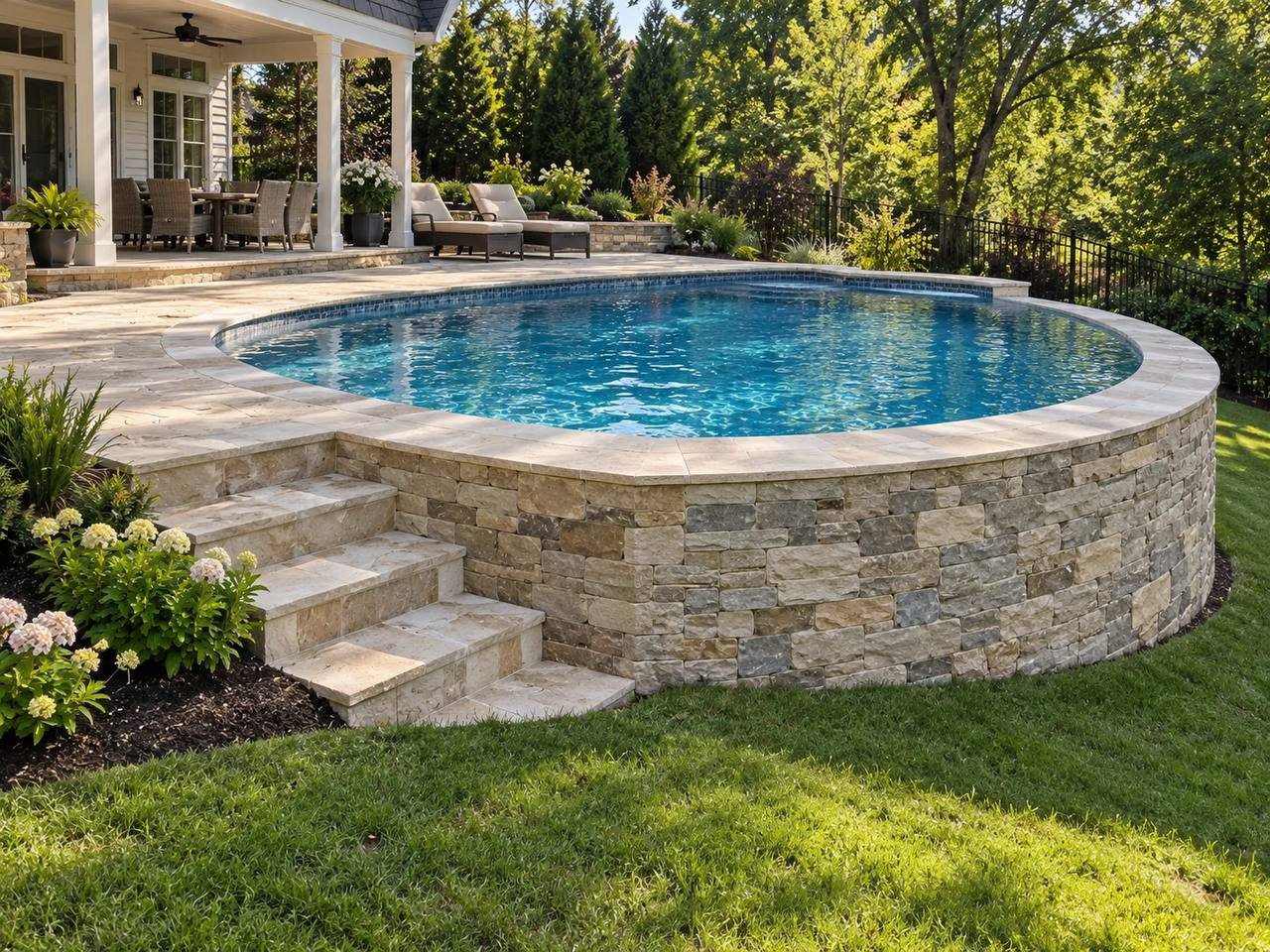
The material spec matters more when the deck never fully dries. Travertine and tumbled pavers carry natural porosity and joint gaps that let moisture escape rather than build pressure under the surface — that's why the complete surface guide puts them near the top for wet mountain climates. Dense, sealed concrete overlays trap moisture when the sealer ages and delaminate in cycles of heat and rain.
Stamped concrete is the practical middle ground: sealed and maintained well, it holds up and photographs cleanly for rental listings. The catch in a lake-humidity environment is the resealing interval. What's a four-year schedule inland tends to be a two-year one here. The Pool and Hot Tub Alliance (PHTA) publishes slip-resistance thresholds for wet pool deck surfaces; any stamped finish should be specified to meet those standards, not left to a contractor's default texture choice.
Code, rental use, and what NC pool rules require
A significant share of Lake Lure pool decks are on vacation rental properties — short-term rentals that make the deck semi-commercial in practical terms even when the parcel is zoned residential. The NC DHHS Division of Public Health Environmental Health Section governs pool and spa safety rules statewide, including slip resistance and drainage requirements for decks that serve pools open to paying guests. Meeting those standards isn't optional, and a homeowner's insurance underwriter may ask for documentation that you do.
The NC Department of Insurance Building Code Council sets the structural and surface requirements that permitted work has to satisfy. A cosmetic overlay typically doesn't require a permit; structural repair, drainage regrading, or any change to the deck's footprint usually does. Ask before work begins which category your job falls into — the contractor who doesn't raise the question is also the one who won't be pulling the permit.
Rutherford County carries 19 federal disaster declarations over 1978-2026, most of them storm and flood events. That record reflects how surface and subsurface water actually moves across these lots under pressure. A deck built to survive those conditions starts with correctly specified drainage slope — not patch work after the next event.
What a proper scope includes before work starts
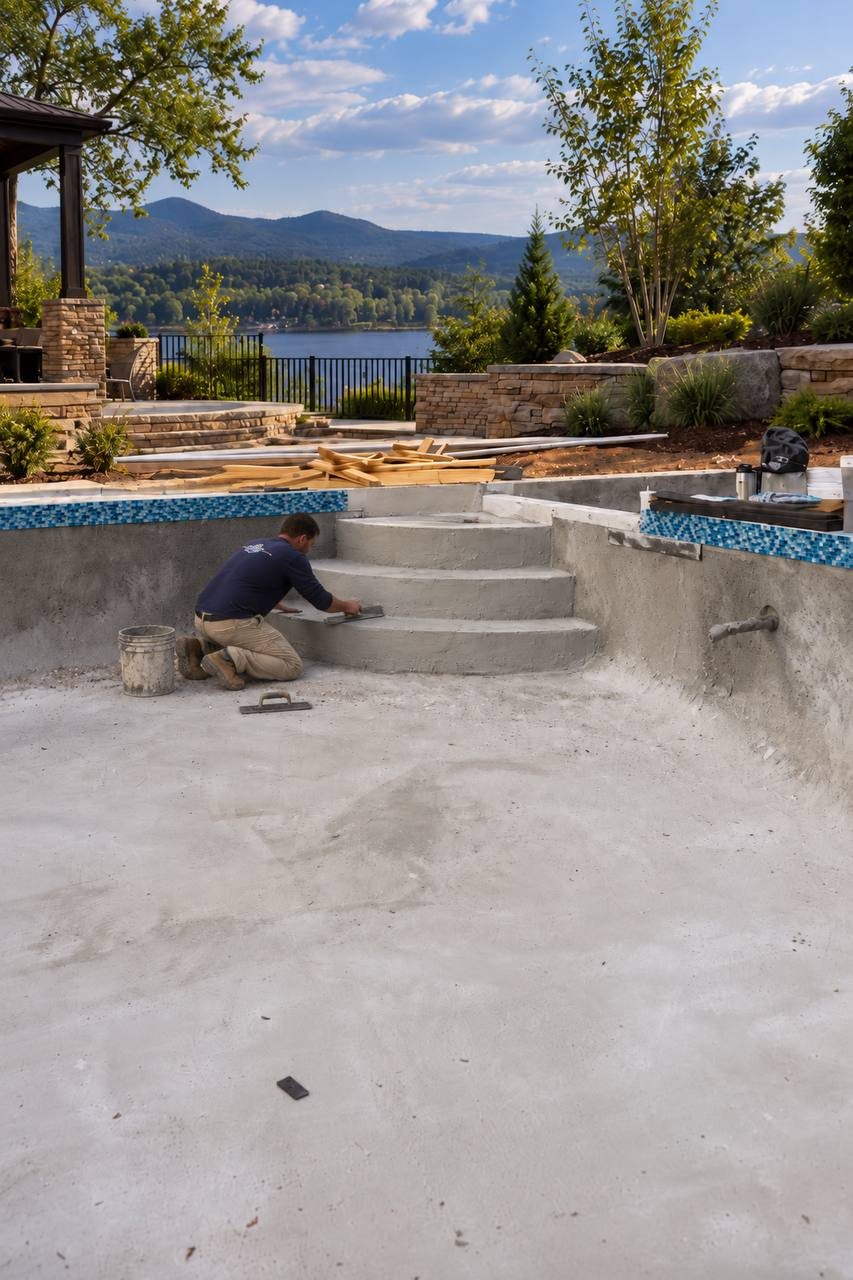
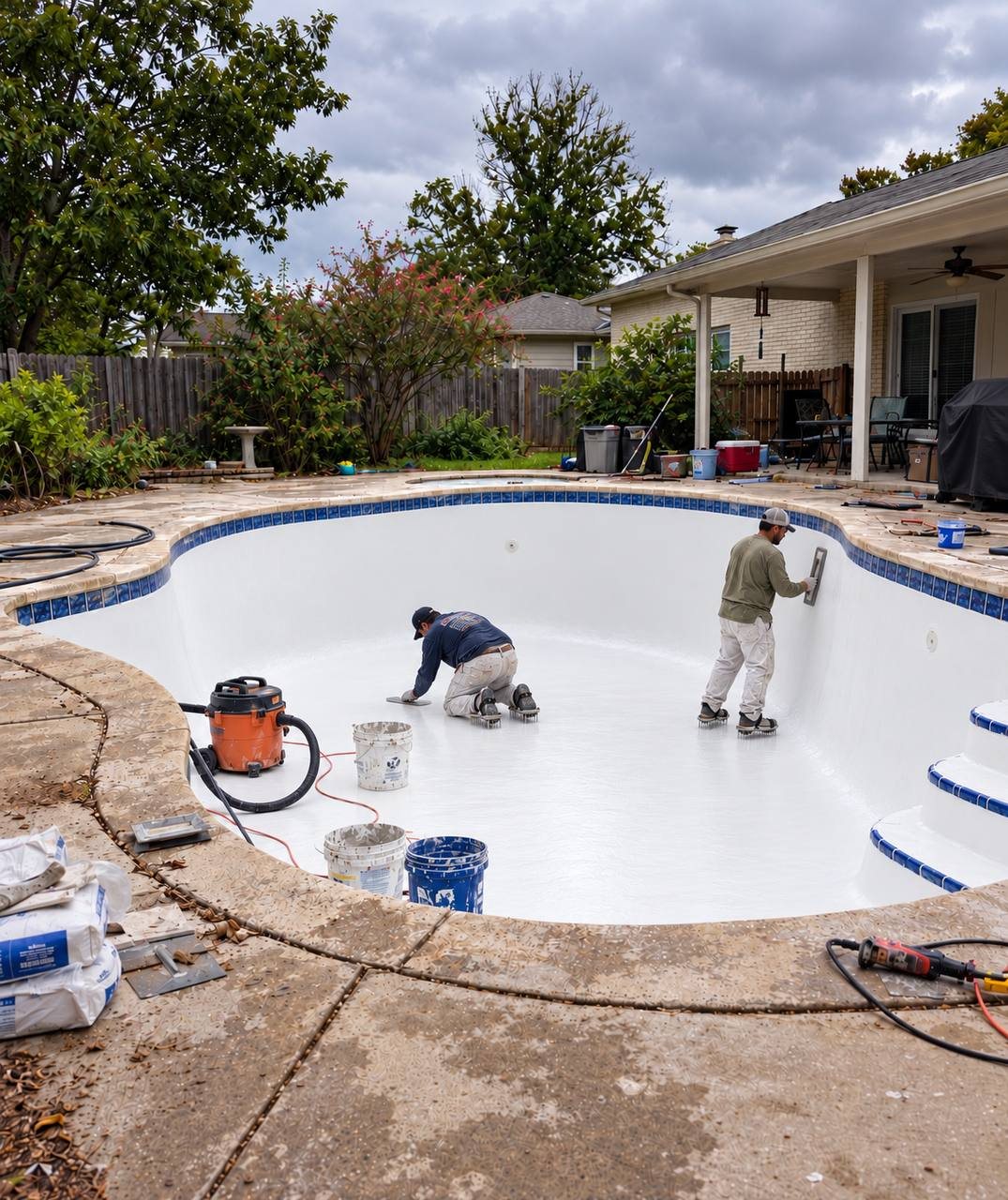
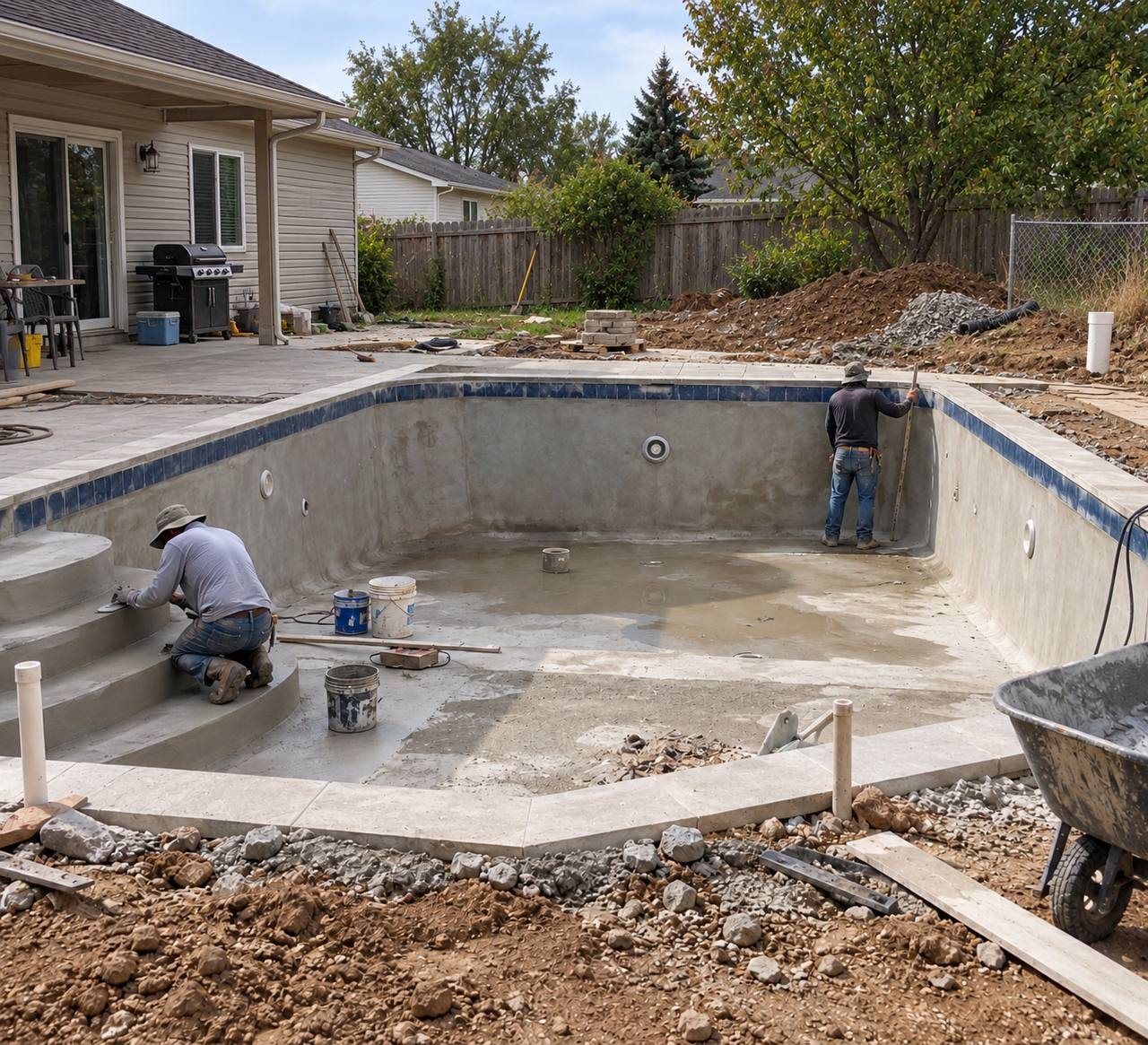
A Lake Lure resurfacing scope begins with a substrate walk: tapping the existing concrete to locate hollow spots indicating delamination, measuring current drainage slope and direction, and documenting active cracks versus dormant ones. Active cracks — the kind that change after rainfall or between seasons — require injection or cut-and-fill before any surface material goes down. Skipping that step just moves the failure date forward.
On slope lots, drainage corrections go in before any surface layer. On vacation-rental properties, PHTA slip-resistance spec gets confirmed before material selection is finalized. When the project is part of a broader update — adding coping, changing deck dimensions, or addressing the pool surround — the pool renovation overview covers how to sequence those decisions without creating rework.
A quote that doesn't include a substrate report is a quote for a surface, not a scope. Ask to see the inspection findings before the number lands.