What Asheville winters do to pool shells
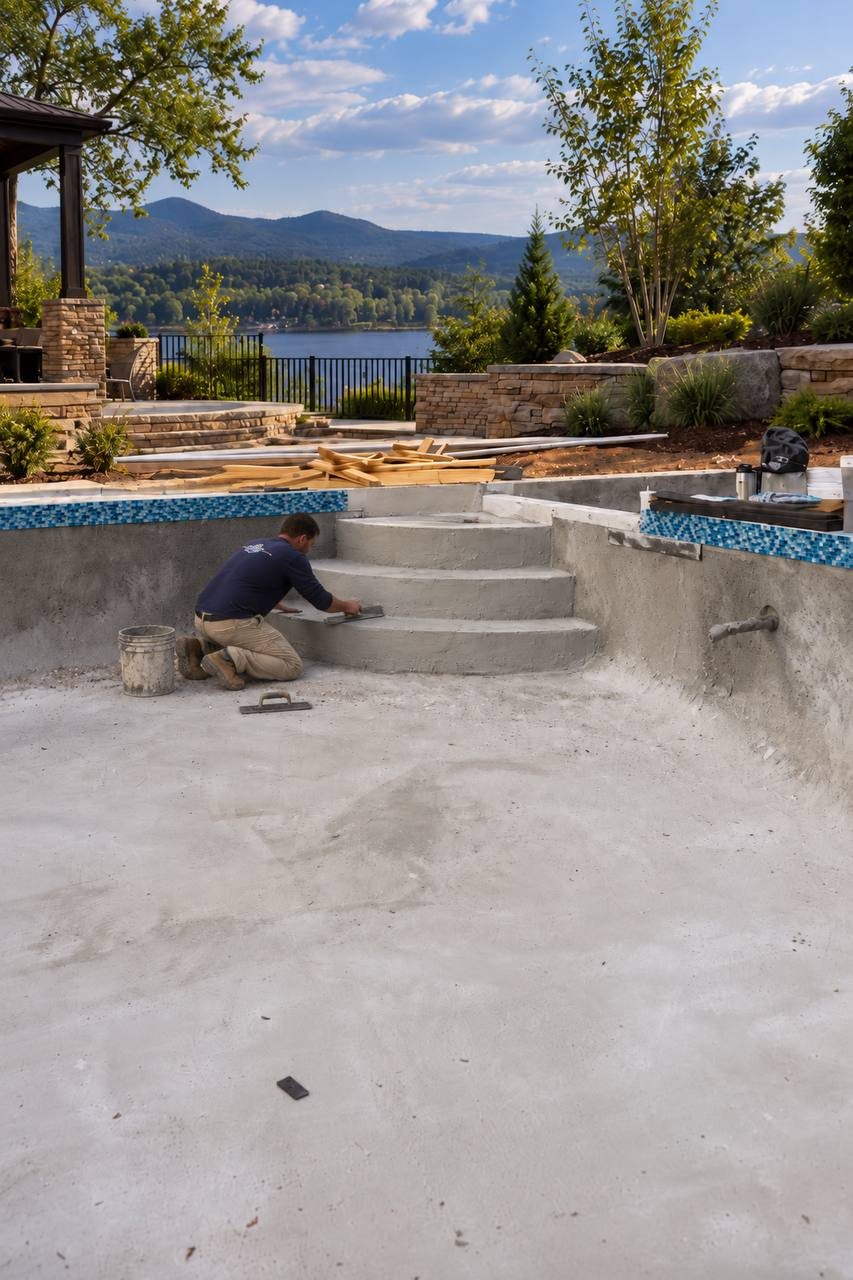
Pools in Buncombe County work harder in winter than almost any other pool in North Carolina. The county seat of Asheville sits above 2,100 feet in elevation — high enough that freeze-thaw cycles stress pool plaster, fittings, and underground plumbing every season in ways that Charlotte or Wilmington pool guides never account for. A pool on a cut-and-fill lot in Kenilworth or terraced into the ridge above North Asheville goes through repeated expansion and contraction that works fittings loose and opens hairline plaster cracks over a run of hard winters.
That is the local angle that shapes what professional leak detection finds here — not just a dripping fitting, but often the cumulative record of mountain stress on a shell. A pool that loses water faster in cold months than in summer is showing the freeze-thaw signature, not an evaporation pattern. Technicians who know this terrain look for cracks that seal under warm water and reopen overnight when the temperature drops; those who don't sometimes clear a pool as tight because they tested under the wrong conditions.
That context does not inflate the detection price itself — professional visits here run $100 to $500 just as they do statewide. But it shapes what you need from the visit: a clear method log, an honest accounting of what was and was not tested, and a technician who understands mountain-lot soil behavior alongside standard plumbing diagnostics. Catching a freeze crack at the hairline stage costs a fraction of addressing it after two more cycling winters have widened it to the rebar layer.
What Buncombe County pool owners actually pay
Detection pricing in this market tracks the Southeast range closely. The spread comes almost entirely from method: a basic pressure test that confirms a leak exists costs less than a full inspection combining electronic listening and dye confirmation that pinpoints the exact fitting or crack section. On the larger custom gunite pools common in the Asheville-area market, a thorough inspection almost always warrants multiple methods — and the added step is usually worth it before committing to a repair quote.
| Scope of work | Typical range | What it covers |
|---|---|---|
| Pressure test only | $100 – $200 | Confirms a plumbing leak is present; does not locate it |
| Pressure test + electronic detection | $150 – $350 | Locates leak to a pipe run, fitting zone, or shell area |
| Full inspection (pressure + electronic + dye) | $250 – $500 | Pinpoints the exact fitting, crack, or line breach |
| Minor crack or fitting patch (same visit) | $100 – $300 | Small plaster or fitting repair when leak is minor |
| Structural crack, spall, or rebar repair | $700 – $5,000+ | Separate estimate; depends on depth, access, and extent |
Those ranges cover detection plus any minor same-visit repair. When detection surfaces a structural issue — a crack tracing to a shifted gunite section, exposed rebar from repeated freeze damage, or a deteriorated bond beam — the repair becomes a separate project. Our pool crack and structural repair guide covers what those scopes add to the total cost.
NC rules that apply when a leak leads to repairs
A detection visit is a service call, not a permitted activity. But the repairs detection sometimes surfaces can cross into permitted structural work, and knowing where that line sits matters before you sign a repair contract.
North Carolina pools open to public access — community pools, HOA facilities, hotel pools — fall under state health department oversight through the NC DHHS Division of Public Health Environmental Health Section, which publishes pool and spa sanitation rules and tracks facility compliance. For private residential pools, the direct jurisdiction of the environmental health section is narrower, but the state building code still governs structural modifications. The NC Department of Insurance Building Code Council administers the residential building code statewide; Buncombe County applies that code locally through its inspections process.
For most private pool repairs, the practical permit question is whether the work is structural or cosmetic. A fitting swap or surface crack injection that restores a finish without modifying the shell structure typically does not require a permit. Excavation around a pool wall, modification of the main drain to meet federal anti-entrapment requirements, or a re-plaster combined with a shell repair more often does. When scope is unclear, a call to the county inspections office before work begins is faster than resolving a stop-work order after it starts — and that call costs nothing.
Industry standards published by the Pool and Hot Tub Alliance (PHTA) define best-practice methodology for certified detection and repair contractors. Asking whether a technician holds PHTA credentials is a concrete vetting step to run alongside price comparison.
Three habits that protect your detection budget
How you book and structure a detection visit in the Asheville market directly shapes what you pay and how useful the result is.
Confirm the method before you confirm the price. A quote of $150 and a quote of $400 may both be reasonable — the question is what each one actually checks. Pressure testing alone tells you a leak exists somewhere in the plumbing; electronic listening and dye testing tell you exactly where. If the first quote uses only pressure testing and the second includes a full electronic survey, they are not comparable on price alone. Ask what each step covers before deciding which visit is worth booking.
Separate detection cost from repair cost. Many contractors bundle minor detection and repair together, which is efficient for straightforward fitting leaks. The risk is that a combined quote makes it hard to know what the detection itself cost — which matters if you want a second opinion on the repair. Ask for line items: what does the visit cost, and what does any same-visit repair cost separately.
Ask about a return-visit policy up front. On mountain lots, some freeze-related cracks seal under warmer pool water and reopen overnight or after a temperature drop. If a technician finds nothing on the first visit but water-loss measurements still point to a leak, knowing the return-visit policy before you pay prevents surprises. That detail is easy to get before booking and hard to negotiate after.
When a detection visit opens a bigger conversation
Buncombe County's documented storm and flood history matters here: 19 federal disaster declarations spanning 1973-2026 include storm events that pushed water against pool shells, shifted drainage paths, and deposited soil against equipment pads. Pools sited at the low point of a lot, or downhill from a slope that funnels runoff toward the shell, carry a higher background rate of leak activity than pools on flat or well-drained ground. If your pool fits that geography, treat the detection visit as a site read too — ask the technician whether surrounding grade is directing water toward the pool structure, not only to confirm the active leak location.
The gap between a $200 detection visit and a $3,000 structural repair is not a bait-and-switch. It is what early detection looks like in practice. A freeze-thaw crack caught at hairline stage patches cleanly and inexpensively. The same crack, ignored through two more cycling winters, can reach bond beam depth or expose rebar where the repair becomes a significant excavation project. The $700–$5,000 structural range is real and wide; the low end is only available to pools whose owners caught the problem early.
If you already know where the leak is and want to move directly into repair planning, our pool crack and structural repair guide covers what to expect at each scope level. If you are still in the diagnostic stage, our pool losing water guide walks through how to confirm the loss rate and frame the problem before calling a detection crew.