What elevation does to pool surfaces in Buncombe County
Asheville sits at roughly 2,000 feet in the Blue Ridge, and that elevation changes the math on pool surfaces in ways that a flat-state estimate never accounts for. The culprit is not dramatic snowfall but the dozen-plus overnight freeze-thaw cycles that arrive between October and March. Water works into surface micro-pores, expands as it freezes, then contracts as it thaws — and after enough cycles the bond between plaster and shell fails. A white plaster finish that might deliver 12–15 years near the coast can show delamination and stress cracking in 8–10 years here without a material matched to the conditions.
Buncombe County also receives substantially more annual rainfall than piedmont or coastal parts of the state, and pools with intermittent use through wet shoulder seasons see accelerated chemistry swings that etch plaster from below. Many mountain properties have mature canopy shade that holds moisture on pool surfaces longer than open-sky installations. The honest starting point is not picking a finish color — it is understanding that the right finish for this climate is one evaluated against these conditions, not just advertised as durable. How long pool plaster actually lasts gives realistic life expectations by finish type in mountain climates.
What a proper resurfacing job involves
A residential replaster runs two to four days when conditions cooperate. Each phase matters:
- Drain and dry. The pool is fully drained and the shell allowed to dry thoroughly. In Buncombe County's humid climate — especially through spring and early summer — rushing this step compromises the bond coat from the first day.
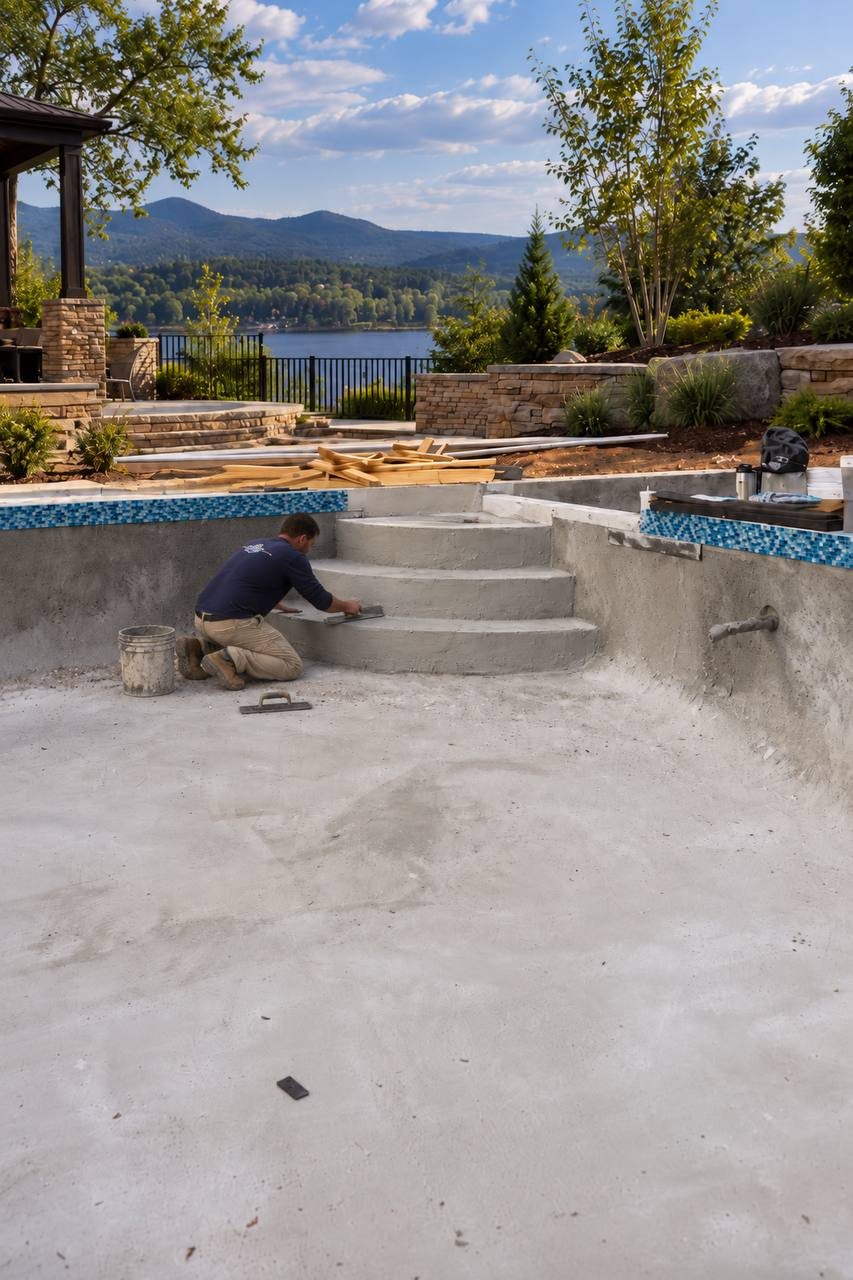
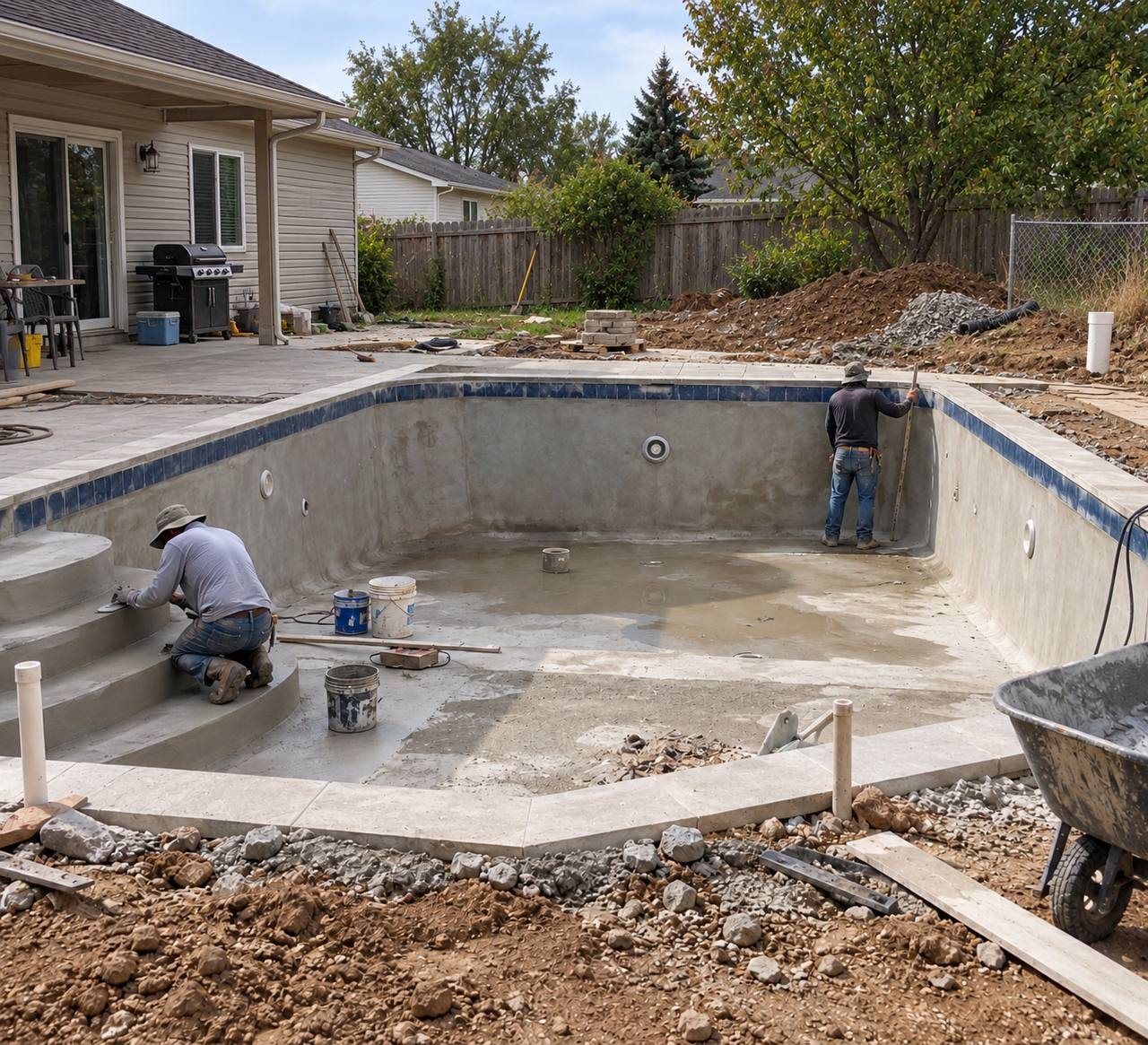
- Chip and prep. Old plaster is removed down to the gunite or shotcrete shell. This is the phase where the real structural condition of the pool becomes visible, which is why no responsible bid is final until the shell is exposed.
- Shell inspection and repair. Cracks, hollow areas, and delamination in the shell are addressed before any new finish goes down. Coating over a damaged shell is how a resurfacing job fails at year three instead of year twelve.
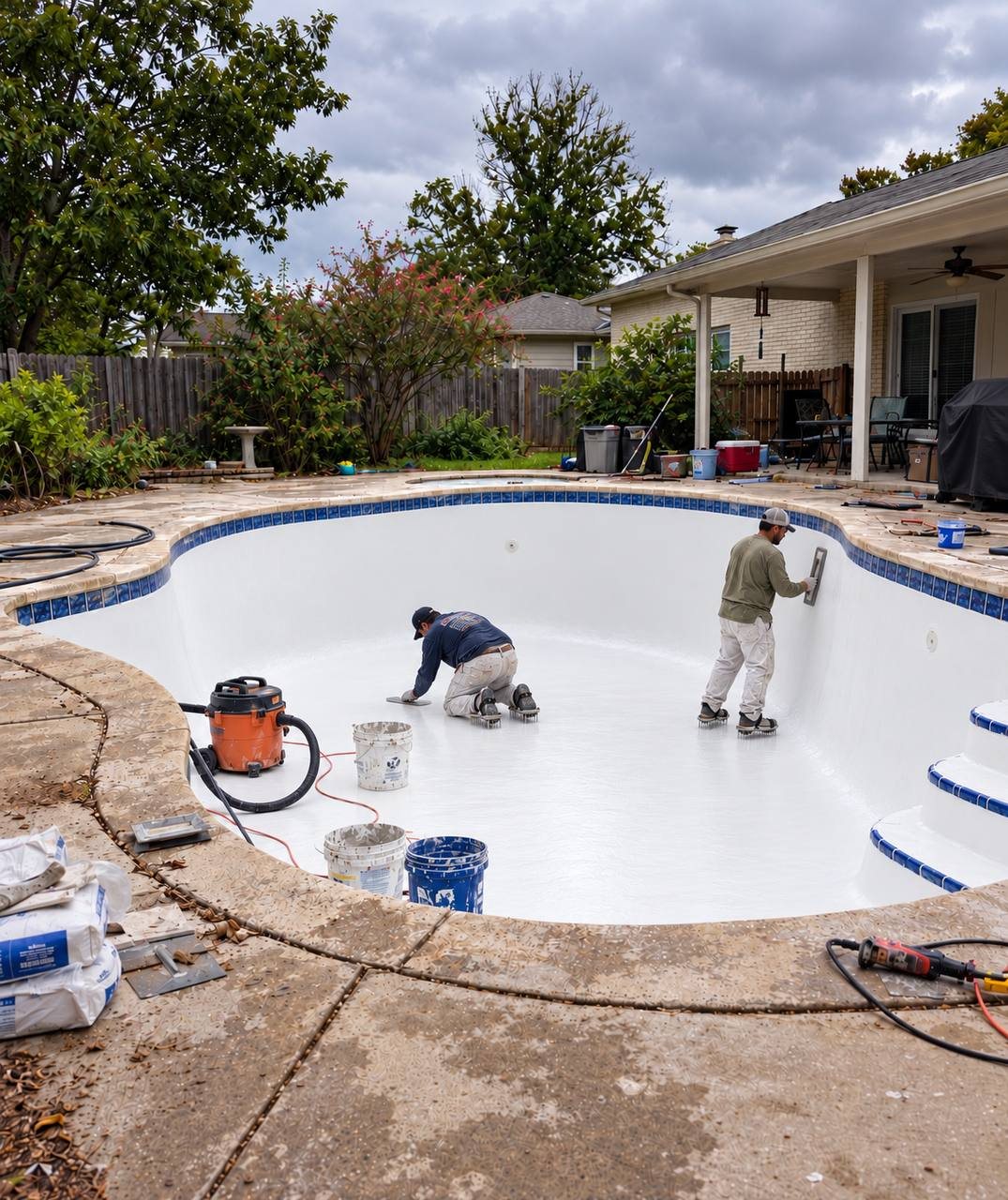
- Finish application. Plaster, quartz aggregate, or pebble finish is applied to specification. Mix consistency and application thickness matter — workmanship standards from the Pool and Hot Tub Alliance (PHTA) define what correct technique looks like and are the benchmark a serious crew works to.
- Fill and startup chemistry. The startup chemistry during the first weeks of fill is when the surface cures. Inattentive chemistry management or a premature acid wash during this window can subtract years from the finish's service life. A startup schedule provided in writing before the job begins is a sign of a crew that knows this.
Finish types and what they mean for this climate
White plaster is the entry-level choice: lower upfront cost, but its soft calcium-based surface handles freeze-thaw cycling and water chemistry swings worse than any alternative. For a pool in Asheville's temperature band, it rarely proves the most cost-effective option over a ten-year horizon.
Quartz aggregate finishes run $5 to $8 per sq ft installed and are the standard choice for most Buncombe County residential pools. The crushed quartz particles harden the surface against both chemical etching and thermal stress, hold color more reliably under variable chemistry conditions, and typically add three to five years of service life compared to plain plaster in mountain conditions.
Pebble and exposed aggregate finishes run $9 to $12 per sq ft installed and represent the longest-lasting option available. The pebble matrix resists thermal cycling better than either plaster or quartz, the textured surface drains well, and the aesthetic range is substantially wider. See the pebble and quartz finishes page for a full breakdown of aggregate options and what each looks like after several mountain seasons.
Commercial and public pools in North Carolina operate under a separate regulatory tier from residential work. The NC DHHS Environmental Health section sets surface and sanitation standards for public pools that apply regardless of what a residential contractor quotes, and commercial resurfacing bids must be scoped accordingly.
What it costs and what moves the number
A standard 1,000 sq ft gunite pool runs $6,000 to $15,000 fully resurfaced in western North Carolina. Finish type is the biggest variable within that range; structural shell condition is the biggest wildcard. Here is how scope maps to cost:
| Scope | Price range |
|---|---|
| White plaster, typical residential pool | $6,000–$9,500 |
| Quartz aggregate finish | $5–$8 per sq ft installed |
| Pebble or exposed aggregate finish | $9–$12 per sq ft installed |
| Structural shell repair (added to finish cost) | +$1,500–$4,000 |
| Waterline tile band replacement | +$800–$2,500 |
Slope lots are the local terrain factor that pushes projects toward the top of any range. A meaningful share of Asheville residential pools sit on grades that complicate equipment staging and extend job duration — a reality of Buncombe County's topography that flat-rate online estimates do not reflect. Smaller pool footprints are also more common on constrained mountain lots than in flat suburban developments, which changes the per-sq-ft economy of the job.
Weather timing is a genuine cost driver here. Buncombe County carries 19 federal disaster declarations over 1973-2026 — a measure of how seriously this terrain's rainfall history weighs on outdoor work schedules. Contractors who build schedule buffer for mountain weather are pricing honestly, not padding. Full cost variable details are on the pool resurfacing cost page.
Pool contractors in NC working above certain dollar thresholds must hold a valid license. The NC Department of Insurance maintains the contractor licensing registry and is the right place to verify credentials before you sign a contract.
Three questions that keep a resurfacing bid honest
"What prep standard are you working to, and do you follow PHTA guidelines?" The Pool and Hot Tub Alliance publishes workmanship standards for surface preparation that set the floor for what "correctly prepped" means in practice. A crew that cannot name what standard they work to is giving you useful information about what they will skip.
"Will you inspect the shell before finalizing the price?" Any bid written before old plaster is chipped and the shell exposed is a rough estimate. Structural repairs are more common on older Asheville-area pools that have absorbed years of freeze-thaw stress, and they change the job scope materially. A contractor who prices the full job before looking either plans to upcharge mid-project or plans to ignore what they find.
"What is your startup chemistry protocol, and do I get it in writing?" The first 28 days after fill are when the finish cures, and the water chemistry during that window is the most underestimated factor in how long a surface lasts. Ask for a written startup schedule. Responsible contractors produce one without being asked.