Elevation is the job variable most quotes skip
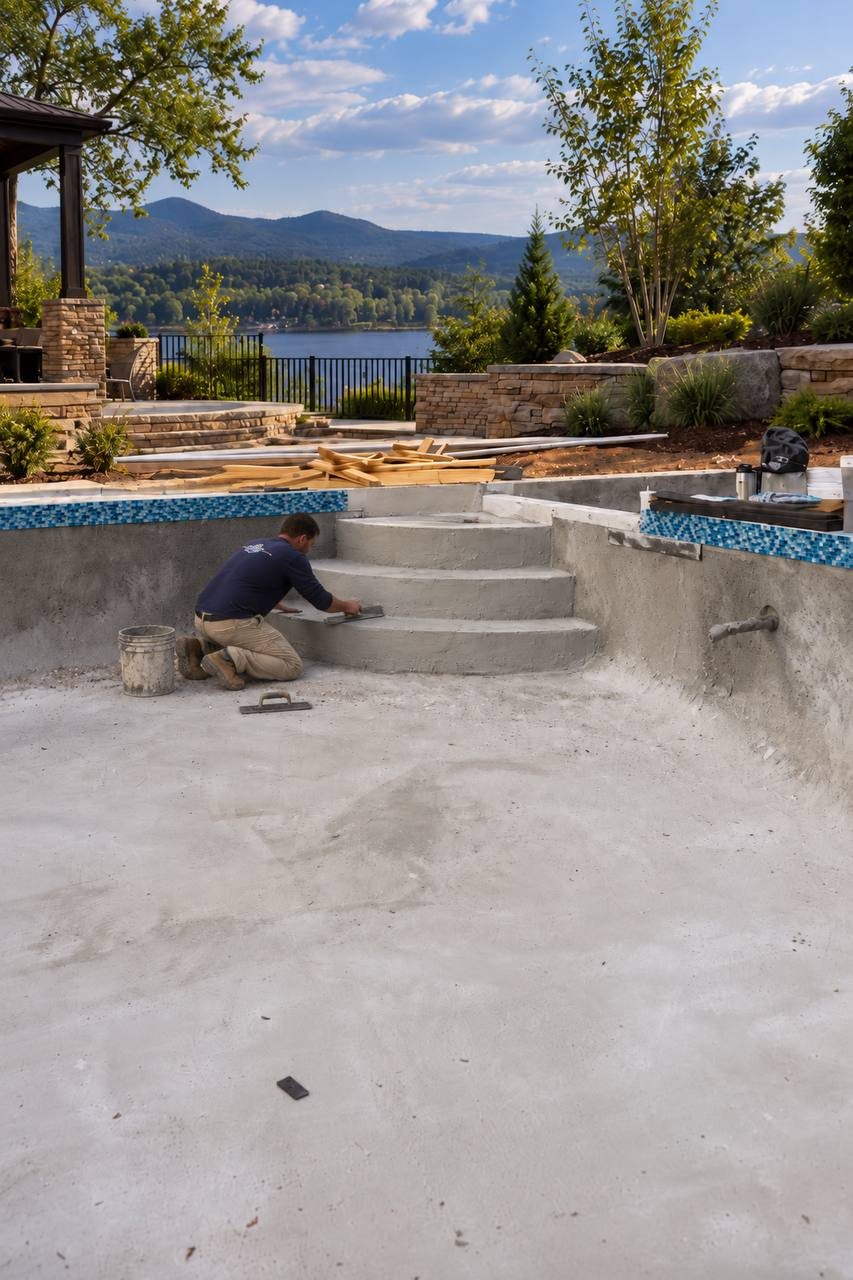
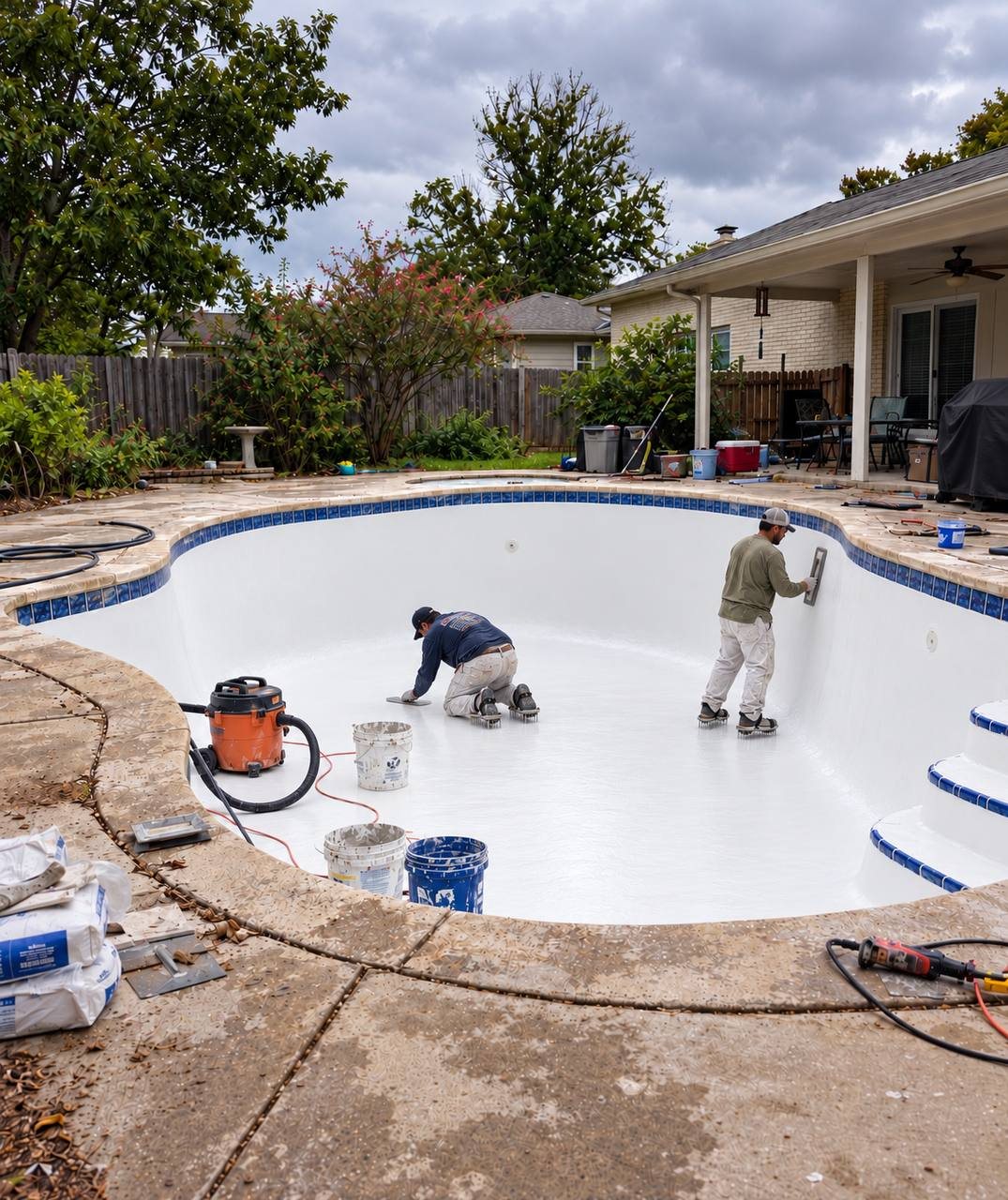
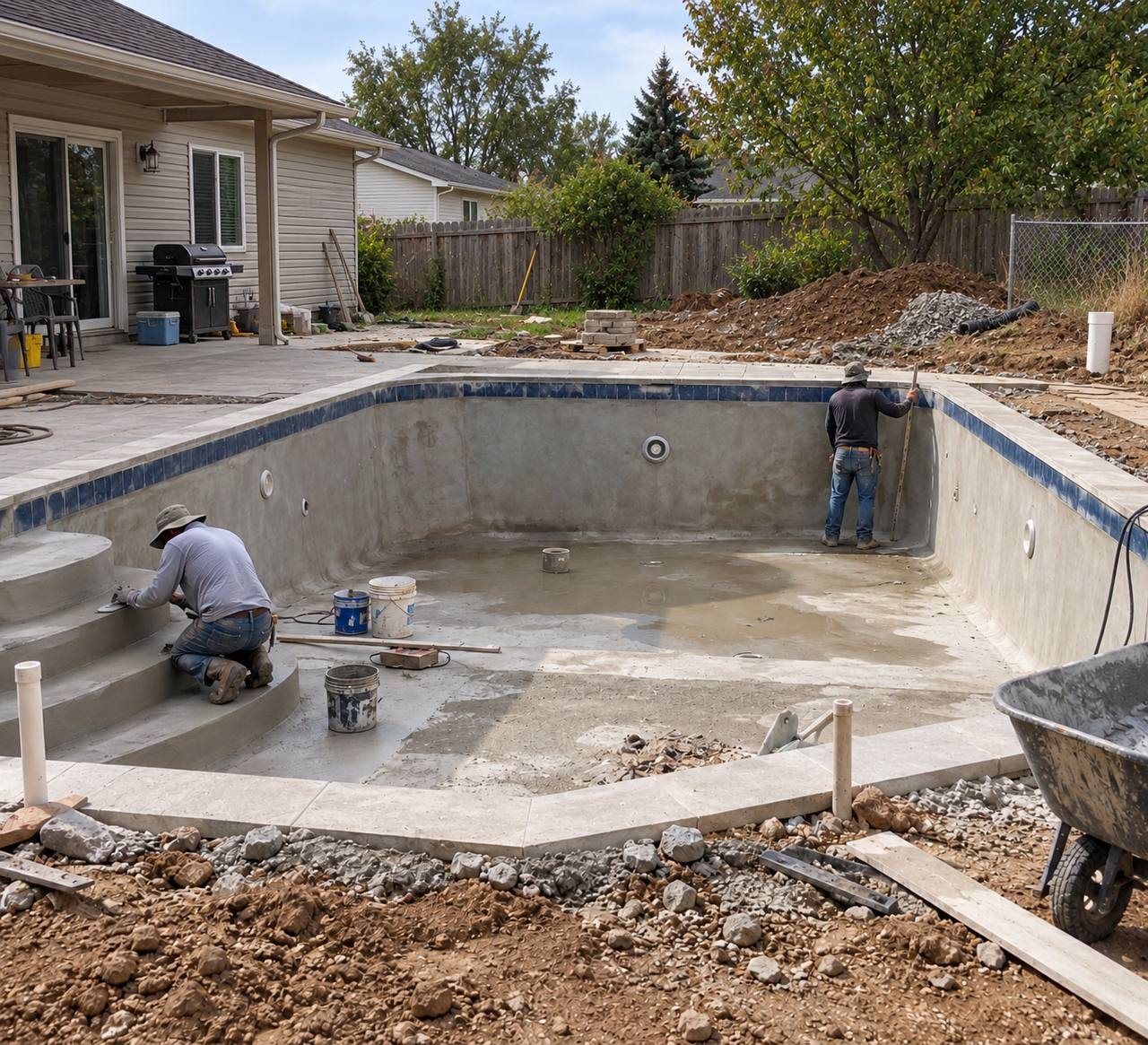
Buncombe County pools aren't like most of North Carolina's. Asheville sits at roughly 2,100 feet, and neighborhoods like Kenilworth, Lakeview Park, and the ridges above Town Mountain Road climb higher still. At that elevation, pool decks face genuine freeze-thaw cycling that the coast and the Piedmont largely skip: water infiltrates surface cracks, freezes, and expands hard enough to spall a concrete deck that a Wilmington yard might carry another decade. The job that changes here isn't just the surface — it's the drainage assessment underneath it. A deck that ponds water fails again regardless of what resurfacing material goes over it.
Buncombe County's 19 federal disaster declarations across 1973-2026 are overwhelmingly storm and flood family. Each one sent water at pool decks on cut-and-fill lots designed for a drier assumption. A proper scope of work here starts with where that water goes — grading, channels, and whether the uphill grade still drains away from the deck edge — before any surface product is selected.
How Asheville pool decks fail
The failure patterns in this climate are consistent enough that a quick walk-around tells most of the story. Spalling — where the surface layer pops away in flakes or chunks — is the freeze-thaw signature, and it typically starts at the deck edge near the coping where water collects and temperature shifts are sharpest. Hairline crack networks that looked cosmetic two summers ago open to quarter-inch gaps after a cold winter and start admitting water beneath the slab.
On shaded north-facing decks — common on slope-lot pools that face ridgelines — algae and moss accelerate surface breakdown beyond what sun exposure alone would do. The deck-to-coping joint is another tell: when the gap at that seam has grown or coping stones rock slightly underfoot, the deck has moved relative to the pool shell. That movement has to be assessed before resurfacing, because a new layer placed over an unstable substrate cracks along the same lines. When the movement is structural rather than cosmetic, the full renovation guide covers what the next step looks like.
Scope and cost for Buncombe County jobs
The full cost breakdown covers line-item detail, but the working ranges for pool deck resurfacing in this region follow the table below. Asheville-specific factors — slope-lot drainage prep, ridge-property access, and the material selection pressure from freeze-thaw exposure — push most jobs toward the upper half of each band.
| Scope | Material | Typical Range (per sq ft) | Note |
|---|---|---|---|
| Surface overlay only | Concrete overlay / microtop | $3–$10 | Requires sound, stable substrate |
| Decorative finish | Stamped concrete overlay | $8–$20 | Annual sealing critical in freeze-thaw climate |
| Paver or natural stone install | Travertine, bluestone, concrete pavers | $15–$27 | Best freeze-thaw performance; proper sand-set base required |
| Drainage correction added | Varies by surface choice | +$500–$1,800 flat | Common on slope lots; address before surface work |
| Full slab replacement | Poured concrete base + finish | Scope-dependent | Needed when existing slab is heaved or structurally compromised |
These figures reflect installed cost. Jobs on ridge properties or those requiring equipment access down a retaining-wall grade carry line items that flatland quotes never show — treat any bid without them as incomplete rather than cheap.
Which surface holds longest in mountain conditions
The freeze-thaw pressure on Asheville decks makes material selection more consequential than at lower elevations. A concrete overlay applied to a structurally sound deck is the most cost-effective starting point — the full resurfacing options guide walks through the full comparison — but it demands proper sealing and annual inspection of the seal coat. At Asheville's temperatures, a seal that lapses turns an overlay into a spall risk within two or three winters.
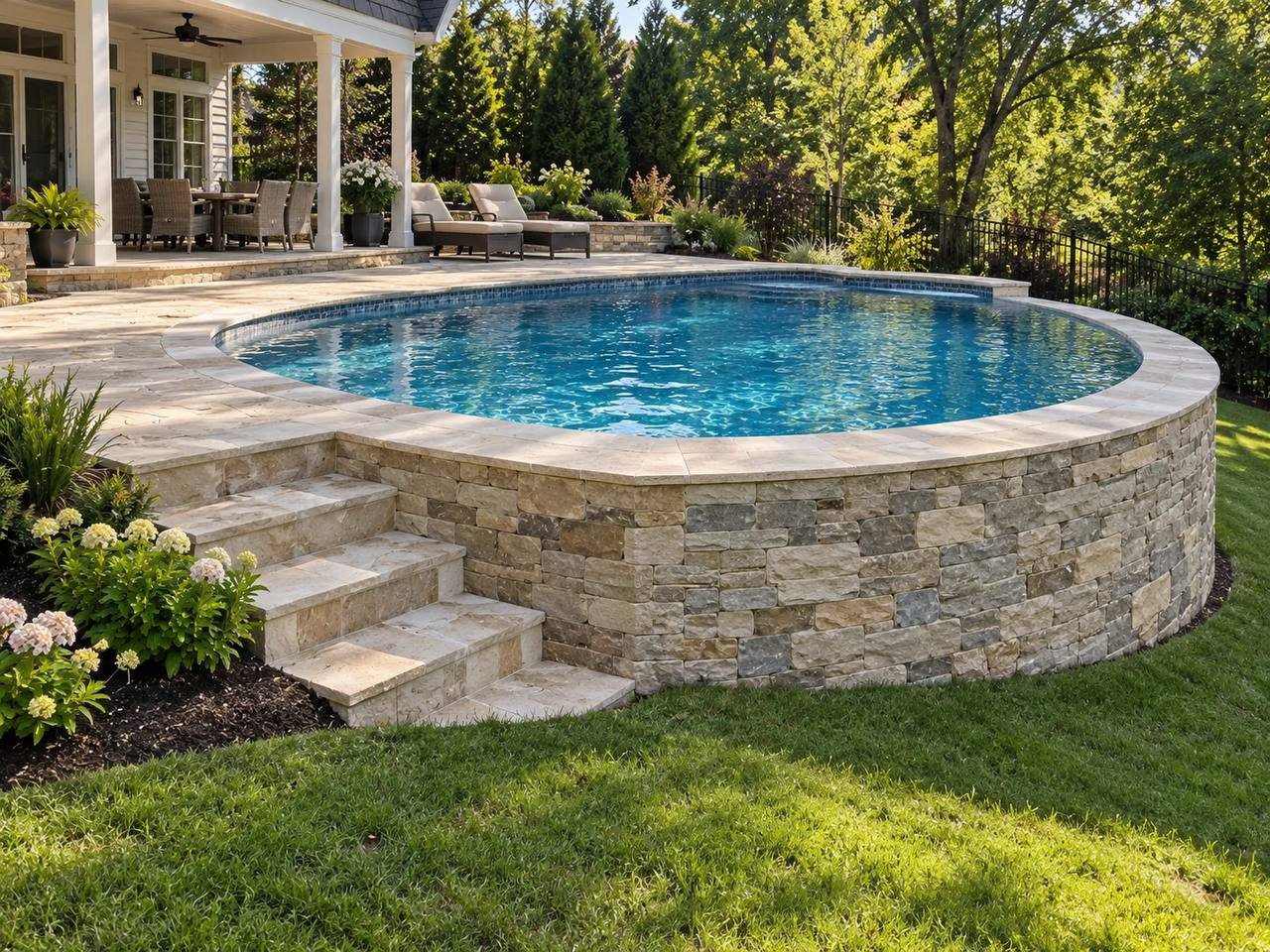
Stamped concrete overlays offer more design flexibility and hold well with the right sealer, but the same discipline applies. Travertine and paver surfaces handle freeze-thaw best of the three because they allow drainage between units rather than sitting as a monolithic surface that holds standing water. The trade-off is cost and the quality of the setting bed: a paver deck set without proper compaction or drainage material underneath shifts and rocks as the grade moves. On Asheville's cut-and-fill lots, that is the most common callback on paver jobs done without site-specific prep. Match the material to the site conditions, not just the budget.
Safety standards and the permit question
North Carolina's pool and spa rules, administered by the NC DHHS Division of Public Health Environmental Health Section, govern commercial pools directly. For private residential decks, the question is usually whether resurfacing triggers a building permit. In Buncombe County, cosmetic resurfacing over an existing stable slab typically does not require one; work that alters grade, adds drainage infrastructure, or modifies the pool coping falls under different review. Confirm with the county when scope is borderline — the NC Building Code Council sets the residential construction floor, and work crossing structural thresholds requires licensed contractor involvement under state rules.
Slip resistance is the primary safety metric the Pool and Hot Tub Alliance tracks for deck surfaces. Asheville's shaded, frequently damp conditions make this more than a code consideration: a high-gloss stamped overlay on a north-facing deck that stays wet is a slip hazard regardless of what the product label says. Texture choice and sealer type matter here as much as material selection.