A mountain lake beside every pool changes the job
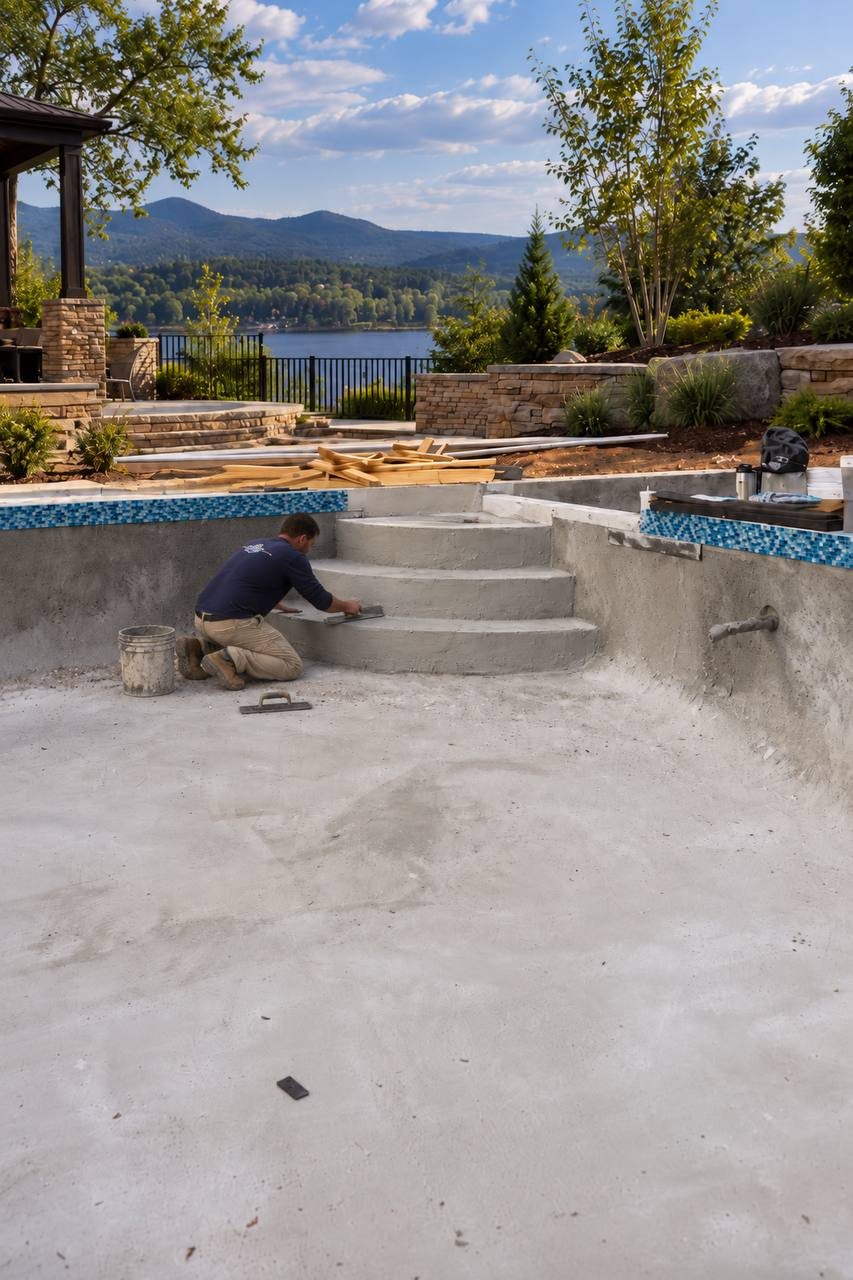
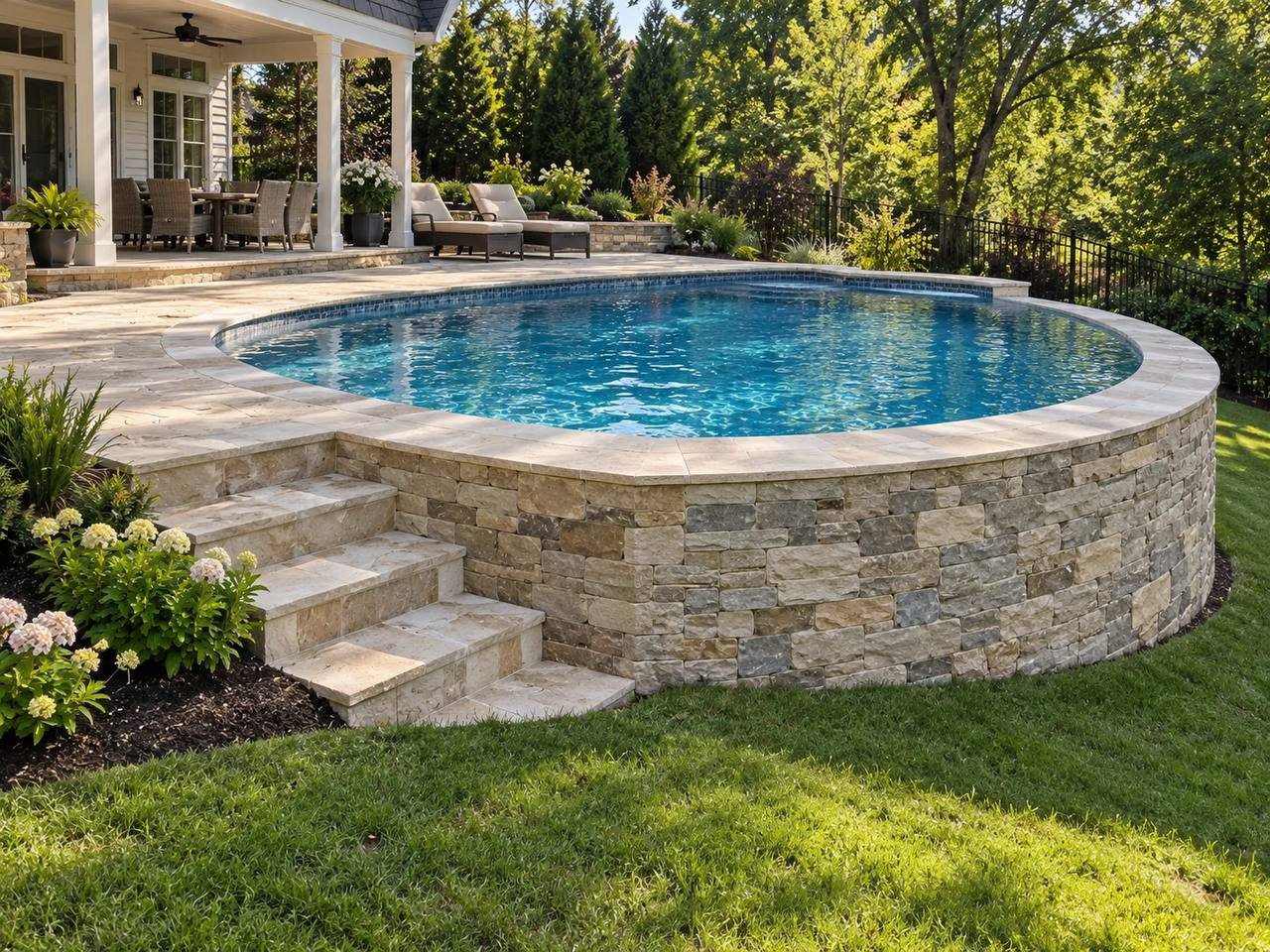
Lake Lure sits in a reservoir carved into the Blue Ridge foothills, and the residential lots around it are terraced hillsides, not flat suburban slabs. Pools here sit on cut-and-fill pads, step down toward water views, and share drainage paths with retaining walls that are already managing hillside runoff. When a pool on one of these lots leaks, water rarely stays where it exits. It migrates downslope through fill material, appears as staining on a retaining-wall face, or seeps into the hillside below the deck — sometimes twenty feet from the actual defect.
That migration problem shapes everything about detection work in Lake Lure. A technician who treats each pool the same — dye the skimmer, pressure-test the mains, write the report — will catch obvious leaks and miss the ones that matter most on slope lots. The full detection guide covers what a complete scope looks like; the critical difference here is that a thorough technician reads the site geometry before running any tests.
Vacation rental properties compound the issue. A pool that sits closed between bookings can run a slow leak for two or three weeks before anyone notices the water line has dropped. By then, saturated fill under the deck has already begun to move.
The signs worth acting on before the season opens
Many Lake Lure pools are second homes or rental properties that close in October and reopen in April or May. The freeze-thaw cycle at 1,000 feet in the foothills does steady work over winter: return-line fittings crack at the wall fitting, skimmer throats shift when the deck frost-heaves, and small shell cracks sealed by mineral deposits during summer reopen when the shell contracts in cold. None of these are obvious until the pool is full and the pump is running.
The hardest read in this climate is separating leak loss from evaporation loss. A pool in a mountain wind gap on a hot, dry afternoon can drop three-quarters of an inch to evaporation alone; a pool losing the same amount on a calm, overcast day has a plumbing problem. The water-loss diagnostic guide walks through the bucket test step by step — it takes twenty minutes and gives any technician a solid baseline before a detection visit begins. Movement that changes week to week is climate; movement that only grows is structure.
What a proper detection visit covers here
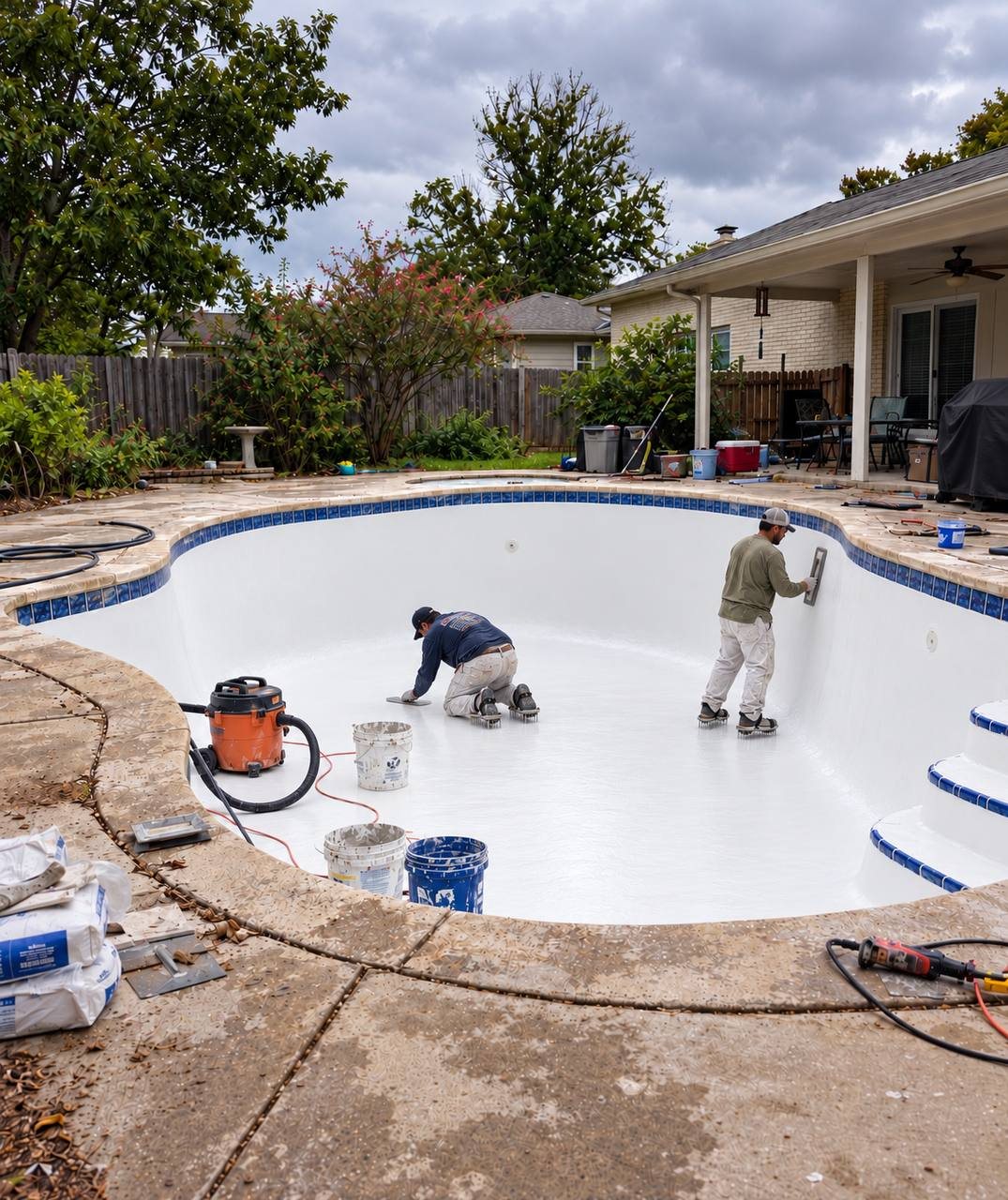
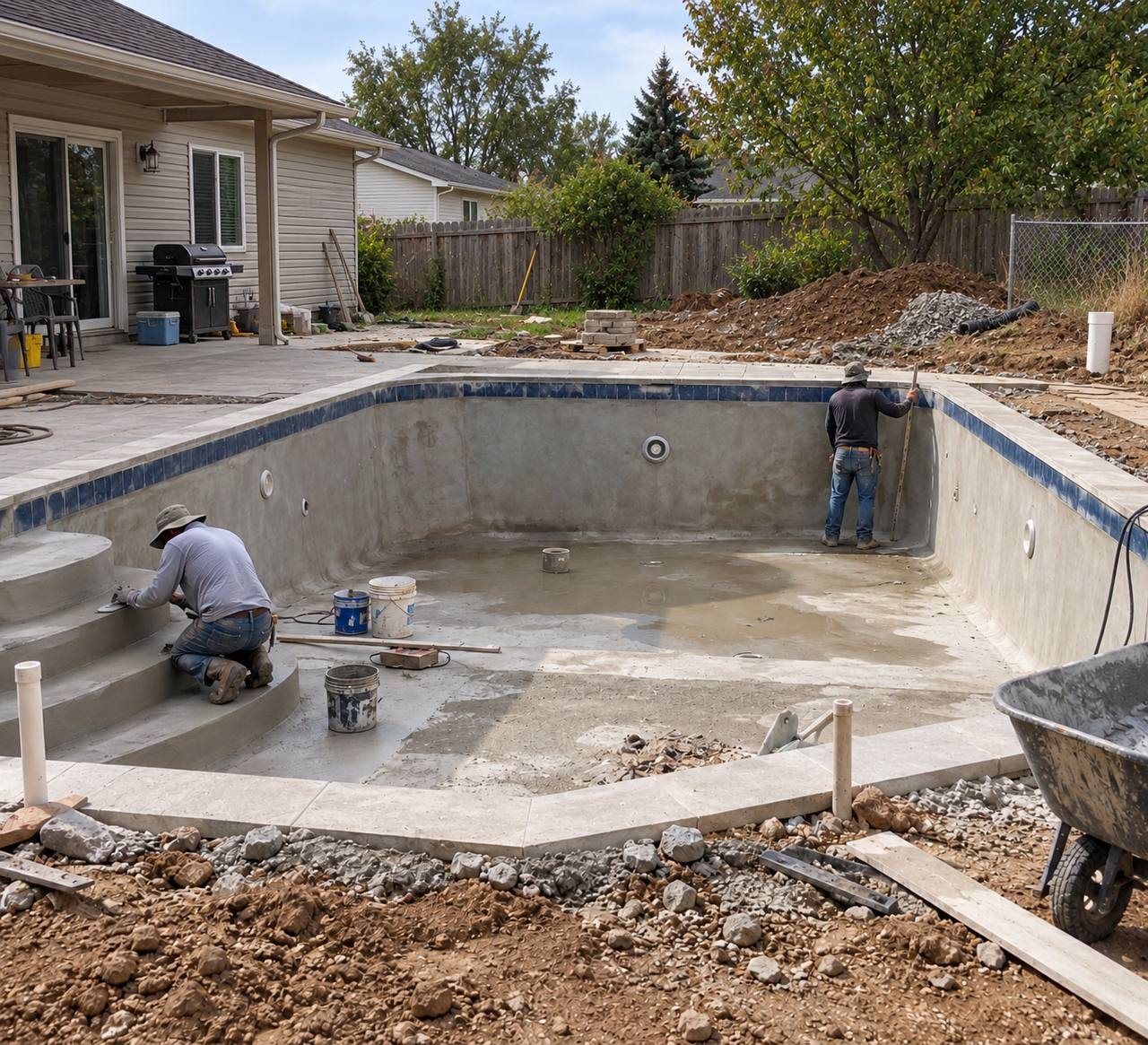
A professional visit at a Lake Lure property starts with a visual pass across the shell, coping, and deck — looking for cracks that widened since last season, bond-beam separation, and any water staining on the hillside below the pool. Pressure testing isolates which plumbing circuit is losing pressure; return lines and suction lines are tested separately. Dye testing locates shell defects that pressure testing misses. On slope lots, the technician should also check the hydrostatic pressure relief valve: when groundwater pressure rises after heavy rain on a saturated hillside, it pushes on the shell from below, and a stuck or missing relief valve makes that force worse.
The Pool and Hot Tub Alliance publishes service technician standards that define acceptable pressure-test differential ranges — knowing those numbers protects homeowners from a report that calls a slow leak within tolerance. Below are typical cost ranges for detection work and common repairs in this market:
| Scope | Typical Range |
|---|---|
| Pressure test + dye trace (detection visit) | $100 – $500 |
| Skimmer throat or fitting replacement | $100 – $400 |
| Main drain line repair | $300 – $800 |
| Return line section replacement | $400 – $1,200 |
| Shell crack injection (epoxy or hydraulic cement) | $300 – $1,000 |
| Structural shell repair (large crack or delamination) | $1,500 – $5,000 |
For a full breakdown of what drives a job toward each end of these ranges, see how pool leak detection is priced.
Storm history and what it left in pool infrastructure
Rutherford County has recorded 19 federal disaster declarations spanning 1978-2026, the large majority tied to flooding from tropical storm remnants that funnel up the mountain corridors toward Lake Lure. Each major flood event brought extended soil saturation — in some cases weeks of waterlogged ground pressing against pool shells built for normal seasonal moisture cycles. The result is a layer of deferred structural stress: hairline cracks sealed by mineral buildup that reopen the following season, return-line fittings that shifted when the ground swelled and never quite reset.
Pools closer to the lake face an additional exposure that flatland pools never see. When Lake Lure's water level rises after heavy rain, the water table around lakefront lots rises with it. A shell in good condition holds fine under normal circumstances; the same shell under sustained upward hydrostatic pressure can show seepage through the floor or around the main drain. The NC DHHS Environmental Health Section rules set water quality and safety standards for commercial and vacation rental pools — and a pool leaking undetected for a season can drift out of compliance faster than owners expect, because chemistry corrections that mask a slow leak only work for so long.
Choosing the right crew for lake-adjacent, slope-lot work
Three questions worth asking before booking a detection technician in the Lake Lure area: whether they have direct experience on hillside lots, not just flat suburban installs; whether the written report will separate plumbing loss from shell loss in writing (that distinction matters for insurance conversations and repair sequencing); and what they do when water is migrating below the deck to the hillside. The answer to the third question separates crews that solve the drainage path from crews that patch the surface crack and leave the water moving.
For vacation rental owners, timing matters as much as scope. A detection visit booked in early April, before rentals open, costs the same $100 to $500 as one in July — and it leaves time to schedule repairs before the summer calendar fills. If you are not certain whether the pool has a leak or is simply losing water to a hot stretch of weather, the water-loss guide is worth working through before booking the visit. It removes the guesswork from the first conversation with any contractor.