A lake next door changes how pools lose water
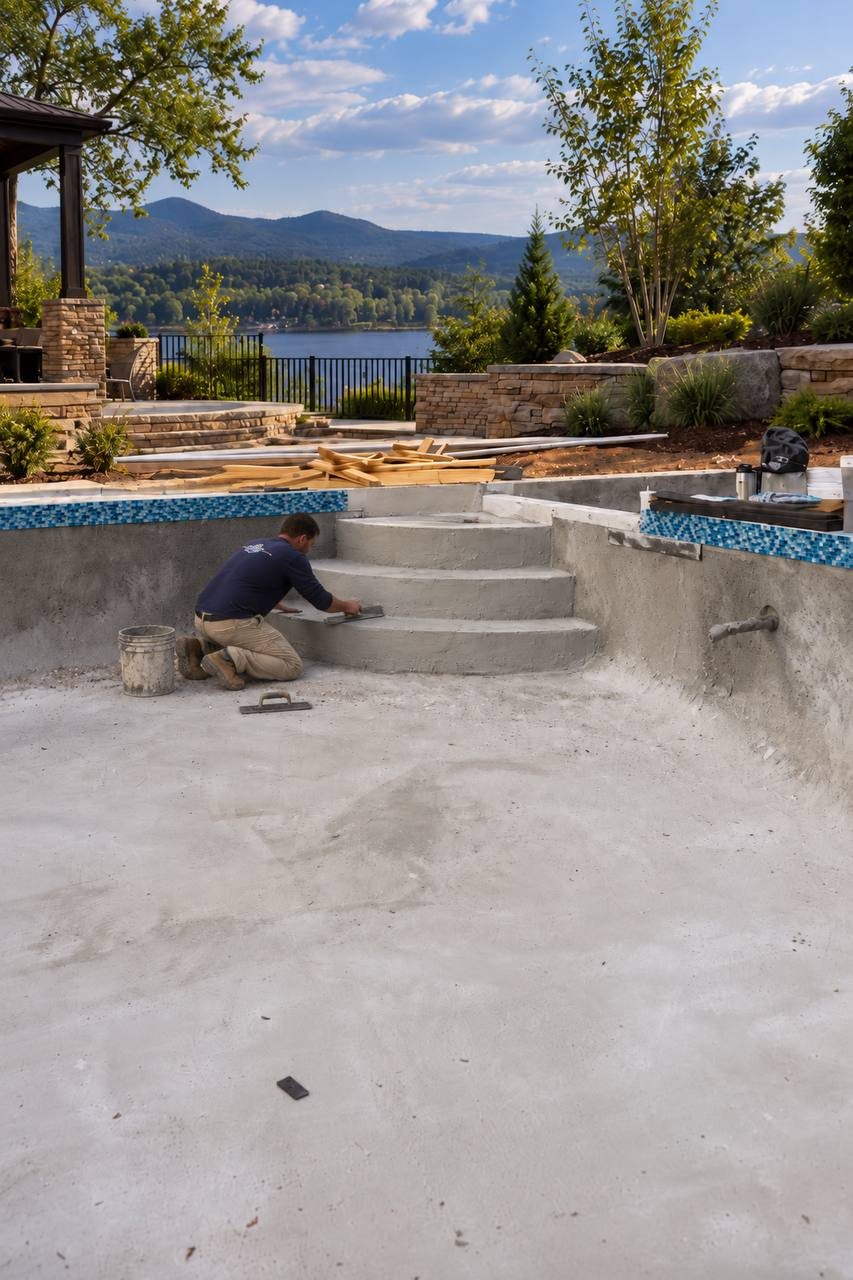
Lake Toxaway sits at roughly 3,000 feet elevation in Transylvania County, about 25 miles southwest of Brevard, the county seat. The lake covers approximately 640 acres, and the homes ringing it are predominantly second homes and high-end vacation retreats, many of them built into heavily graded mountain lots with in-ground pools cut into or cantilevered off the slope. That setting creates a diagnostic wrinkle that flatland pools do not share: the surrounding soil stays saturated for weeks after any significant rain, and the lake's water table exerts outward pressure on pool shells and plumbing lines in ways that change how a technician reads any leak test.
A pool in a suburban Charlotte neighborhood losing a quarter inch of water daily is almost certainly evaporation. That same drop on a Lake Toxaway pool could be hydrostatic pressure working against a hairline crack from the previous winter's freeze-thaw cycle. Mountain winters at this elevation are harder on pool shells than anything in the piedmont or on the coast. Add pools that sit completely unoccupied from Labor Day to Memorial Day and you have a combination that makes pool leak detection in Lake Toxaway a meaningfully different job than the one quoted elsewhere in the state.
What a professional detection visit covers
Leak detection is a diagnostic service, not a repair. A trained technician pressure-tests the plumbing lines, uses electronic acoustic equipment on the shell, and runs dye tests at fittings, light niches, skimmers, and returns. The objective is to confirm whether water loss is structural, plumbing-side, or coming from the equipment pad, because each source points to a different repair scope and a different cost. A full visit on a typical residential pool takes two to four hours, and the result should be a written summary of findings before any repair is priced.
State rules through the NC DHHS Environmental Health Section set construction and operational standards for pools across North Carolina; the design principles in those rules inform how a skilled technician approaches any residential pool's plumbing layout. Technician training and certification standards published by the Pool and Hot Tub Alliance represent the industry benchmark for this work — ask which certification the company's lead technician holds before scheduling. Our pool leak detection guide covers what a proper first visit should include from start to finish.
Detection and repair cost ranges in this market
Detection costs separate from repair costs: the visit identifies the source, and the repair follows once the scope is confirmed. Pools built into graded lakeside lots with older shells and longer plumbing runs tend toward the upper end of each range. The full breakdown is on our pool leak detection cost page; the table below covers the common scopes in this market.
| Scope | Typical Range |
|---|---|
| Pressure test (plumbing lines only) | $100 – $200 |
| Full detection visit (lines, shell, fittings) | $150 – $500 |
| Minor fitting or gasket repair | $100 – $300 |
| Skimmer replacement | $200 – $600 |
| Small shell crack (epoxy or hydraulic cement) | $200 – $800 |
| Return line repair (minor excavation) | $800 – $2,500 |
| Major structural shell work | $2,000 – $5,000+ |
Any repair requiring excavation on a steep mountain lot may carry additional site-preparation costs. Ask any contractor to itemize slope and access conditions before agreeing to a final number — a bid that does not account for the grade is likely to change after work starts.
What a Transylvania County winter does to an undetected leak
Transylvania County has recorded 16 federal disaster declarations over 1993-2026, the majority linked to severe storms, flooding, and winter weather events at mountain elevations. A pool closed for six to eight months is not protected from any of those. A small shell crack that costs $200 to patch in September can widen over a winter of freeze-thaw cycling and sustained hydrostatic pressure into a structural repair in the $2,000 to $5,000 range by spring opening. The critical difference at Lake Toxaway is that nobody is watching it happen.
The pattern that shows up most often in this market is water loss that started as a slow plumbing drip, went unnoticed through two or three vacant winters, and eventually saturated the backfill around a return line enough to require excavation by the time anyone scheduled a visit. The gap between a normal spring water-level drop after a closed season and an actual slow leak is smaller than most owners expect. That distinction — and how to read it before calling a technician — is explained on the pool losing water page.
Hiring the right crew for lake-lot pools
Three questions matter before scheduling anyone. First: ask whether the technician has worked pools on saturated-soil or lakeside lots specifically. Reading pressure-test results on a pool next to a 640-acre lake requires understanding how local ground conditions affect baseline readings, and general plumbing experience does not substitute for that. Second: ask for the repair scope in writing before work begins. Structural repairs fall under residential construction requirements governed by the NC Department of Insurance Building Code Council; permitted work protects your property value and ensures an inspection took place. Third: ask how they handle long-vacant pools. A crew that does not ask about the pool's closure history, its age, and its backfill type before touching the equipment pad is skipping the diagnostic steps that prevent a routine detection visit from becoming a surprise repair bill. When you're ready to book, the pool leak detection guide walks through exactly what a proper inspection includes and what questions to ask before the technician arrives.