Why pool surfaces wear faster in Transylvania County
Transylvania County earns its nickname — the Land of Waterfalls — through a rainfall pattern that few outdoor trades ever fully price in. The county sits where moisture-laden air stalls against the southern Appalachian ridgeline, producing one of the highest average precipitation totals of any inland county in the eastern United States. That water reaches pools constantly: as direct rain, as runoff carrying tannins and organic acids from the hardwood canopy overhead, and as the pH swings that follow every significant storm. Plaster in a dry suburban climate might hold its surface for a decade or more; the same mix applied here is working against a chemistry problem from the first season.
The federal disaster record tracks the broader pattern: 16 declared events cross this county over 1993-2026, the majority of them tied to precipitation and flooding. Homeowners with pools feel a scaled-down version of that same force every year, as etching, staining, and surface roughness arrive earlier than any warranty anticipates. Knowing which climate your pool sits in is the first question for any resurfacing job — and the answer here changes both the finish recommendation and the realistic service life you should plan around.
Finishes worth considering here, and what to budget
The full scope-and-cost breakdown for the region lives in the pool resurfacing cost guide. The table below captures the standard scopes in this market. Because of the county's organic load and terrain, the finish tier you choose is one of the larger price levers you control.
| Scope | Typical Range |
|---|---|
| White plaster, standard gunite pool (~1,000 sq ft) | $6,000–$8,500 |
| Colored or tinted plaster | $7,000–$10,000 |
| Quartz aggregate finish | $9,000–$13,000 |
| Pebble / exposed-aggregate finish | $11,000–$15,000 |
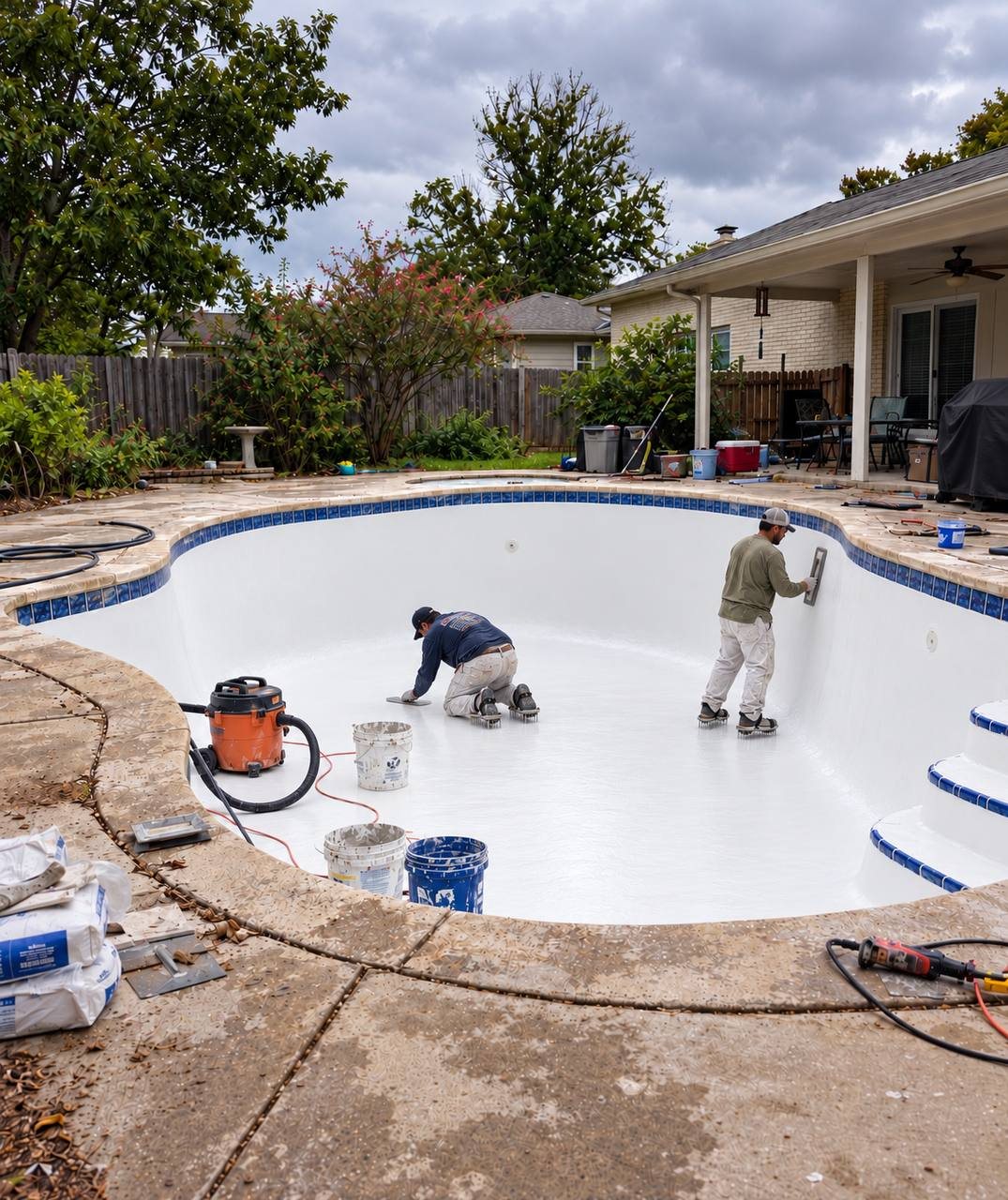
White plaster is the affordable starting point and the least forgiving in a chemically active environment. Every pool in Transylvania County is a candidate for acid etching from tannins and rain-diluted pH, and white plaster shows that damage early. Quartz aggregate finishes are genuinely more resistant: silica quartz has a measurable hardness advantage over plain plaster, and that edge is meaningful in this climate. Pebble and exposed-aggregate surfaces extend the durability further and are the recommendation most often made for pools with significant organic load and limited drainage clearance from surrounding trees and slope. The pebble and quartz finish comparison runs a side-by-side on lifespan, texture, maintenance demands, and cost so you can work through the decision before requesting quotes.
Slope, canopy, and the logistics behind your quote
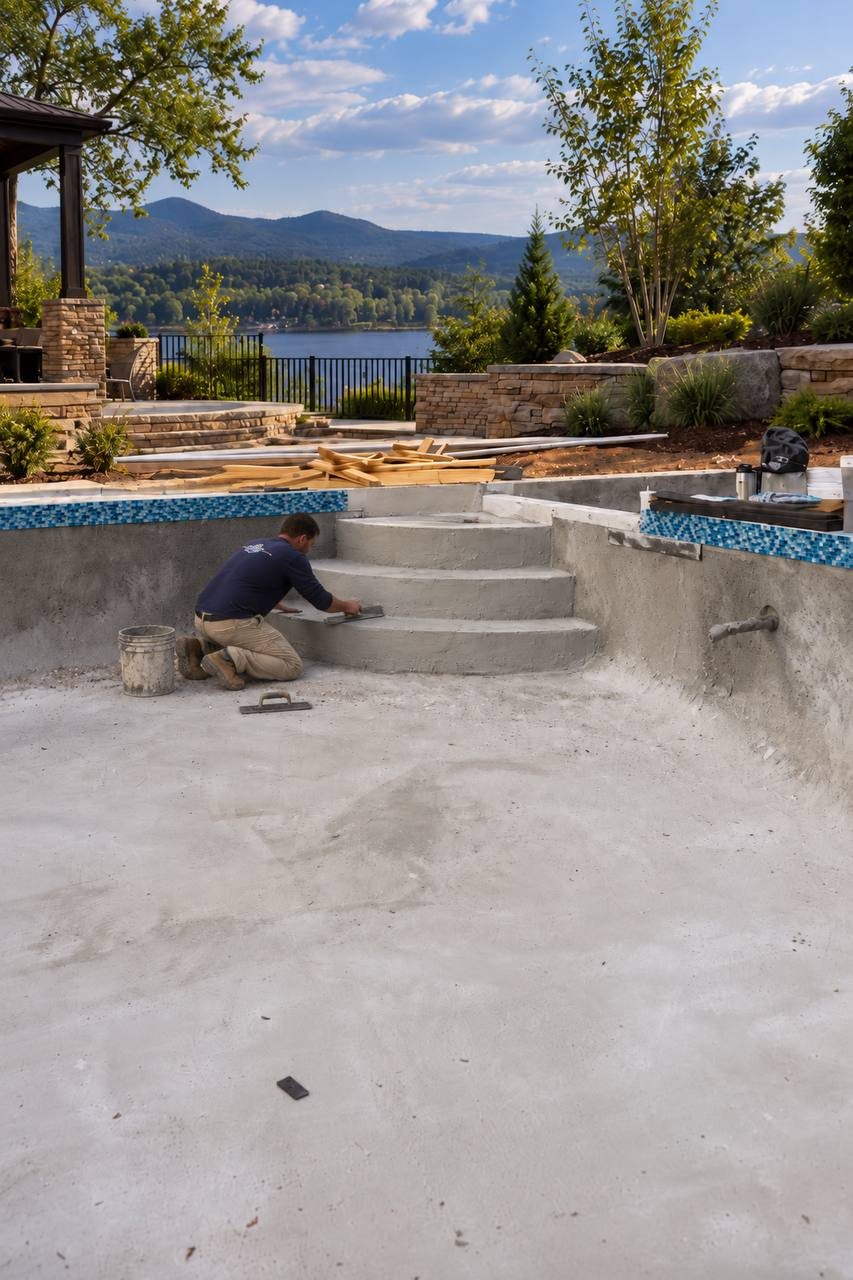
Most of Brevard's residential pool stock sits on the kind of lot that makes a flatland contractor pause before naming a number. The terrain between Brevard and the county's ridge communities involves switchback driveways, mature tree cover that creates both organic load and staging obstacles, and grades that don't leave room for the equipment a standard crew expects to drive close to the water's edge. When access is tight, jobs require smaller equipment, more hand-staging of materials, or both — variables that belong in the quote before anyone signs a contract.
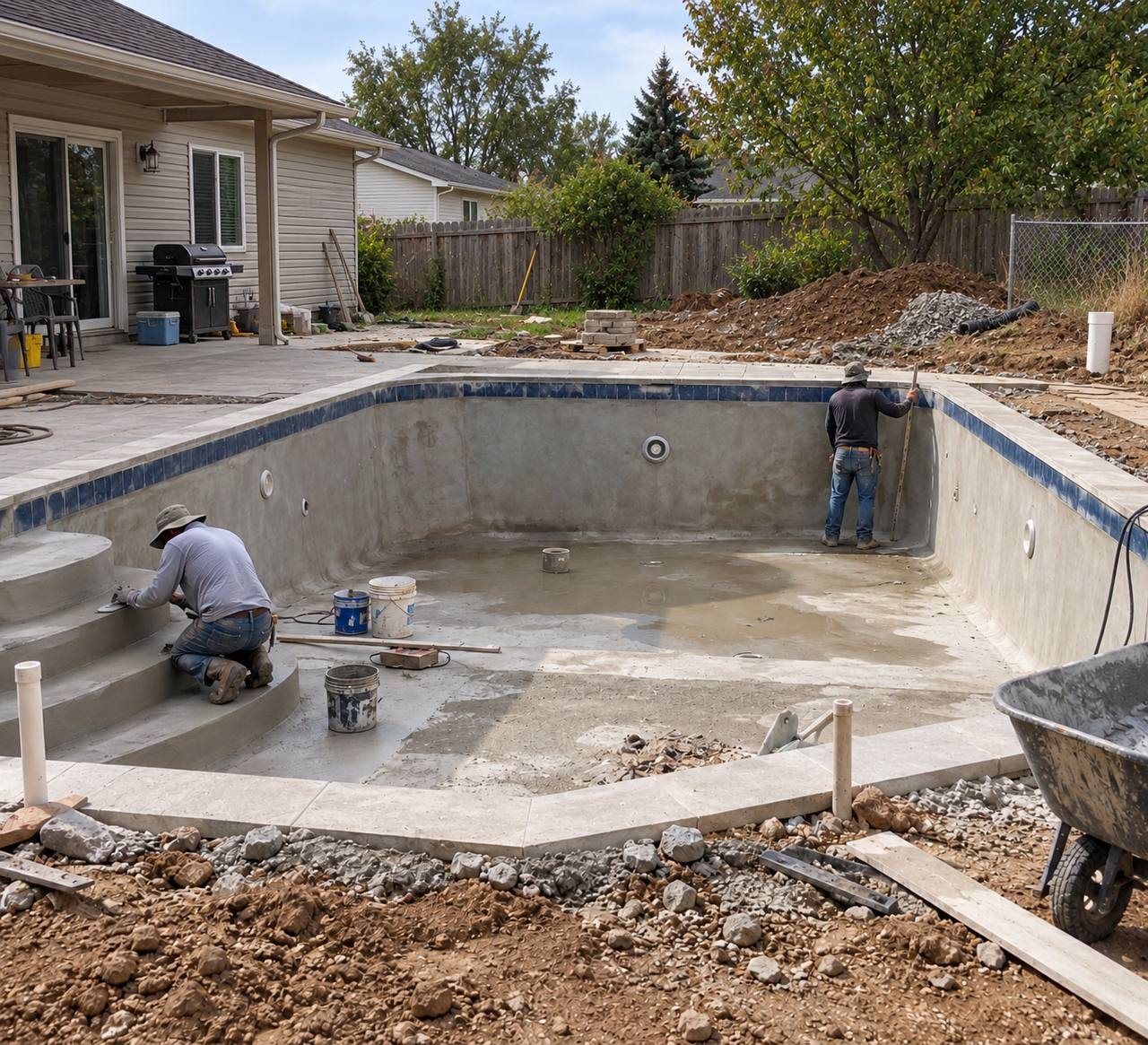
The prep work alone moves more slowly on a slope-restricted site: draining, surface grinding, crack repair, and bond-coat application all take longer when a crew is working around real access limits. None of this is a reason to defer a needed repair. It is a reason to ask every contractor exactly how they plan to stage the job before you accept a price. A quote that arrived without a site visit or a question about your lot configuration almost certainly did not price your actual conditions.
Permits, inspections, and what state rules reach residential pools
Residential pool resurfacing in North Carolina occupies a regulatory gray zone that depends entirely on project scope. A straight like-for-like replaster — same finish tier, no equipment replacement — typically does not require a standalone building permit in most Transylvania County jurisdictions. But any project that replaces a pump, modifies electrical connections, or upgrades circulation equipment may trigger inspection requirements under both local building codes and state pool standards. The NC DHHS Division of Public Health's Environmental Health Section sets the baseline for pool construction and renovation statewide; subdivision and HOA pools that serve multiple households are governed as public pools under those rules and carry tighter requirements than single-family residential work.
For equipment replacement specifically, a federal layer also applies: the US Department of Energy's dedicated-purpose pool pump efficiency standards now govern which motors can be installed — a requirement that surfaces regularly when resurfacing projects include pump replacement at the same time. Ask your contractor explicitly which inspections or permits apply to your scope and get the answer in writing as part of the project description. Standards from the Pool and Hot Tub Alliance (PHTA) inform the certification training most credentialed installers in this region carry and are a useful reference for what a professional installation should look like. The full resurfacing service overview covers how a properly scoped project gets documented before any work begins.
Questions to ask a contractor before you hire in this county
Three checks matter specifically for this market. First, ask whether the crew has worked on lots with terrain similar to yours — not mountain lots in general, but steeply graded or canopy-restricted sites where equipment staging adds real time to the job. The answer surfaces in how they quote and how they plan the sequence. Second, ask what finish they recommend for your specific environment and why. The answer should account for your tree coverage, your testing history, and the organic load your pool typically carries through the season. A contractor who recommends white plaster without asking any of those questions is giving a flatland answer to a mountain problem.
Third, ask about their startup and curing protocol when rain is a near-daily variable. New pool plaster cures best under controlled water-chemistry conditions, and a county that receives this much rainfall creates a real management challenge in the weeks after application. A contractor without a rain-week protocol is leaving a quality variable open that will show up in the finished surface. Use the service overview as a checklist for what a thorough first conversation with any crew should cover.