Elevation is the price driver most local quotes don't explain
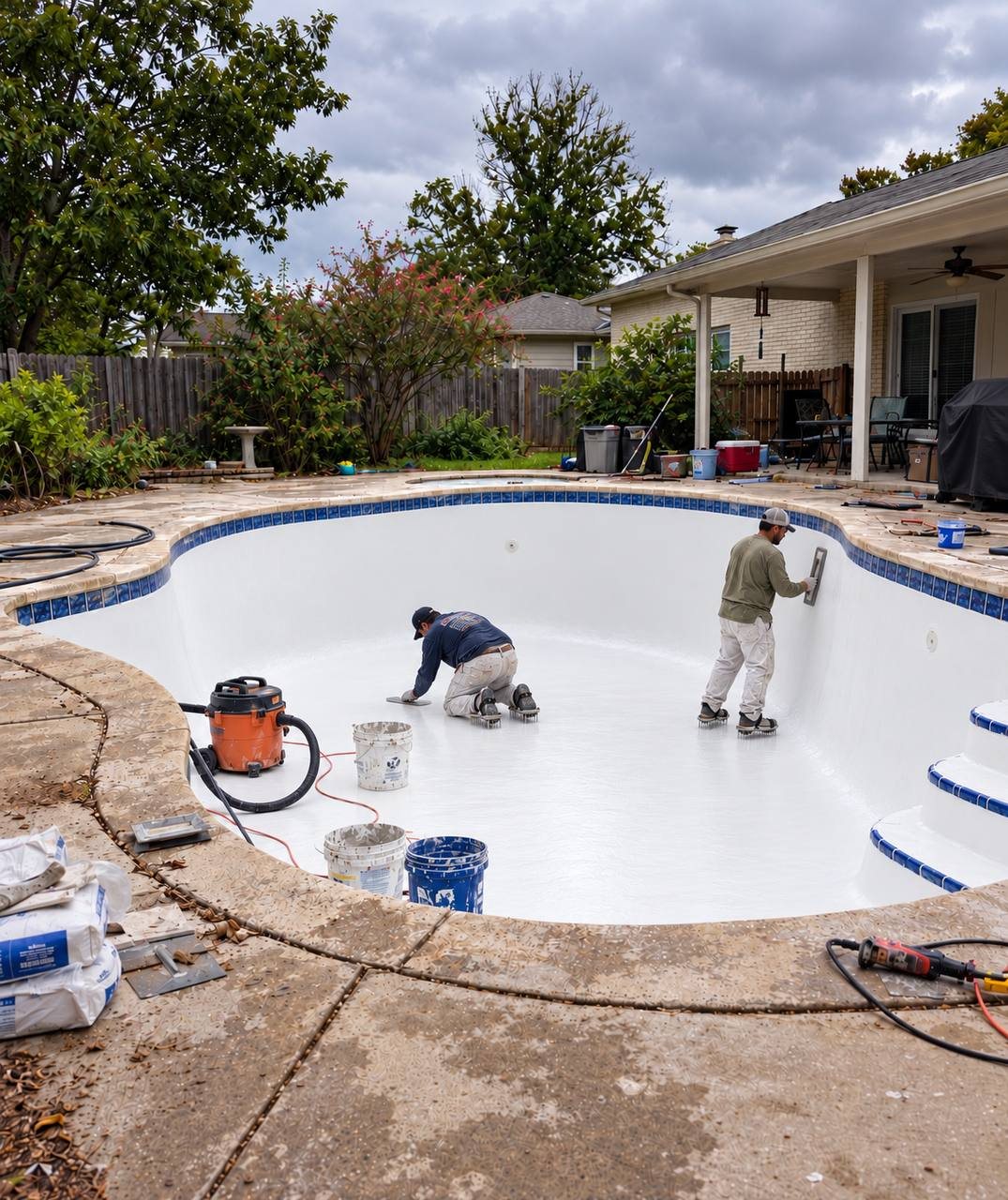
Waynesville is the county seat of Haywood County, tucked into the southern Blue Ridge at roughly 2,600 feet — higher than Asheville, and higher than most of the western NC residential pool market. That altitude introduces a variable that pool owners from the piedmont or the coast never plan around: real freeze-thaw cycling. A pool in Charlotte or Wilmington might see one or two genuinely hard freezes in a normal winter. A pool in Haywood County cycles through below-freezing nights for weeks at a stretch. Water that works its way into micro-cracks in aging plaster or marcite expands when it freezes and contracts when it thaws, and that repeated mechanical pressure is what drives the blistering, delamination, and rough-aggregate feel that define most local resurfacing calls.
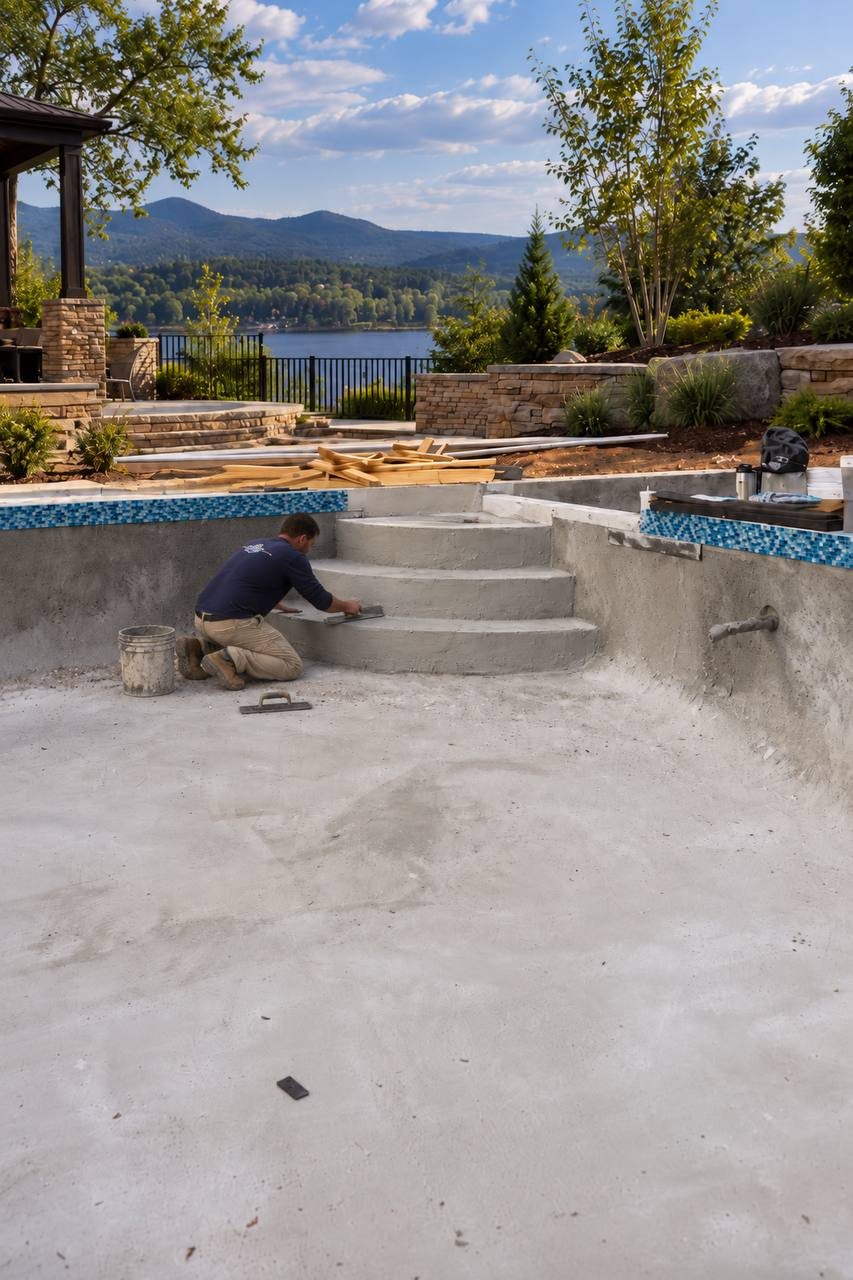
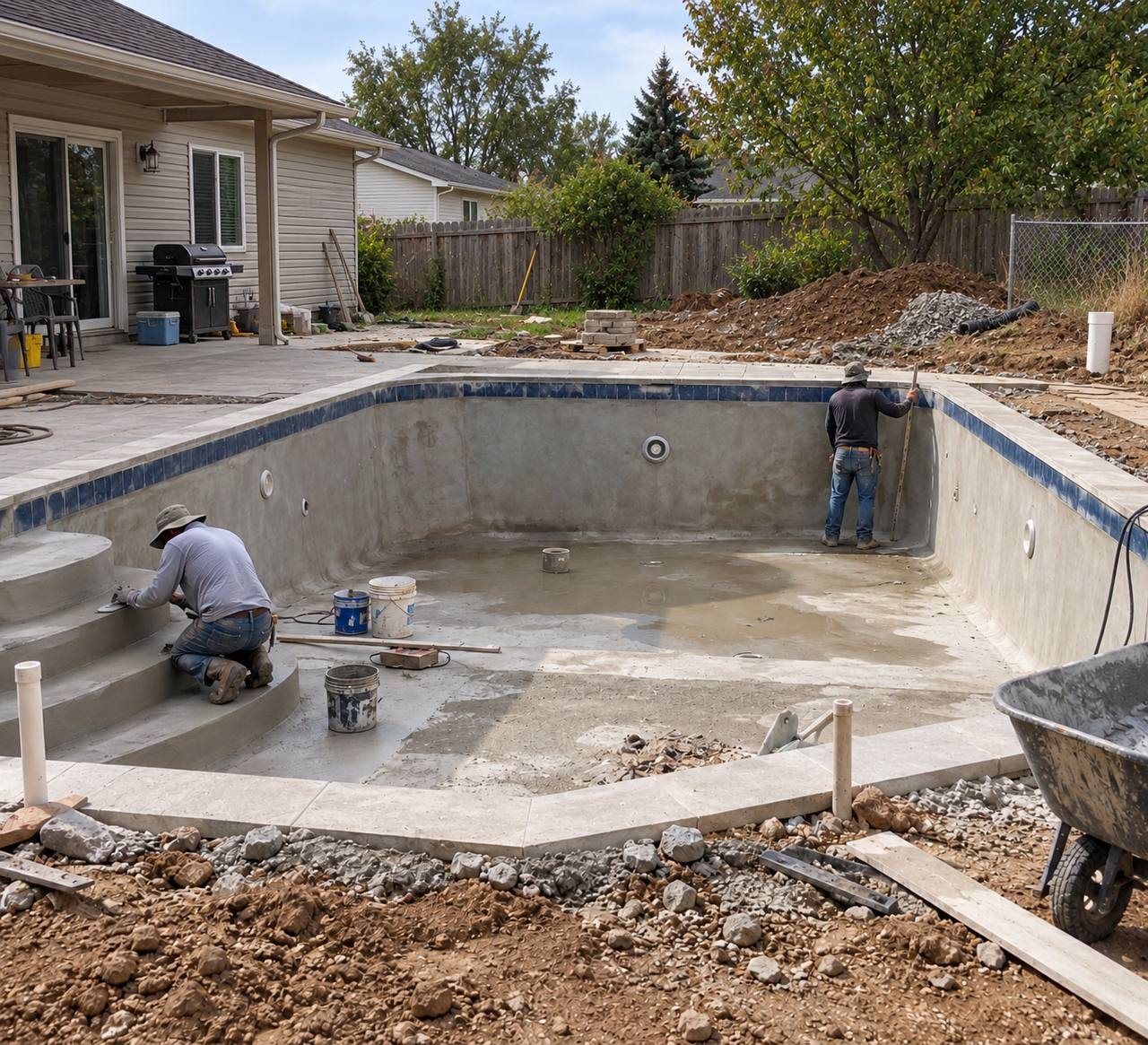
Terrain compounds the cost picture. The vast majority of residential pools in Haywood County were built into hillside lots — dug into sloping ground across the county's coves and ridge neighborhoods, often with limited equipment access behind retaining walls or steep grades. Draining a hillside pool, staging material deliveries on a tight lot, and finishing a surface below grade all take more time than the same job on a flat suburban site. Quotes that don't account for site conditions will account for them eventually, usually in a change order.
What resurfacing costs across different scopes
The full cost breakdown covers line-item ranges for every finish type. For a typical residential gunite pool in the 800–1,200 square foot range — which describes most pools in Haywood County — the table below reflects honest working numbers for this market. Prep work on a surface that has been patched rather than properly resurfaced before, and access charges on steep lots, push jobs toward the upper end of each band.
| Scope | Typical Range | Notes |
|---|---|---|
| Marcite / standard plaster | $6,000–$9,000 | Entry-level finish; shortest lifespan in freeze-thaw conditions |
| Quartz aggregate finish | $9,000–$12,500 | Better cold-weather durability; most common upgrade in this market |
| Pebble finish | $11,500–$15,000 | Best longevity at elevation; preferred for pools kept open late in the season |
| Tile and coping repair (add-on, quoted separately) | $800–$2,500 | Often surfaces during prep inspection; priced apart from the finish |
The pebble and quartz comparison guide walks through longevity and maintenance cost trade-offs in detail. In a climate with real freeze-thaw cycling, the case for investing more in the initial finish is stronger than it looks on a line-item comparison alone.
Mountain water chemistry and why the startup week matters
Haywood County draws on a combination of municipal supply and private wells, and mountain water tends to run soft and slightly acidic — a chemistry profile that is harder on newly applied plaster than the mineral-rich water common in the piedmont. An unbalanced startup after a replaster can etch the new surface before it has fully cured, producing the chalky, rough texture that makes owners think they received a substandard product when what they actually got was a substandard startup process.
The Pool and Hot Tub Alliance startup protocol calls for careful management of pH, alkalinity, and calcium hardness across the first two weeks after refilling. Skipping or compressing that period is the single most common reason a new plaster surface looks tired before the end of its first full season. A contractor who hands off written instructions and walks away is not the same as one who manages the first week's chemistry alongside you.
If your pool serves vacation rental guests or short-term users, water quality compliance becomes a more formal concern. The NC DHHS Environmental Health Section pool and spa rules apply to semi-public pools in this state, and surface condition is directly tied to inspection outcomes. A degraded or porous finish accelerates chemical consumption and can put a rental property on the wrong side of an inspection during peak season.
The storm record and what it means for pool shells
Haywood County carries 19 federal disaster declarations on record (1973-2026), nearly all of them storm and flood events tied to the county's river valleys. High-water events do not flood a pool from above — they stress the shell from below. A saturated hillside pushes lateral hydrostatic pressure against a gunite wall engineered for static soil loads, and owners who discover new cracking or surface delamination in the months following a significant storm season are often dealing with that mechanism rather than ordinary surface wear.
A thorough pre-resurfacing inspection accounts for this distinction. Stress cracking from hydrostatic events follows different patterns than surface weathering: look for lateral cracks that run parallel to the pool wall, cracks that propagate through coping, or delamination concentrated on a single wall face. Applying a new finish over unaddressed shell stress does not resolve the underlying problem — it simply restarts the clock on finding the same damage a few years from now.
Permits, drain covers, and what triggers a code review
A straight replaster — same surface material, same shell geometry, no changes to fittings or equipment — typically does not require a building permit in Haywood County. Add a pump replacement, change a return fitting, or perform structural repair, and the work enters permitted territory under the NC building code enforced through the NC Department of Insurance Building Code Council. Confirm the permit question before work starts, not after.
Main drain covers deserve explicit attention at the scope stage. Federal anti-entrapment requirements under the Virginia Graeme Baker Act mandate compliant covers on residential and public pools alike, and a resurfacing project is the natural moment to verify that yours qualify. A contractor who does not raise this during the scope visit is signaling something about how thorough the rest of their inspection will be. The pool resurfacing scope guide covers what a proper first-visit assessment should include and the questions worth asking before anything is signed.
Getting a quote that holds
Three questions worth asking any contractor before committing to a number: what specific finish do they recommend for this elevation and water chemistry (a specific answer matters more than "whatever you prefer"); how do they handle the startup chemistry period and who is responsible for managing it through the cure window; and what direct experience do they have with hillside pool access in Haywood County specifically.
A quote that addresses prep method, surface material specification, tile condition, startup chemistry management, and return-to-service timeline as explicit line items is a quote that will hold. One that leaves those items as assumptions will surface them in change orders. The cost guide includes a full checklist of what a proper proposal should cover. Getting two or three scopes in writing before deciding is standard practice on jobs in this price range — and it is the only reliable way to compare bids that are genuinely covering the same scope of work.