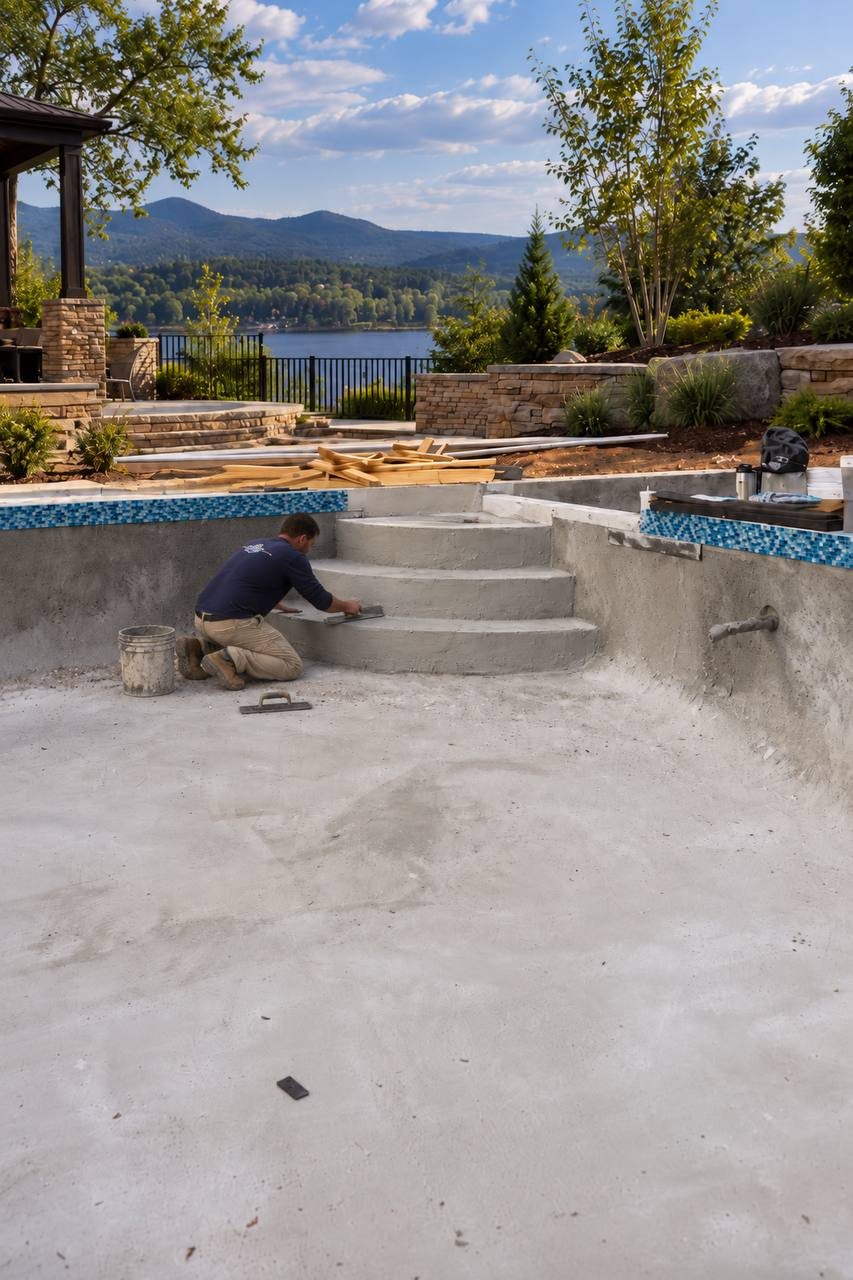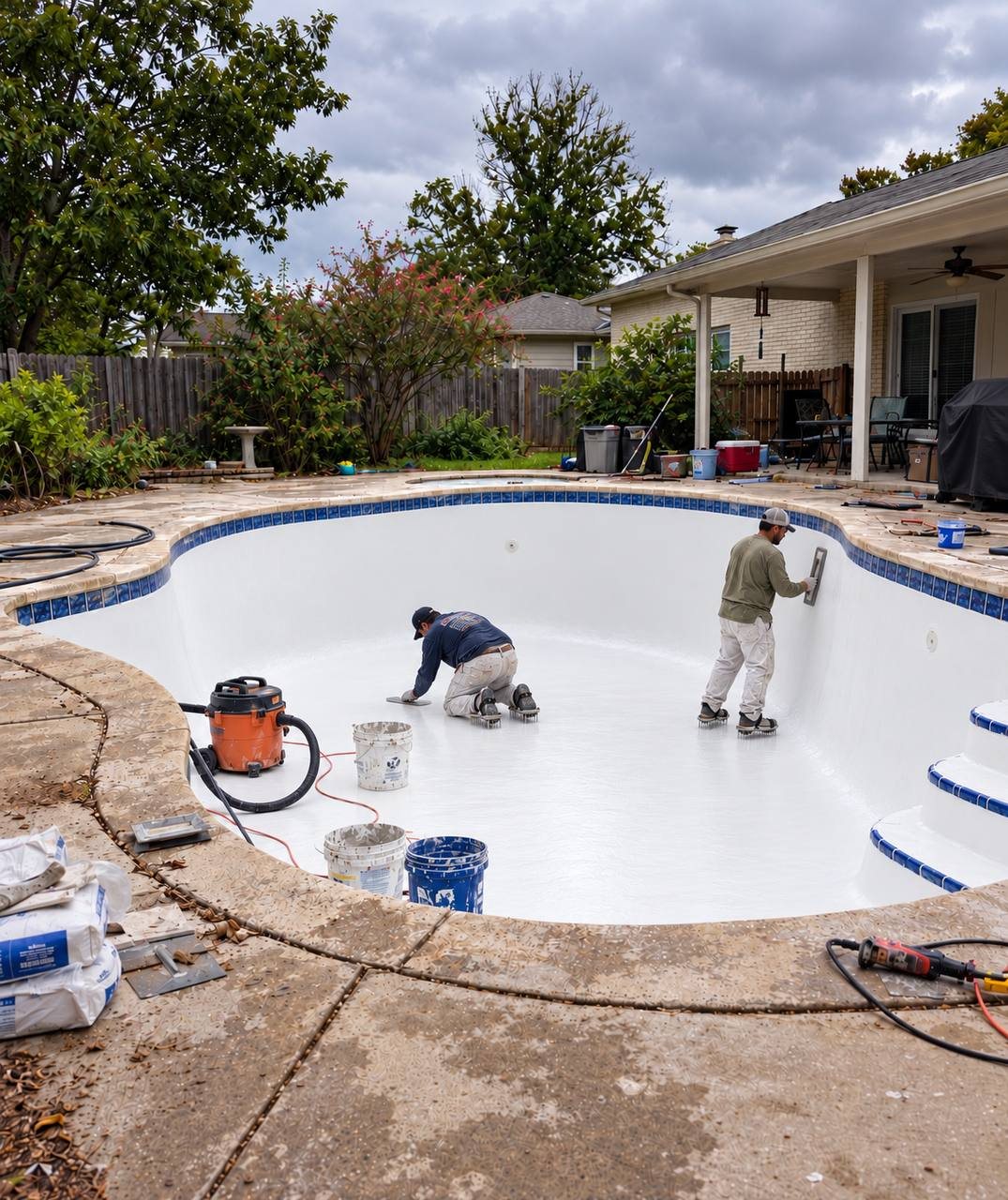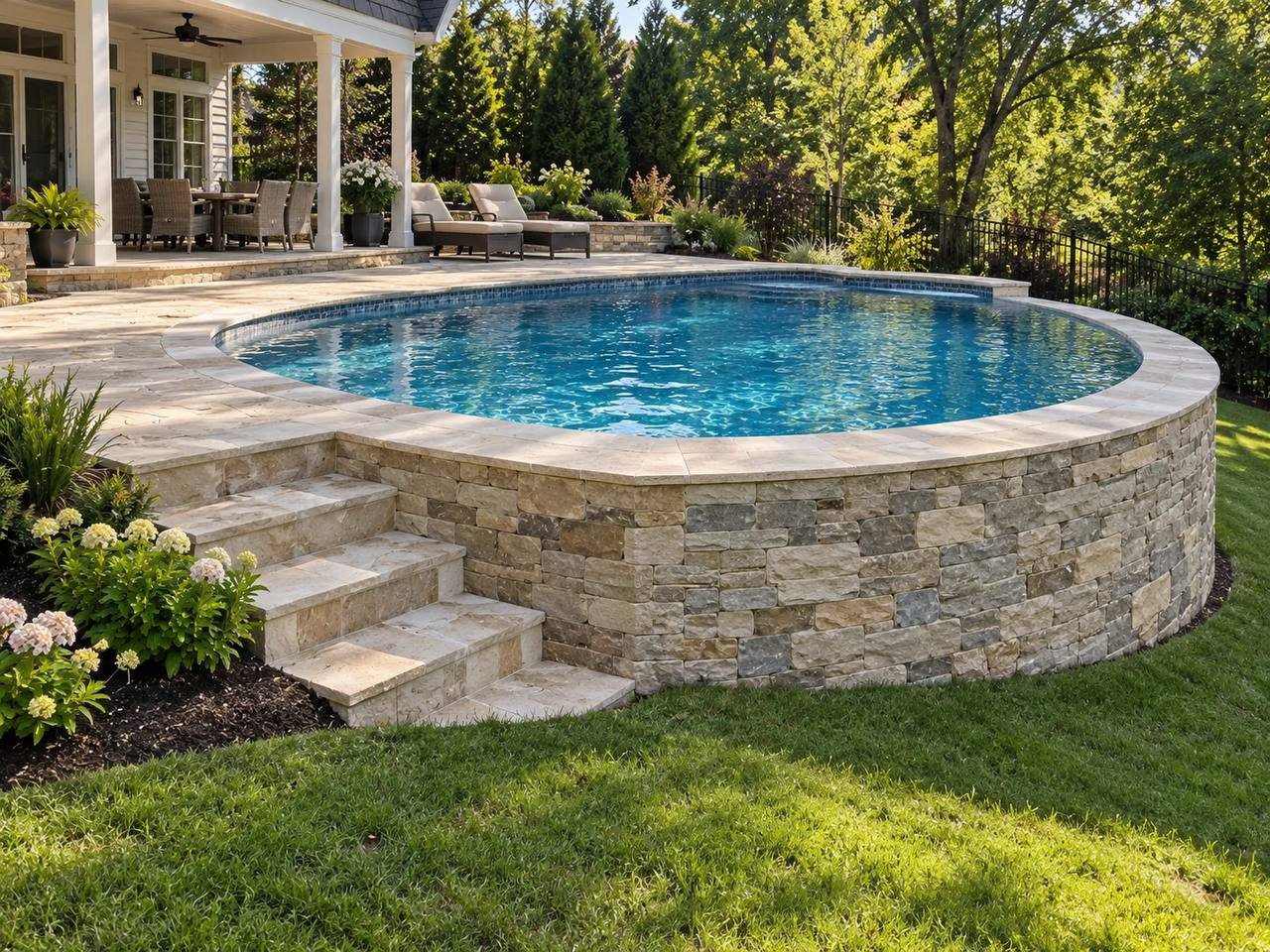
The terrain shapes the quote before a bag of plaster opens
A plaster pump truck needs room to stage, and most lots around Lake Lure do not offer it easily. Rutherford County properties above and along the lake often arrive by driveways that tighten to single-car width before the backyard comes into view, with grade changes that would stop low-clearance equipment before the first turn. When a crew cannot position directly at poolside, they hand-pump or bucket-relay material — both of which add hours to a job that a flat Charlotte backyard handles in a fraction of the time. Describe your driveway clearance and any gate width before you ask for a quote; that detail opens the scope conversation.
Lake Lure sits at roughly 1,000 feet in the Hickory Nut Gorge, and the surrounding ridges channel cold air into the valley through winter. Freeze-thaw stress on plaster surfaces here runs harder than in the Piedmont foothills or on the coastal plain. Plaster that reaches fifteen years on a Mecklenburg County flatland pool may start checking and crazing on a Lake Lure mountain lot in eight to ten. That calendar reality is not a reason to over-build a simple repair — it is a reason to price finishes with longevity in mind from the start.
What aging gunite looks like on a mountain lot
Most private pools around the lake are gunite shells built during the vacation-home construction waves that followed Lake Lure's early resort era. Decades of mountain winters leave visible marks: chalking white plaster that stains from mineral-rich runoff, rough surfaces that trap algae even with clean chemistry, and hairline cracks at return fittings and main drains that open a little wider each spring thaw. A surface that has roughened past the point where it cuts bare feet is already overdue for attention.
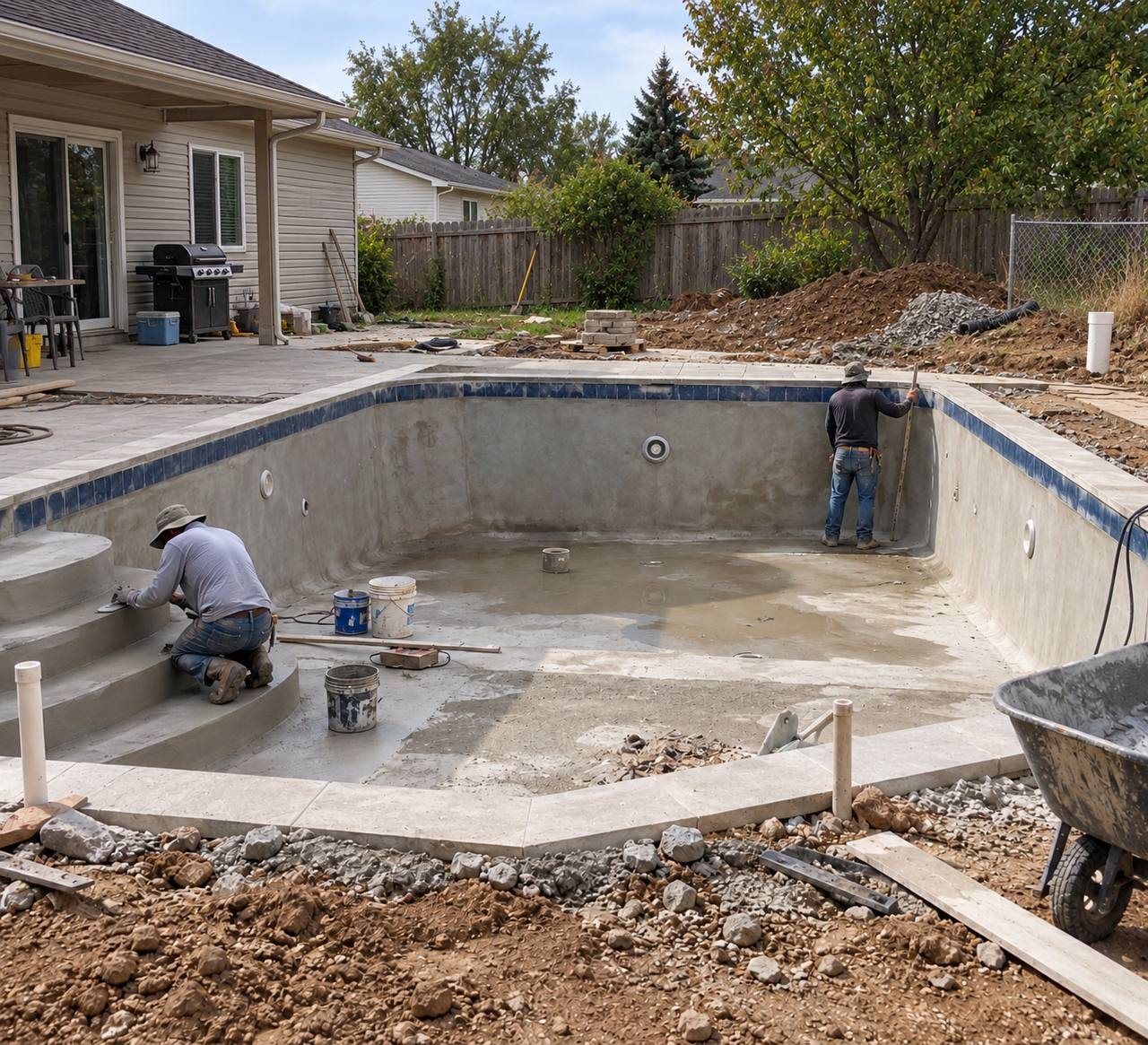
Structural signals deserve a separate look before any surface crew mixes a bag. Tile that has shifted off the bond beam, coping stones that rock or have opened their joints, and a pool that loses water overnight without an obvious mechanical cause all point to work that a replaster alone will not fix. The right sequence is structural evaluation first, surface work second — skipping that order is the pattern behind the most expensive surprises in this trade, and what a thorough evaluation covers is part of any complete pool resurfacing scope.
Many of these pools now serve as short-term rental amenities, which makes surface condition a business decision rather than a cosmetic preference. A rough or dated finish shows up in guest reviews before it shows up in a maintenance log. Resurfacing before the rental season — rather than reacting to a complaint — is worth pricing now.
What resurfacing costs around Lake Lure
The ranges below reflect a standard privately-owned gunite pool of around 1,000 square feet in Rutherford County. Access difficulty, finish grade, and structural condition are the three price movers — any quote that does not address all three is an estimate in the abstract rather than a scope on your specific pool. For a full line-item walkthrough, see how much does pool resurfacing cost.
| Scope | Typical Range |
|---|---|
| Standard white plaster replaster | $6,000 – $9,500 |
| Quartz aggregate finish | $8,500 – $12,500 |
| Pebble or glass-bead finish | $10,500 – $15,000 |
| Coping tile repair (per linear foot) | $35 – $75 |
| Structural crack repair (per crack) | $300 – $900 |
| Steep-lot / limited-access surcharge | $500 – $1,800 |
The steepest Lake Lure lots and premium finish choices tend to meet near the top of the band. A flat lakeside lot with unobstructed equipment access and a straightforward replaster can land closer to the lower end. Coping tile, crack repair, and access surcharges are line items that add to a base resurfacing quote — get them itemized separately so you understand which number each lever is moving.
Finishes that hold up in mountain water
Mountain water around Lake Lure carries mineral content that standard pool chemistry cannot fully neutralize at the surface. Calcium and metals that arrive through fill water and rainfall stain white plaster relatively quickly, and once staining sets into a porous surface, reversing it requires an acid treatment that shortens the plaster's remaining life further. The finish decision matters more here than it would on a chlorinated flatland pool fed by softer municipal water.
Quartz aggregate finishes resist mineral staining better than standard plaster because the quartz particles are denser and absorb less at the surface. Pebble and glass-bead finishes add another layer of durability and hold their appearance well through freeze-thaw cycling. Both cost more upfront, but on a mountain lot where standard plaster may need replacement in eight years rather than fifteen, the longer-lived material often returns its premium. See pebble and quartz pool finishes for a direct comparison of how each material ages under these conditions — including how mineral exposure and cold-weather cycling factor into the lifespan gap.
Storm history and what it does to in-ground shells here
Rutherford County sits in a river valley that collects runoff from the surrounding Blue Ridge terrain. The county has 19 federal disaster declarations on record spanning 1978-2026, most of them storm and flood events tied to the Rocky Broad River corridor and the surrounding watershed. Each major event saturated soils, raised water tables, and pushed hydrostatic pressure against in-ground shells that were engineered to hold water from the inside — not resist it from outside. Pools that were drained or partially emptied during high-water events face pop risk when hydrostatic pressure lifts the shell against the missing ballast.
The practical result is that resurfacing jobs around Lake Lure uncover structural crack repairs at a higher rate than flatland markets. Build that possibility into your budget and timeline rather than treating it as a surprise add-on. A contractor who never mentions hydrostatic pressure or a structural assessment in the first conversation is not accounting for your pool's full history.
Rental pool rules, permits, and hiring right
NC DHHS Environmental Health governs public pool and spa water quality across the state. Short-term rental pools — vacation homes where paying guests access the pool as part of the rental — may qualify as public pools under NC DHHS Environmental Health Section rules, which carry inspection, water-quality, and safety equipment requirements that a purely private residential pool does not face. Before contracting any resurfacing work on a rental property, confirm the classification with Rutherford County Environmental Health. The finish and plumbing standards for a permitted public pool differ from residential standards, and a contractor working to the wrong specification creates liability that lands on the owner.
Contractor licensing for pool work follows the NC state framework, and any job that includes structural repair, replumbing, or equipment replacement should be performed by a licensed contractor. The Pool and Hot Tub Alliance (PHTA) publishes guidance on what qualified pool service professionals should carry, and NC DHHS Environmental Health is the authority on public pool inspection requirements in this state. Ask to see an active license before you sign. A crew that is vague about what they carry is telling you something useful about how the job will go.