Elevation makes finish longevity a different calculation here
Buncombe County pools deal with something pools in Charlotte and the Triangle largely don't: meaningful freeze-thaw cycling through the cold season. Asheville sits above 2,100 feet at the valley floor, and neighborhoods on the surrounding ridges push higher. When nights drop below 32°F and afternoons recover, pool finishes expand and contract in a thermal cycle that standard white plaster handles poorly over time. A plaster job that might hold up a decade in Raleigh can begin crazing and popping within five to seven years here when winterization isn't executed perfectly every season.
The broader precipitation pattern compounds this. Buncombe County has accumulated 19 federal disaster declarations over 1973-2026, most tied to flooding and severe weather events. Heavy precipitation saturates the soil around pool shells, creating hydrostatic pressure cycles that stress finish adhesion — particularly in a surface already being worked by thermal expansion and contraction. Upgrading to a quartz or pebble aggregate finish at the time of your next resurfacing puts a harder, denser surface between your shell and those stresses from the start, not just a cosmetic improvement.
The three finishes, what they cost, and what you actually get
Plaster, quartz aggregate, and pebble aggregate serve different budgets and use cases. The table below reflects regional installed pricing — surface area multiplied by these rates is your baseline estimate before adjustments for shell condition or lot access.
| Finish | Installed Cost (per sq ft) | Typical Lifespan | Notes |
|---|---|---|---|
| Standard white plaster | $4–$7 | 7–12 years | Smooth surface; stains and etches faster at mountain elevations |
| Quartz aggregate (e.g., Diamond Brite) | $5–$8 | 12–18 years | Harder mineral base; color-stable; strong mid-range durability |
| Pebble aggregate (e.g., PebbleTec) | $9–$12 | 20–25 years | Most durable surface; textured underfoot; best long-term economics |
Quartz finishes embed ground quartz crystals in a cementitious base — the harder mineral resists chemical etching and calcium scaling better than pure plaster. Pebble finishes use small smooth river stones or manufactured pebbles exposed at the surface after troweling. Both aggregate surfaces outlast plaster significantly; the practical question is whether the pebble texture is pleasant underfoot for your household or uncomfortable on bare feet and pool steps. Before committing, see the full finish lifespan comparison to understand how each surface ages under real-world chemistry and climate conditions.
What a pool finish replacement actually involves
The finish coat is the final step in a multi-phase process. Understanding what precedes it helps you evaluate whether a bid is moving through all the steps or skipping the ones that don't show on a walk-around:
- Drain and full prep. The pool is drained and the old surface is chipped, ground, or acid-washed back to bare shell. Incomplete prep is the most common cause of premature delamination — a new pebble finish applied over a loosely bonded old surface will fail along the same planes the old surface was already failing.
- Shell inspection and repair. Cracks, hollow spots, and delaminated sections are repaired before any new material goes down. This is where unexpected costs surface, and the only bids that handle it honestly price this step on a time-and-materials basis after the pool is open and inspected.
- Bond coat application. A scratch coat creates mechanical adhesion for the finish layer. Quartz and pebble finishes particularly depend on this step; thinning or skipping it is invisible until the finish fails two seasons later.
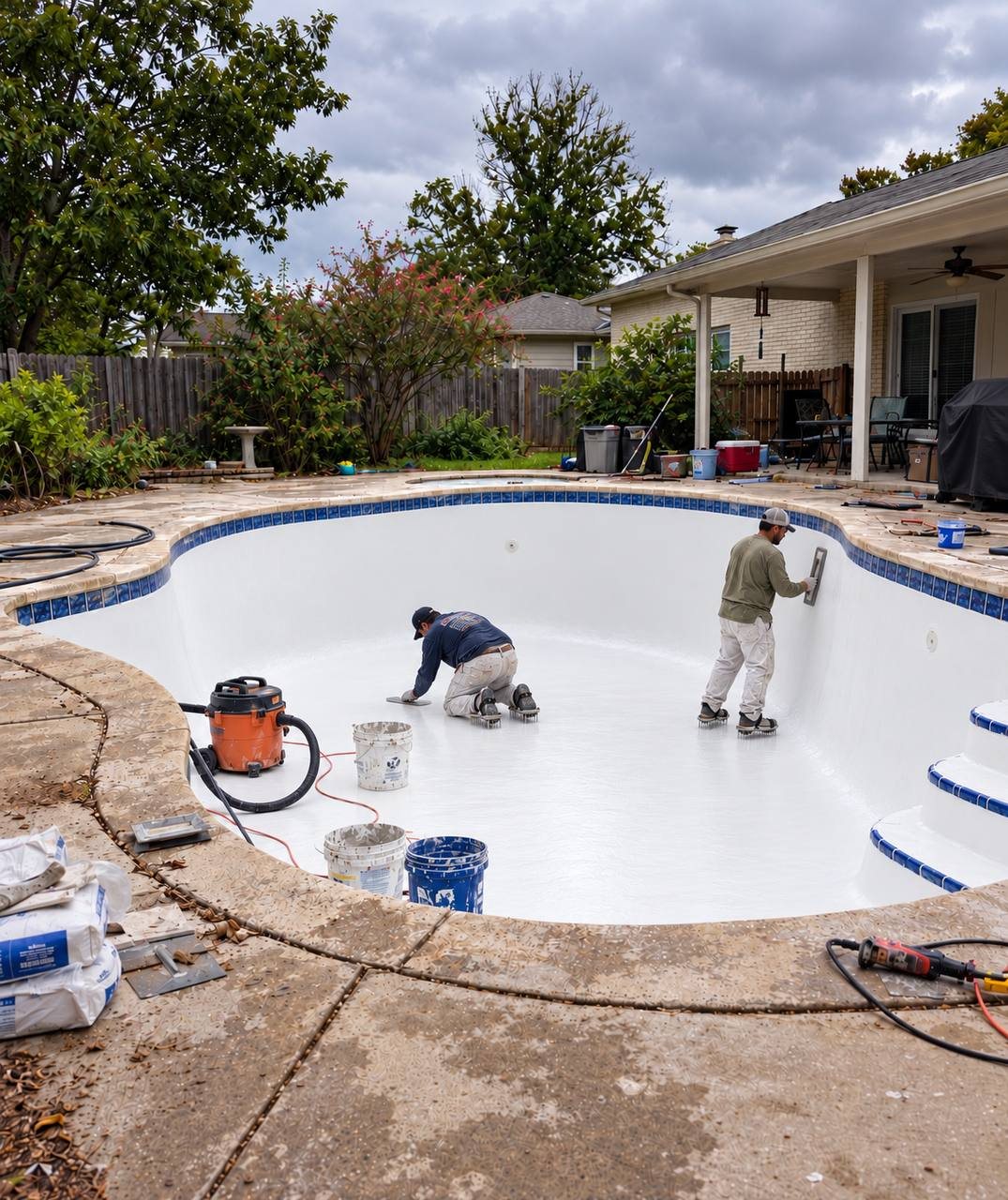
- Finish application. Plaster and quartz are troweled and smoothed; pebble finishes are troweled then washed back with water to expose the aggregate at the surface. Crew experience is most apparent here — blotchy color, uneven aggregate exposure, and rough spots are applicator problems, not material problems.
- Fill and startup chemistry cure. The chemistry protocol during the first two weeks of fill is not optional. Early pH imbalances etch new finishes permanently before anyone has swum in the pool. The NC DHHS Environmental Health Section sets startup and water quality standards for commercial pools; the underlying chemistry principles apply equally to residential work.
What drives the final cost on a mountain pool job
Pool surface area multiplied by the per-square-foot ranges above gives you a floor estimate. Several factors push Buncombe County jobs toward the top of that range:
Lot access and terrain. Ridge neighborhoods around Asheville frequently combine steep driveways, narrow gates, and compact backyard footprints. When pump trucks can't reach the work area, crews hand-mix and hand-haul materials — slower and more expensive. Hillside lots also tend to produce irregularly shaped pools that require more cutting and detail work than a standard rectangle.
Shell condition and repair scope. Pools that haven't been resurfaced in twelve or more years regularly have surface layers that delaminate during prep. Every square foot of void fill or crack repair adds time before the finish coat starts. A bid that doesn't include a shell inspection caveat, or that offers a locked flat price without examining the bare shell, is pricing the best-case scenario and billing the real one.
Aggregate color and blend. Standard pebble color families run within the base range at the installed rates covered on the PebbleTec cost page; custom blends, darker aggregates, and specialty quartz finishes carry premiums above the midpoint. Asking for the base-color rate versus the premium-color rate is a useful way to understand where a quote's assumptions sit.
Installer certification carries real weight here: the Pool and Hot Tub Alliance (PHTA) maintains certification tiers for pool finish applicators. A PHTA-certified crew's rate typically lands in the middle to upper portion of the installed range — but finish warranty claims that require tearing out and redoing a surface cost far more than the premium ever did.
Three questions that protect you when comparing bids
"What does shell prep include, and how is damage priced once the pool is open?" The most common low-bid tactic is a flat quote that assumes a clean shell, followed by supplements once the pool is drained and cracks appear. Prep priced time-and-materials after drain-down is honest. A locked price that doesn't vary with shell condition should prompt you to ask explicitly what happens when surprises show up — because surprises do show up.
"Who actually applies the finish — your crew or a subcontractor?" Many pool companies subcontract the finish application to specialty crews. That is not automatically a problem, but you want to know whose warranty covers the work and whether the applicator carries their own general liability coverage. Pool construction and renovation work in North Carolina falls under contractor licensing requirements; the NC Department of Insurance Building Code Council is the reference for what license classifications cover pool finish and resurfacing work specifically.
"Is startup chemistry service included in the quote?" A pebble or quartz finish neglected through its first two weeks of fill can develop permanent etching before you swim in it once. Some contractors include startup service in the base quote; others bill it separately or leave it to the homeowner. The answer tells you whether the contractor expects accountability for the finish's most vulnerable window — or whether that responsibility lands with you by default.