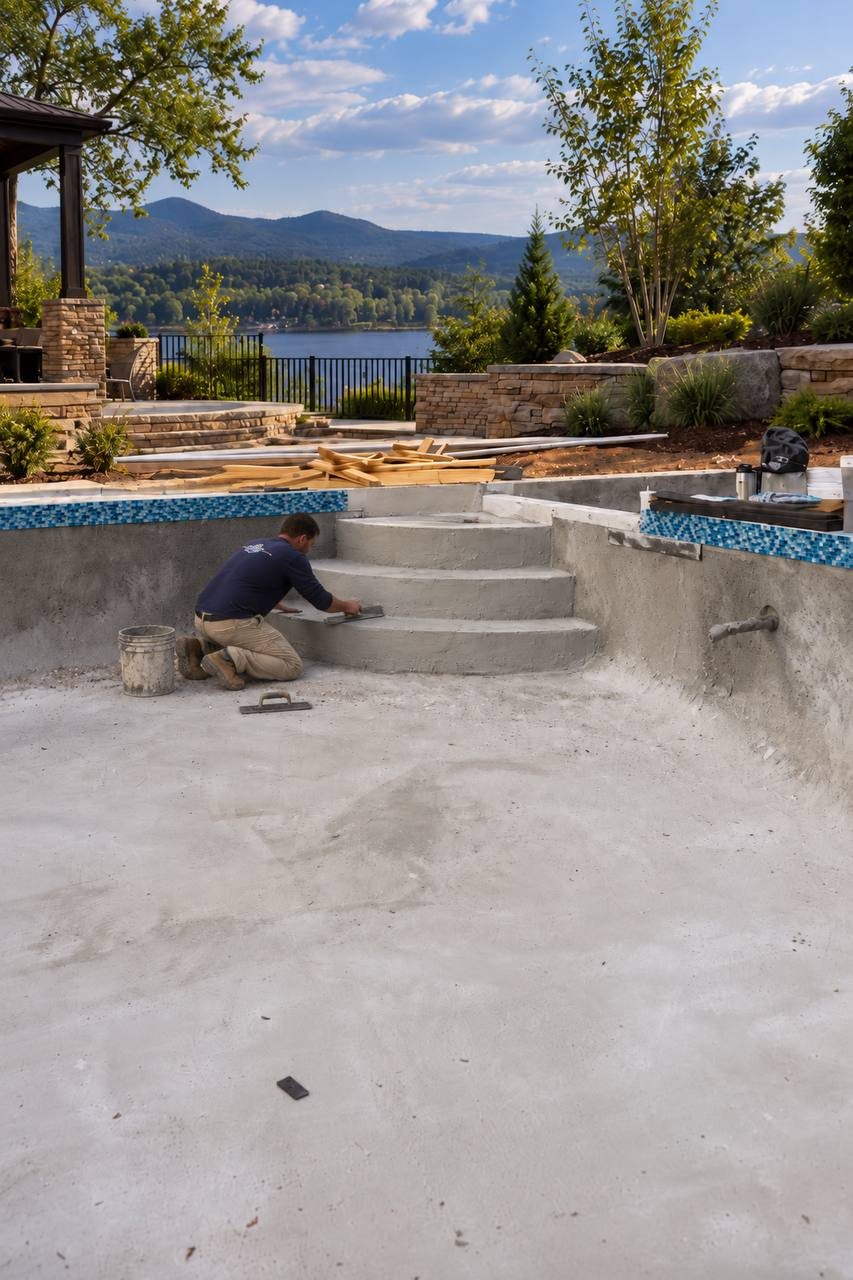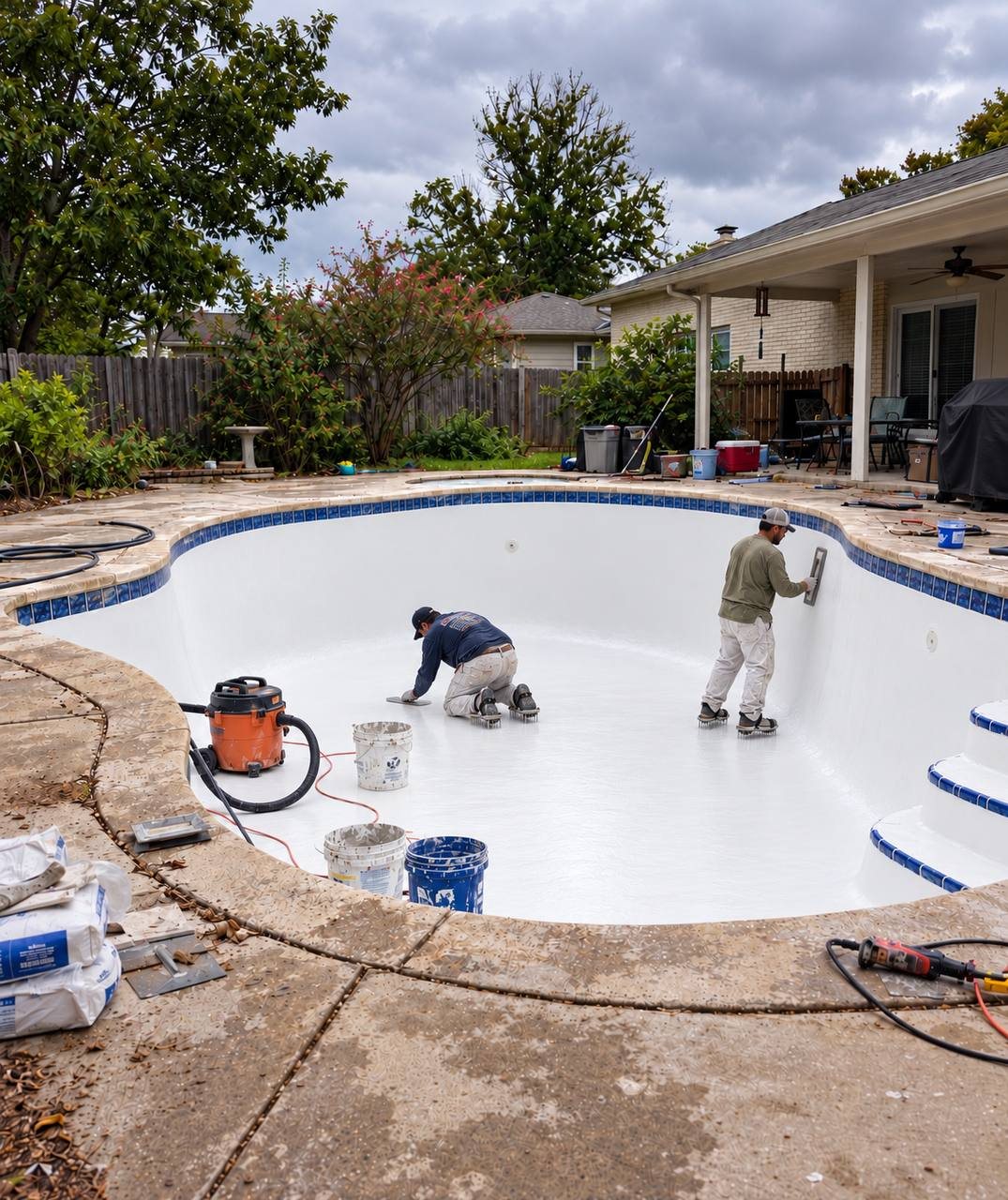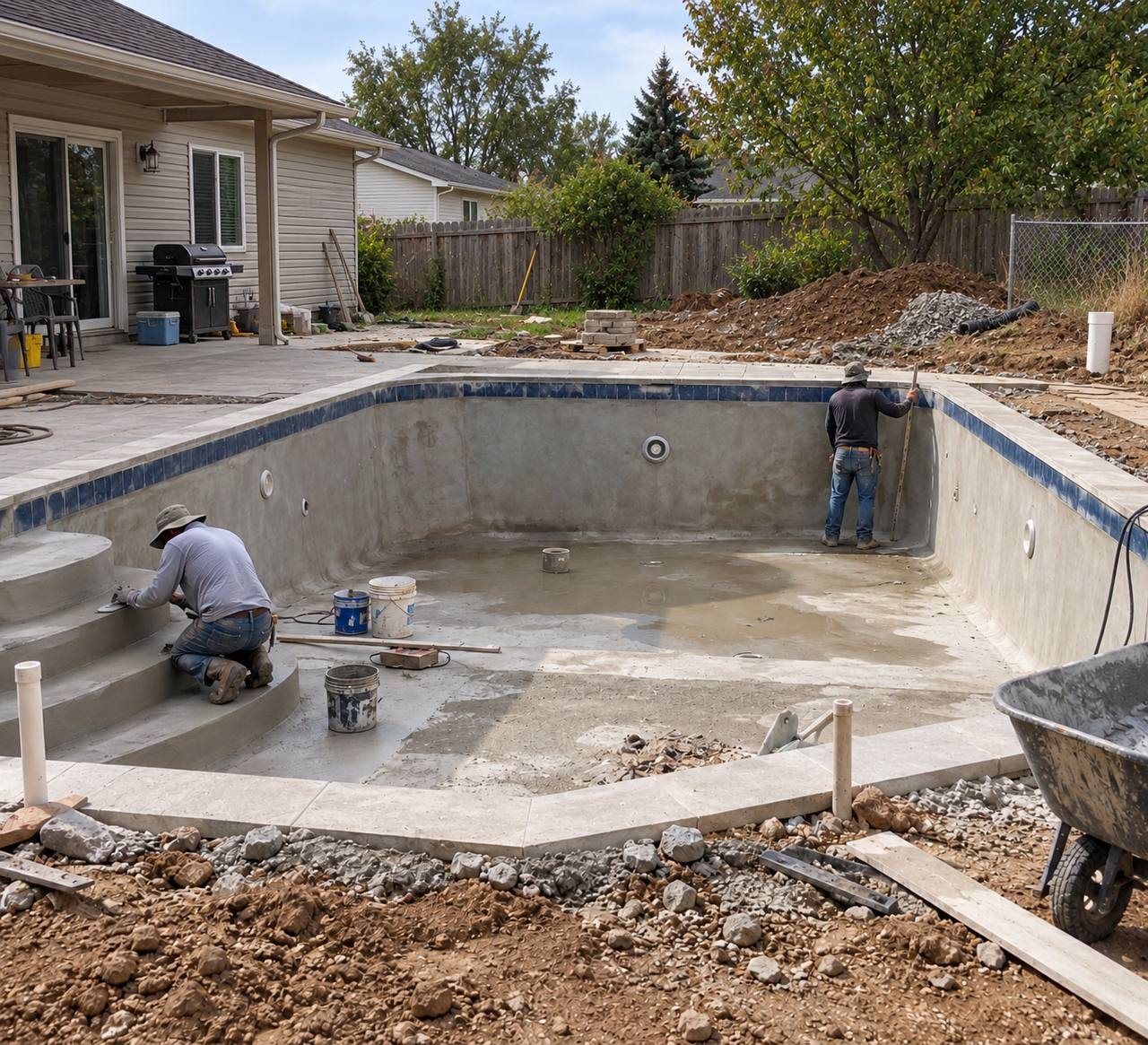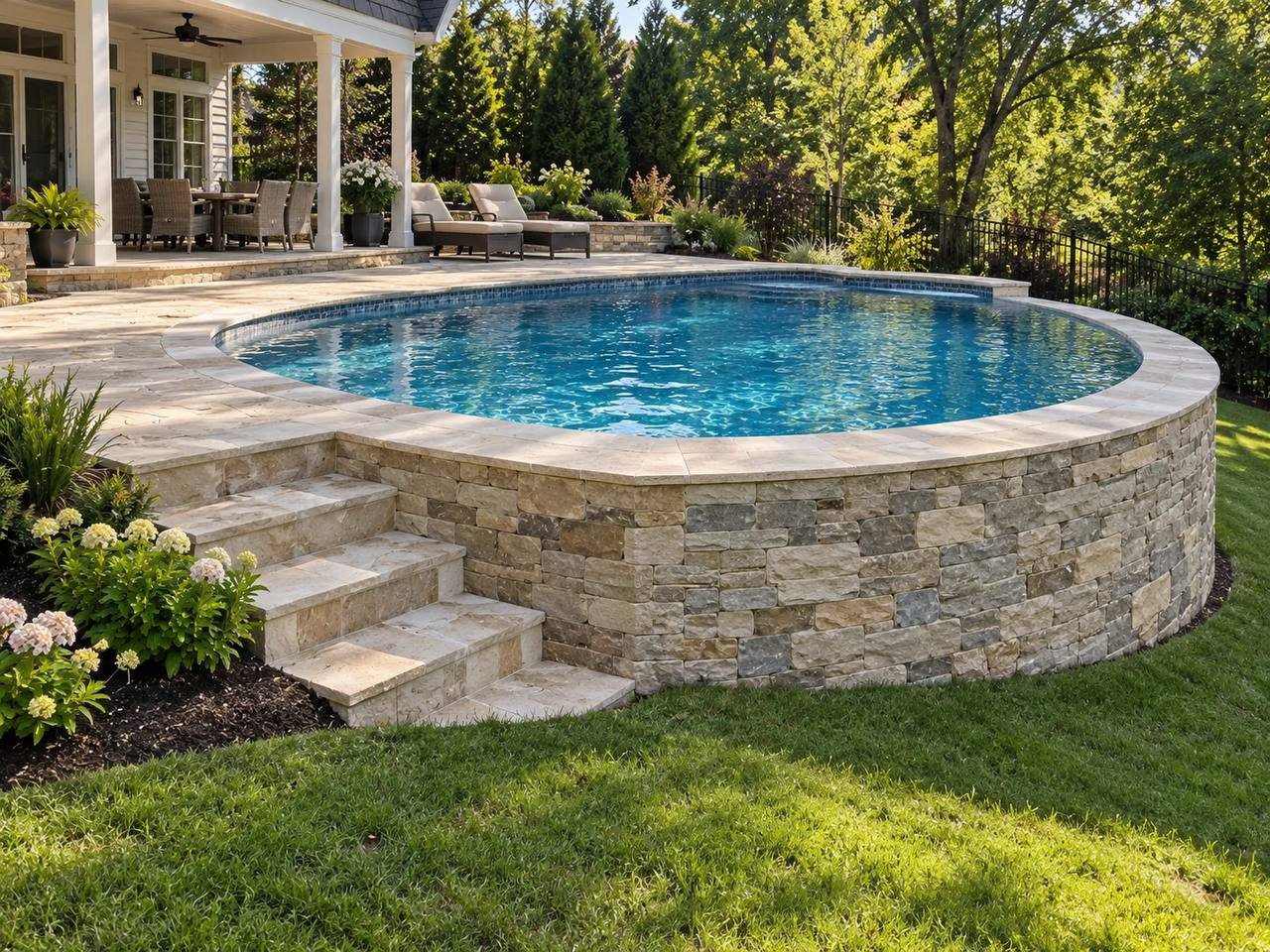
Altitude is the variable no flatland quote prices in
Highlands sits above 4,000 feet on the Macon County plateau — one of the highest incorporated towns in the eastern United States, and one of the wettest. Annual rainfall here runs well above the state average, and winter temperatures regularly cross the freeze threshold. Those two facts together make pool renovation in Highlands a different trade than pool renovation anywhere below the escarpment.
Freeze-thaw cycling is the primary driver: water works into tile grout, coping joints, and plaster cracks during the wet months, then expands when it freezes, widening every opening it found. A pool that would hold a standard plaster finish for fifteen years in the Piedmont may show significant surface failure in eight years here. Renovation scopes in Macon County routinely start with a systematic freeze-thaw assessment — a check of which surfaces have taken on water behind them — before a single scope line gets written. Any bid that skips this step is working blind.
The second factor shaping every job here is ownership pattern. Most Highlands pools sit on vacation estates whose owners spend weeks or months away during the off-season. That means irregular winterization history, equipment shut down and restarted inconsistently, and surfaces that have sat under fluctuating water chemistry longer than ideal. The renovation estimate has to price what is actually there, not what the installation record says was installed.
What breaks first on a mountain pool
The renovation inventory in the Highlands area follows a recognizable sequence. Waterline tile is usually first: grout lines chalk out, individual tiles work loose, and the bond coat behind them shows moisture intrusion that runs deeper than the tile row itself. Coping follows — the stones at the pool edge lift at the corners as the bond below cycles through wet and dry seasons, and once they lift, water gets behind the bond beam and accelerates the next round of damage. Interior plaster comes last, with surface crazing (that spider-web cracking pattern) signaling a finish that has absorbed enough freeze cycles to be past patching.
Equipment problems are less visible but compound quickly. Pumps and heaters that have been inconsistently winterized develop freeze cracks in the housing, scale buildup in the heat exchanger, and control boards that fail at startup after a hard cold season. A renovation that addresses surfaces while leaving degraded mechanical infrastructure in place replaces aesthetics without restoring function.
The full picture of tile and coping replacement — what a proper installation looks like and why substrate prep matters more than material choice in freeze-thaw conditions — is covered in detail on that page. At Highlands elevations, that prep step is where the job either holds for a decade or fails again in three winters.
What renovation work actually costs in this market
Highlands jobs run toward the upper portion of the NC range: mountain lot access, longer heating seasons, and the freeze-rated material and equipment specs this climate calls for all add to base labor. The complete line-item breakdown lives at pool remodel cost; the working table below gives the scope-level view for a standard residential pool.
| Renovation Scope | Typical Range | Highlands Factor |
|---|---|---|
| Resurface only (plaster, pebble, or quartz finish) | $6,000–$15,000 | Freeze-thaw substrate prep often adds scope |
| Waterline tile and coping replacement | $4,000–$12,000 | Bond-coat moisture check required before setting |
| Equipment package (pump, heater, automation) | $3,500–$10,000 | Freeze-rated spec recommended for this elevation |
| Deck resurfacing or replacement | $5,000–$14,000 | Drainage on slope lots adds line items |
| Full renovation (all of the above) | $20,000–$60,000 | Typical for a complete dated-pool overhaul |
These ranges apply to a residential pool of roughly 400–600 square feet of water surface. Larger estate pools, attached spas, or pools requiring structural repair sit toward the top of each band. Any scope that includes new mechanical equipment should also account for the efficiency standards described in the next section — they affect the equipment specification and long-term operating cost.
Permits, rules, and water history in Macon County
Pool renovation in North Carolina runs through two parallel frameworks. The NC DHHS Division of Public Health Environmental Health Section governs public and semi-public pool rules statewide; private residential pools fall under local building code enforcement administered through the NC Department of Insurance Building Code Council. For most residential renovation work in Macon County, permits are pulled at the county level. Scope that adds new equipment or structural modifications typically requires a permit; a resurface alone often does not — but confirming before work starts is the right sequence, not an afterthought.
Macon County's federal disaster record matters here. The county has 15 declared events across 1973-2026, almost entirely in the storm and flood category. Each of those events pushed more water at mountain-lot drainage systems than their original grading anticipated. Pools on sloped lots regularly show damage that traces back not to the pool itself but to where the uphill water went during those events. A renovation scope that ignores the surrounding grade and deck drainage is solving half the problem.
Equipment replacement now carries a separate compliance layer: variable-speed pumps are subject to efficiency minimums under the US Department of Energy pool pump efficiency standards. A renovation is the natural moment to meet that standard — and at Highlands elevations, where the heating season is longer than in warmer parts of the state, the operating cost savings over a pump's life are meaningful.
Hiring well for a vacation-property renovation
Three checks separate the right contractor from a capable one who has never worked a mountain pool. First: ask whether the crew has worked at elevation specifically — freeze-thaw prep, slope-lot drainage, and absentee-owner sequencing are not skills that transfer automatically from warmer, flatter markets. Second: ask for their winterization protocol recommendation before the job starts. A contractor who builds the annual close-down into the renovation spec — recommending materials and equipment that tolerate inconsistent care — is working in the owner's long-term interest.
Third: verify that the license covers the full scope. Plumbing, electrical, and structural work each carry licensing requirements under North Carolina law. The Pool and Hot Tub Alliance maintains professional standards and guidance on what a qualified pool contractor's credentials should include; it is a useful independent reference when evaluating a proposal.
For the full picture of what a renovation engagement should look like — from the first scope call through material selection to final walkthrough — the pool renovation overview covers what questions to ask and what answers to expect. In a market where most owners are not watching the job day to day, that first conversation sets up everything that follows.