What Buncombe County pools actually cost to resurface
Pool resurfacing quotes from online calculators rarely account for what Buncombe County does to a pool surface. At more than 2,100 feet in elevation, Asheville's winters create a freeze-thaw cycle that degrades standard plaster faster than anywhere else in North Carolina — and that shifts both which finishes make sense and how quickly they age. A significant share of pools in older hillside neighborhoods like Kenilworth, Forest Hills, and West Asheville date to the 1980s and 1990s, when plaster was the universal choice. That aging stock means most local resurface projects carry more prep work than a flatland pool of the same size would require.
| Finish type | Typical range (1,000 sq ft pool) | What drives it |
|---|---|---|
| Standard white plaster | $6,000 – $9,000 | Prep extent, crack count, pool age |
| Quartz aggregate | $5 – $8 per sq ft | Blend grade, aggregate, cure conditions |
| Pebble finish | $9 – $12 per sq ft | Aggregate selection, pool shape complexity |
| Large or access-challenged pools | Up to $15,000 | Square footage over 1,200, tight lot access, heavy prep |
Those are working ranges, not bids. A pool sitting on a steep lot with deck drainage issues and 20-year-old plaster will price toward the top; a pool in solid structural shape needing a cosmetic refresh lands lower. For a full line-item breakdown of what each phase adds, the pool resurfacing guide covers the complete project scope.
How mountain winters shorten finish life here
Asheville sits at roughly 2,100 feet above sea level. The surrounding communities — Weaverville, Black Mountain, Swannanoa, Fairview — run higher still, and even within the city limits, elevation varies considerably from the valley floor near the French Broad River up to the ridgeline neighborhoods above Town Mountain Road. At that elevation, winter nights cross the freezing threshold more often than anywhere else in the state east of the Blue Ridge divide. For pool finishes, that temperature cycling is cumulative: water migrates into the micro-pores of aging plaster, freezes and expands, then retreats during the thaw, widening those pores with every cycle. A pool surface that easily runs 12 years in Charlotte or Wilmington may begin chalking and spalling at 7 or 8 years here — and the difference is the elevation, not the homeowner's maintenance habits.
The moisture load goes beyond winter temperatures alone. Buncombe County has recorded 19 federally declared disaster events over 1973-2026, most of them in the storm and flood family. Mountain lots concentrate uphill runoff against below-grade structures, and the same hydrostatic pressure that splits foundation walls also works into aging gunite pool shells during sustained rain events. A resurface that skips thorough crack-and-void repair treats the surface and leaves the cause in place.
For planning purposes: elevation here makes finish selection a long-term performance decision, not just an aesthetic one. Choosing the least expensive finish to save on this resurface can mean scheduling the next one in fewer years, often at equal or higher cost because a degraded shell requires more prep labor than a sound one does. The honest cost comparison is total outlay over 15 to 20 years, not just this resurface's price tag.
Finishes worth considering in this climate
Three finish families dominate the Buncombe County market. Each interacts with the elevation and winter cycling differently, and the price spread between them reflects genuine differences in how they age under local conditions.
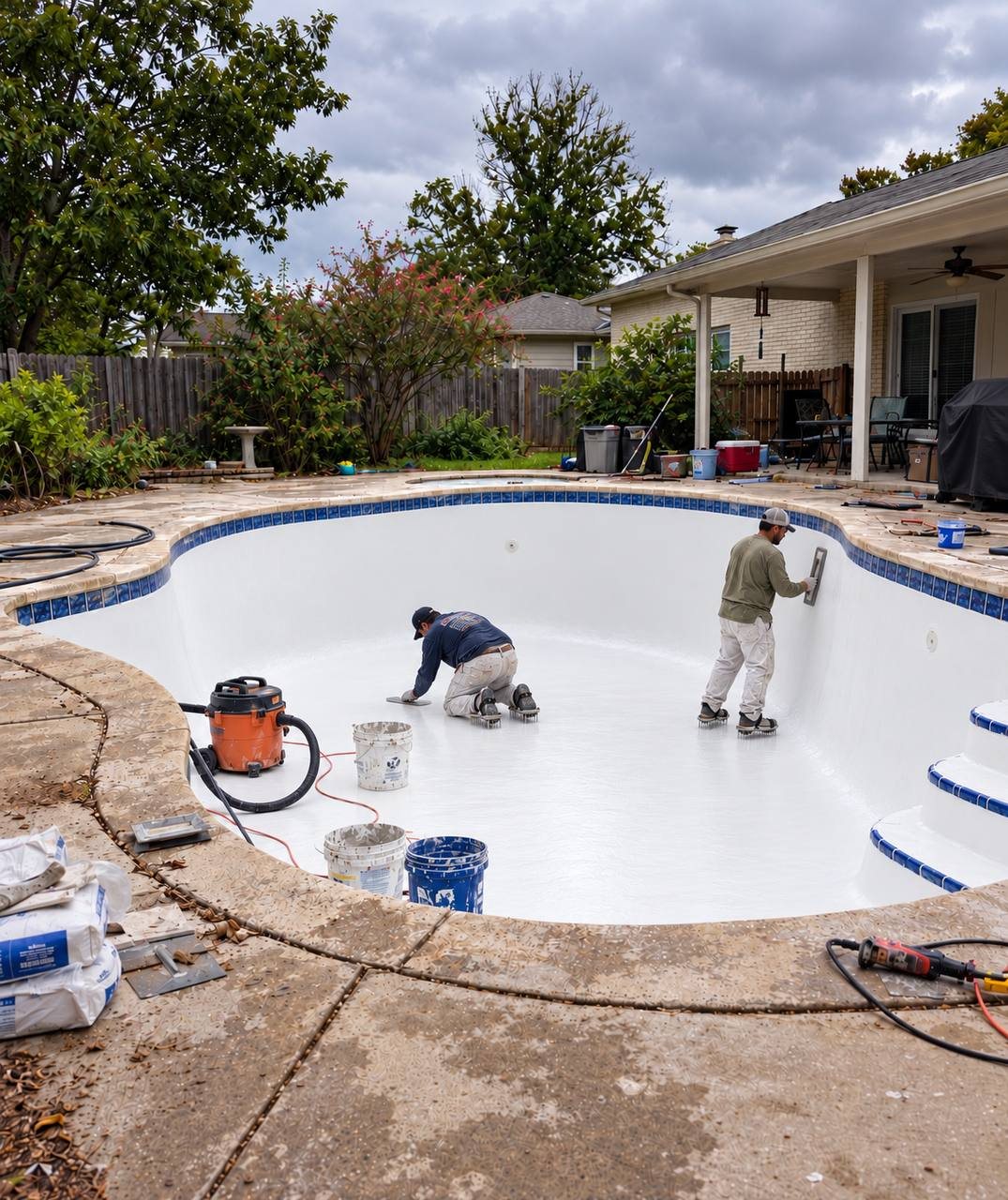
Standard white plaster is the entry finish and the most common reason pools in this area need resurfacing — chalking, roughness that scratches swimmers, and brown or gray staining are the signs. It is also the most vulnerable finish to freeze-thaw erosion. Most crews working the Asheville market treat it as a reasonable choice only when budget is the hard constraint and the owner understands that another resurface is likely within a decade.
Quartz aggregate blends Portland cement with quartz aggregate, tightening the surface and improving resistance to both temperature cycling and the chemical fluctuations that mountain water chemistry creates. At $5 to $8 per sq ft installed, it is the workhorse choice for most Buncombe County pools that see regular seasonal use. The pebble and quartz pool finishes guide covers the specific blends and color options available in this region, including which products carry meaningful manufacturer warranties.
Pebble finishes — PebbleTec and comparable exposed-aggregate systems — offer the hardest surface of the three. At $9 to $12 per sq ft, the upfront cost is higher, but the durability advantage in high freeze-thaw environments is real. The PebbleTec cost guide covers what that premium buys over a 15-to-20-year horizon. The Pool and Hot Tub Alliance (PHTA) maintains finish-performance standards that inform which products carry long-term warranties — worth verifying before committing to a product.
Permits and pool rules that apply in this county
Pool resurfacing in North Carolina sits at an intersection of two regulatory systems that operate independently of each other, and knowing which one applies changes both your timeline and your contractor checklist.
On the building code side, any resurface that involves repairing structural cracks in the pool shell — not simply applying a new finish coat over an intact surface — may trigger a permit requirement under the North Carolina residential building code. The NC Department of Insurance Building Code Council sets the statewide standard; Buncombe County enforces it locally. A purely cosmetic replaster on a structurally sound shell typically does not require a permit. A contractor who cannot give you a direct answer about which category your job falls into is worth questioning before any contract is signed.
On the public health side, the NC DHHS Environmental Health Section regulates pool and spa operations for public and semi-public facilities, a category that includes vacation rental pools and HOA pools under state definitions. If your pool qualifies, state rules govern how and when a resurfaced pool may legally reopen for use. Private single-family pools are exempt from those rules, but the classification question matters if the property is or may become a short-term rental.
Getting a quote that holds on a mountain lot
Buncombe County's terrain creates a few specific issues in the quoting process that flatland resurface bids rarely surface.
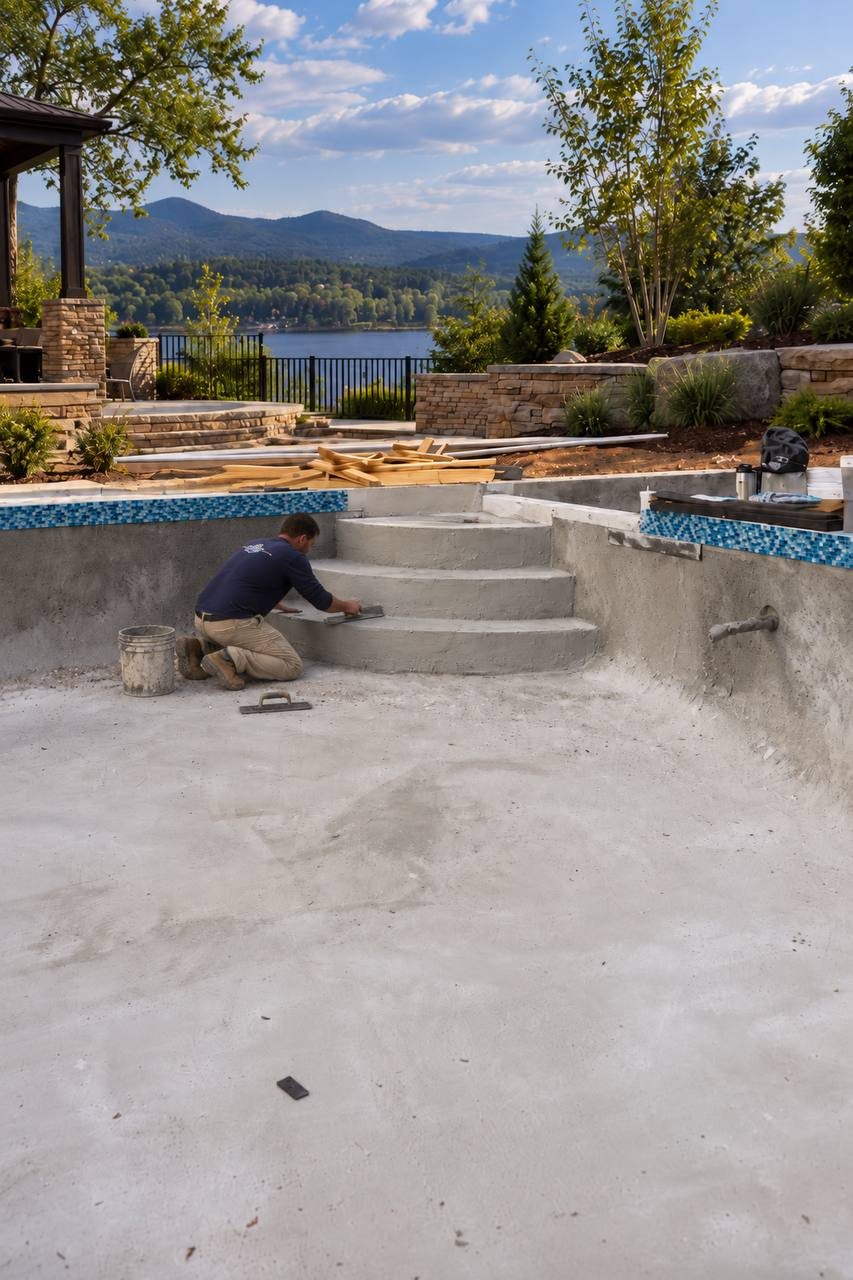
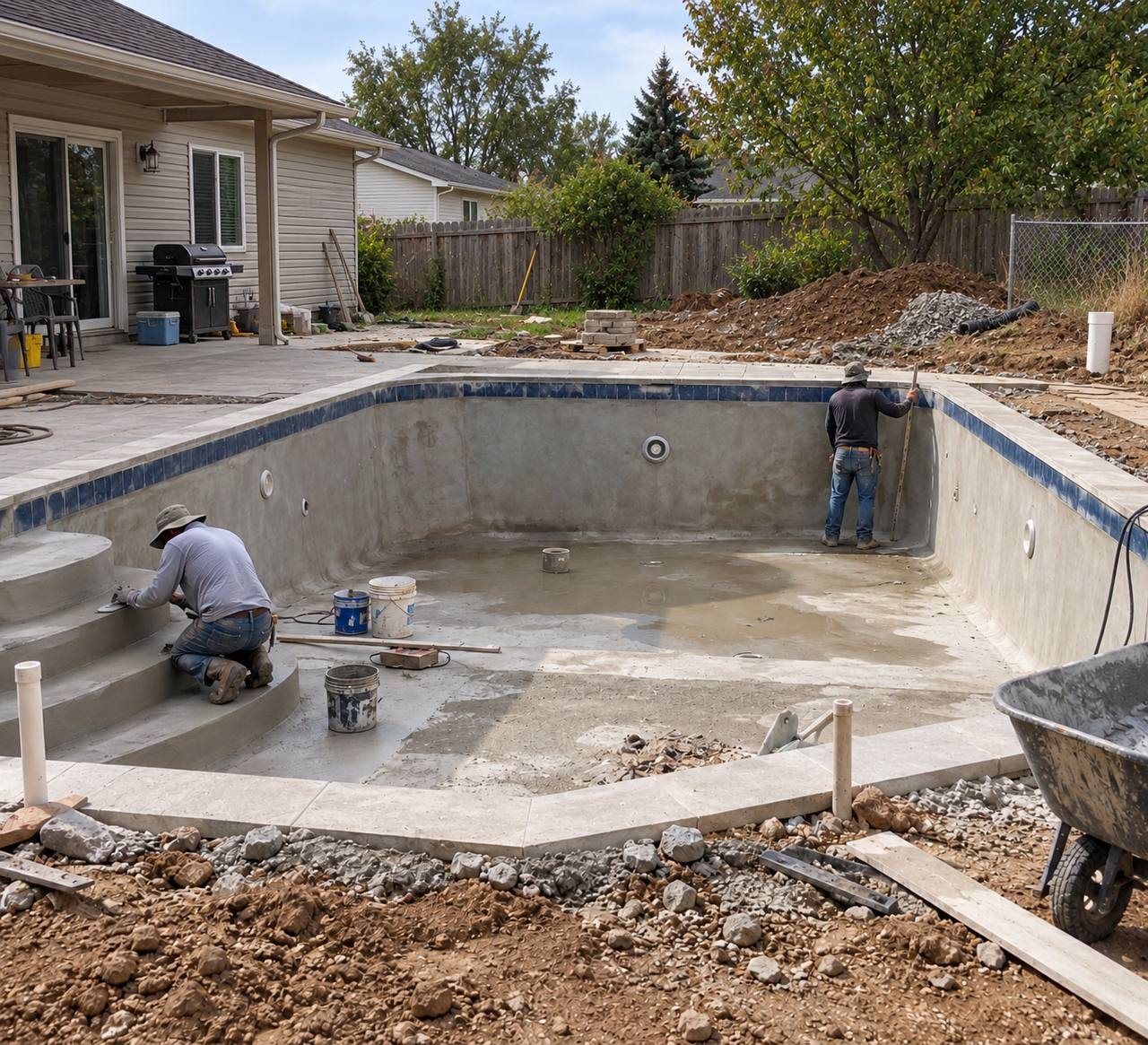
- Start with the shell condition, not the finish. Blistering, hollow spots, and active cracks all add prep labor before new material goes down. Ask every bidder to walk the drained shell with you and identify what prep your specific surface requires — not just what the finish costs per square foot. A crew that quotes without seeing a drained pool is guessing on the most important variable.
- Price per square foot, not per job. Pool dimensions vary, and job-level quotes are hard to compare across contractors. A per-sq-ft number lets you benchmark against the ranges in this guide and keeps change orders honest if prep work uncovers more damage than the initial walk-through caught.
- Ask what the water does when it rains. On the sloped lots that define most of the Asheville market, a resurface that does not address uphill drainage treats the surface without treating the cause. Grade, deck slope, and drain placement all affect how long the new finish holds up. If the contractor does not bring up drainage when you are on a hill lot, bring it up yourself.
For a complete look at what the full project involves — drain sequence, surface prep, bond coat, fill, and water balance after cure — the pool resurfacing guide covers each phase in detail.