What Flat Rock's estate character does to a pool renovation
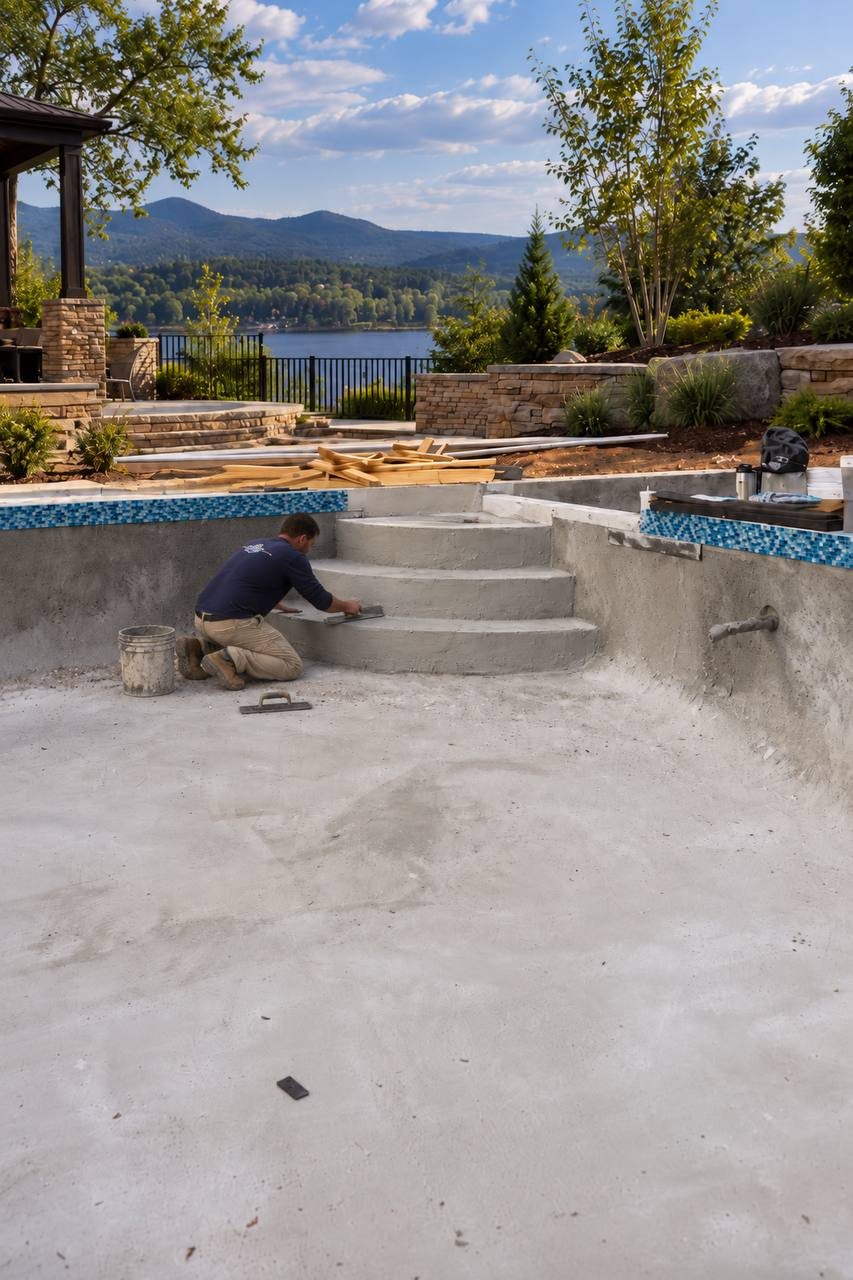
Flat Rock developed as a summer retreat for coastal Carolina families in the nineteenth century, and the estate-scale lots those families established are still the dominant residential character today. Pools on these properties — many added during the mid-century building wave — are now thirty to fifty years old and sitting under the same mature white oaks, tulip poplars, and hemlocks that shade terraced lawns stretching back to the Blue Ridge treeline. That canopy is the defining condition for renovation work here, and it separates a Flat Rock project from most of what you will see on a cleared suburban lot in Hendersonville.
Organic debris breaks down surface chemistry in ways that open-sky pools rarely face. Plaster stains from tannins and leaf tannin; grout etches and chips at the waterline; coping joints fill with root-pushed debris and begin to lift from the bond beam. A pool that has sat under mature hardwoods for fifteen years without a refinish carries a calcium-scale record of those years — layers of chemistry fighting the organic load until the surface itself became the casualty.
Root intrusion into deck sub-base is the other distinctive problem. Cracked concrete near the coping on these lots usually isn't settling; it's the root system of a sixty-year-old tree doing what root systems do. Replacing that concrete without addressing the roots underneath is a five-year fix at best. The full renovation overview explains how scopes are assembled; the Flat Rock version of that scope almost always starts by cataloging what the trees did before pricing what the contractor will do.
What renovation scope costs in Henderson County
Projects in this market price consistently with the regional mountain range. A full remodel covering interior finish, tile, coping, deck, and equipment typically runs $20,000 to $60,000; a resurface-only refresh starts around $6,000. Scope drives price more than pool size: a job that requires deck replacement alongside a resurface is a meaningfully larger project, and the tree-adjacent lots common in Flat Rock often need both. Jobs at the high end of the range frequently add drainage corrections where root activity or saturated soil has compromised the original deck sub-base.
See the Henderson County cost breakdown for full line-item detail. The scope-versus-range summary:
| Scope | Typical range |
|---|---|
| Resurface only (plaster, quartz, or pebble) | $6,000 – $14,000 |
| Tile and coping replacement | $8,000 – $18,000 |
| Concrete deck replacement or full resurfacing | $10,000 – $22,000 |
| Equipment package (variable-speed pump, filter, heater, automation) | $6,000 – $15,000 |
| Full remodel (interior, tile, coping, deck, equipment) | $20,000 – $60,000 |
Any bid that doesn't itemize scope by line and separate labor from materials should be treated as incomplete rather than inexpensive. The difference between a $28,000 job and a $48,000 job on paper-similar pools is almost always deck condition and equipment age — both things a contractor walking the property can tell you before you sign anything.
Mountain weather and how it ages a pool surface
Henderson County sits at the southern end of the Blue Ridge, and its elevation shapes how pools age. At Flat Rock's roughly 2,200-foot elevation, genuine freeze-thaw cycling runs through the winter months — not the extended hard winters of higher ranges, but enough repeated temperature movement to work coping mortar loose and crack improperly drained equipment over five to ten seasons. Pools that were built for a lower-elevation climate, or that have missed consistent fall winterization, typically show that stress in the coping joints and return fittings first, well before the interior finish fails.
The county's storm record adds a second layer of aging. Federal disaster declarations touch Henderson County across 16 events spanning 1978-2026, the majority in the storm-and-flood family. Heavy rainfall events saturate soil around pool decks built on cut-and-fill lots, and that saturation frequently turns a heaving expansion joint from a cosmetic issue into a structural one. When a deck shows persistent movement in the same spot year after year, the ground conditions underneath it — not just the surface material — are part of the renovation scope. A resurfaced deck poured back over the same waterlogged sub-base will crack again in the same place.
This combination of elevation stress and storm-driven soil movement is specific to this county and distinguishes an honest Henderson County renovation scope from a standard flatland one.
Permits, inspections, and what the rules require
Pool renovation in Flat Rock falls under Henderson County permitting for structural and electrical work, and under North Carolina's statewide pool and spa rules for any changes to circulation, filtration, or disinfection systems. The NC DHHS Environmental Health Section maintains the pool and spa standards that apply statewide; residential construction work ties to the building code administered through the NC Department of Insurance Building Code Council. Both layers of oversight exist for the same reason: a pool with an undersized circulation system or improperly bonded electrical components is a hazard, not just a renovation shortcut.
In practice: a like-for-like resurface typically does not require a permit; replacing the circulation system, adding a heater, or making structural changes to the deck or bond beam does. Contractors who skip the permit conversation on mid-scope jobs pass that liability to the homeowner at the next inspection and at every property sale after that. Ask which specific line items require permits before the contract is signed — not during the job.
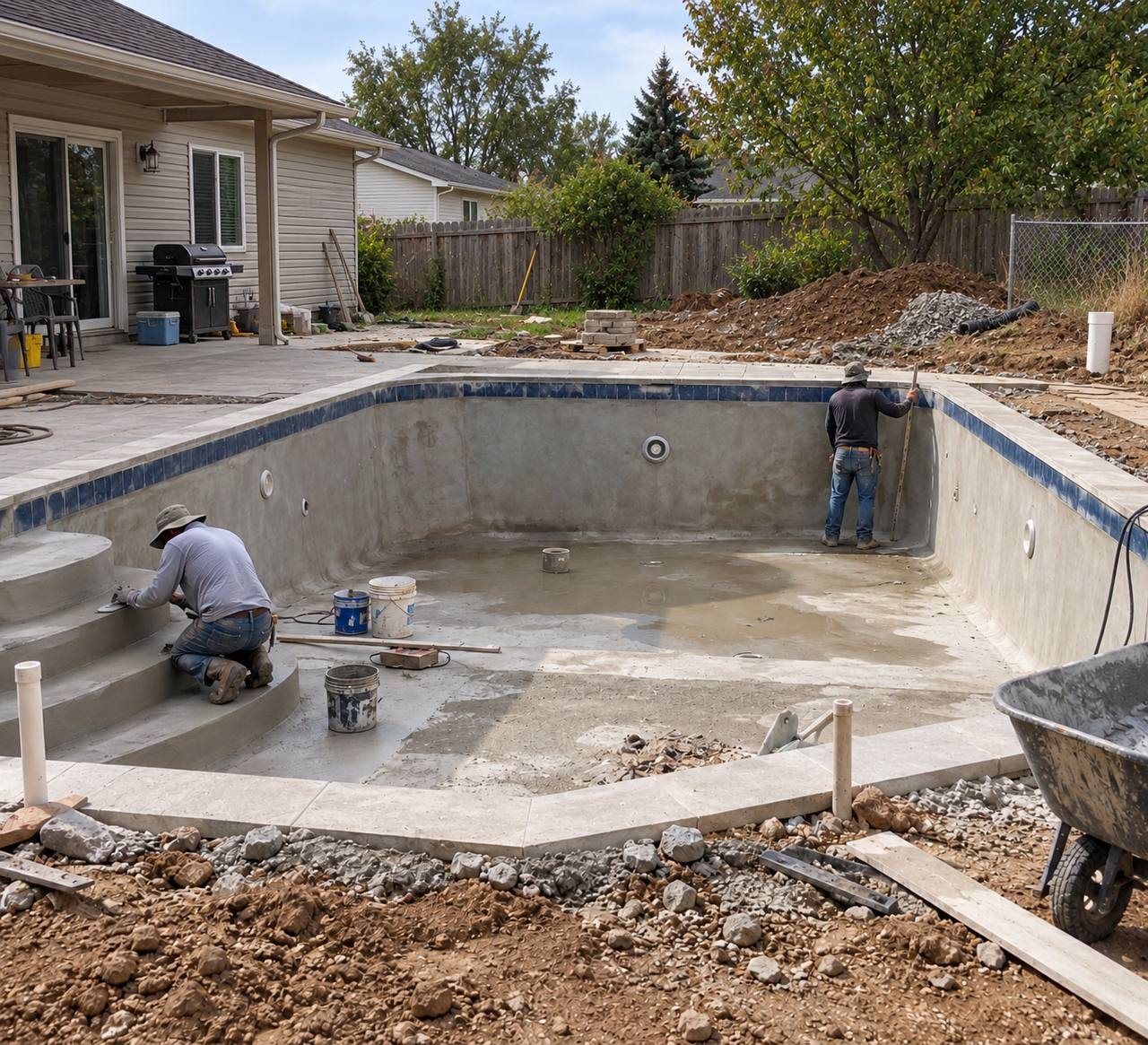
For tile and coping replacement, the scope often sits right at the permit threshold. Coping that engages the bond beam is structural work by definition, and the permit requirement varies by scope and by how the existing pool was originally constructed. Get a clear answer before the old coping comes off.
Equipment upgrades: what changed and why the timing matters
Pool equipment installed before 2010 is almost certainly running on single-speed pumps that have not been manufactured to current efficiency standards in years. The US Department of Energy's dedicated-purpose pool pump rule — detailed in Federal Register 2023-20343 — sets minimum efficiency thresholds that variable-speed technology already exceeds by a wide margin. For a Flat Rock pool running a four-to-five-month mountain season, a variable-speed pump replacement typically pays back in lower electricity costs within a few years; paired with an automation controller, it also simplifies the fall shutdown that mountain-climate pools require every year without exception.
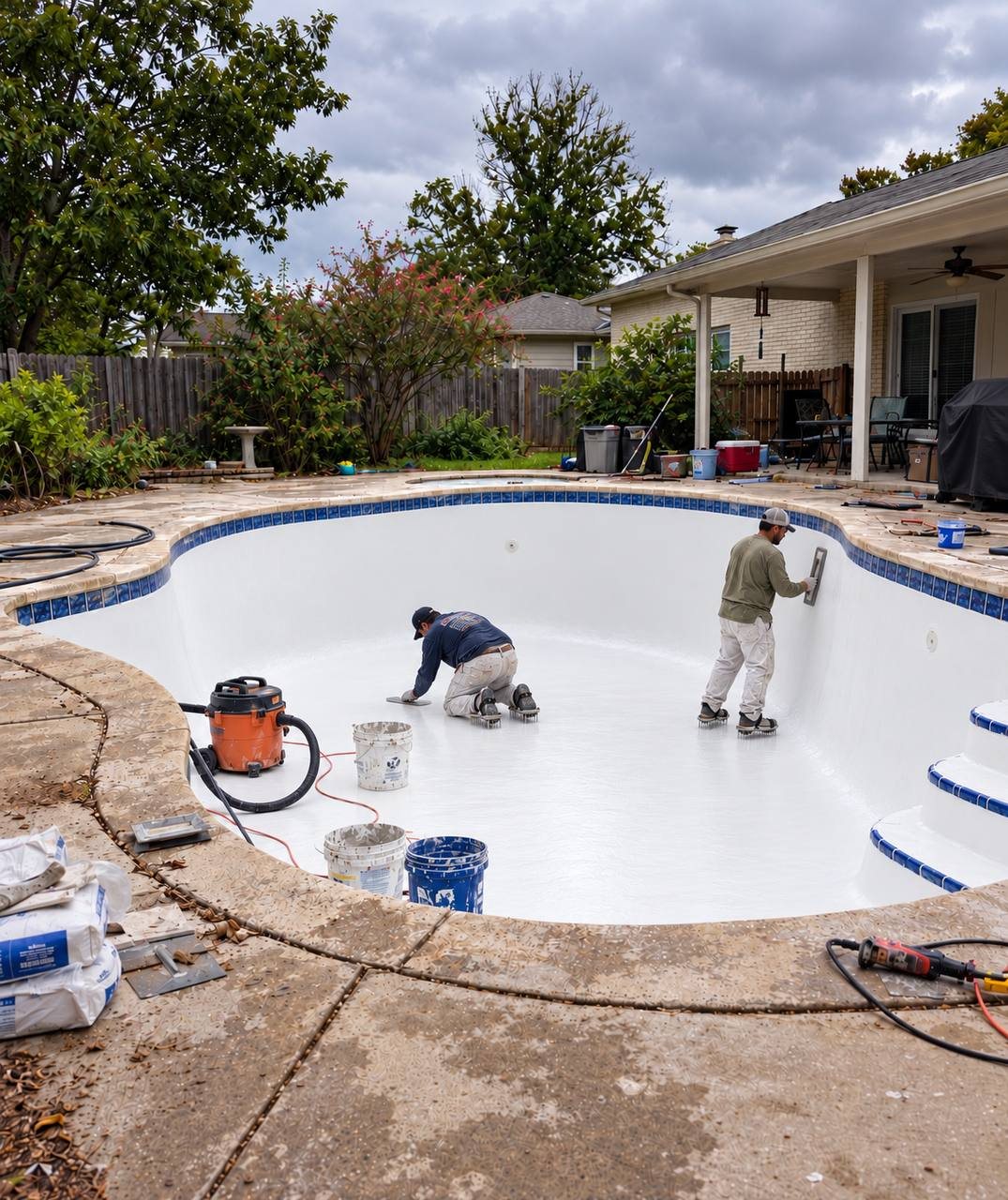
A renovation is the right moment to evaluate equipment alongside surfaces. The pool is already drained, the contractor is already mobilized, and the incremental cost of swapping equipment during a resurface is substantially lower than scheduling a separate project later. Heaters, salt systems, and automation controllers are each worth evaluating against the pool's age and the property's actual use pattern. A vacation home that sits unoccupied for four months at a time has different equipment priorities than a year-round residence, and an honest proposal will reflect that difference rather than upselling every category on the list.