What the canopy does to a pool deck here
Biltmore Forest's residential lots were carved from the Vanderbilt-era estate forest, and the old-growth canopy that defines the neighborhood changes pool deck work in specific ways. This is not a sun-washed subdivision where concrete bakes dry between uses. Shade here is persistent — oaks, maples, and tulip poplars close off the sky over many back-lot pools from late spring through October. On a shaded deck, moisture doesn't leave; it cycles into the surface and back out with every temperature swing. The result is accelerated spalling on older concrete, a persistent green tinge from algae and moss, and surface deterioration that looks cosmetic until it isn't.
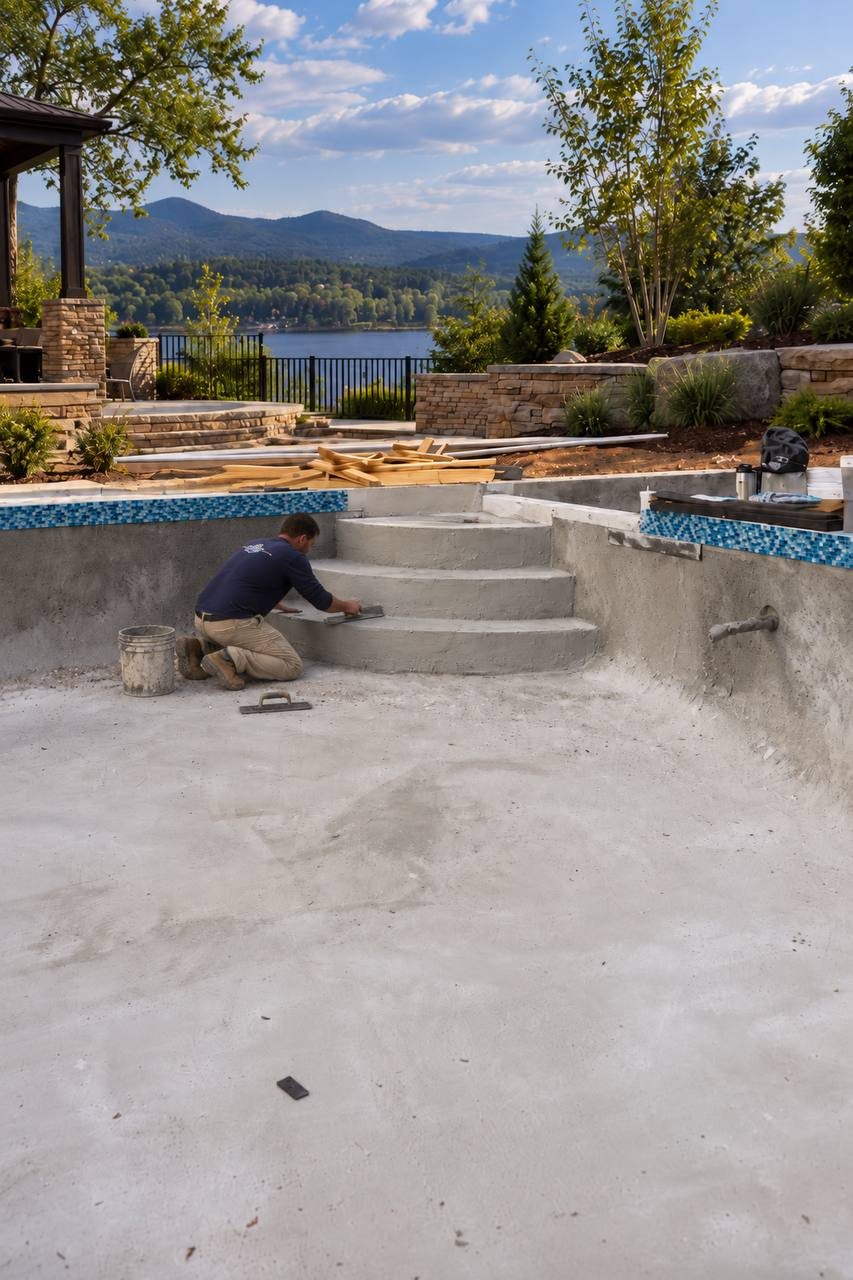
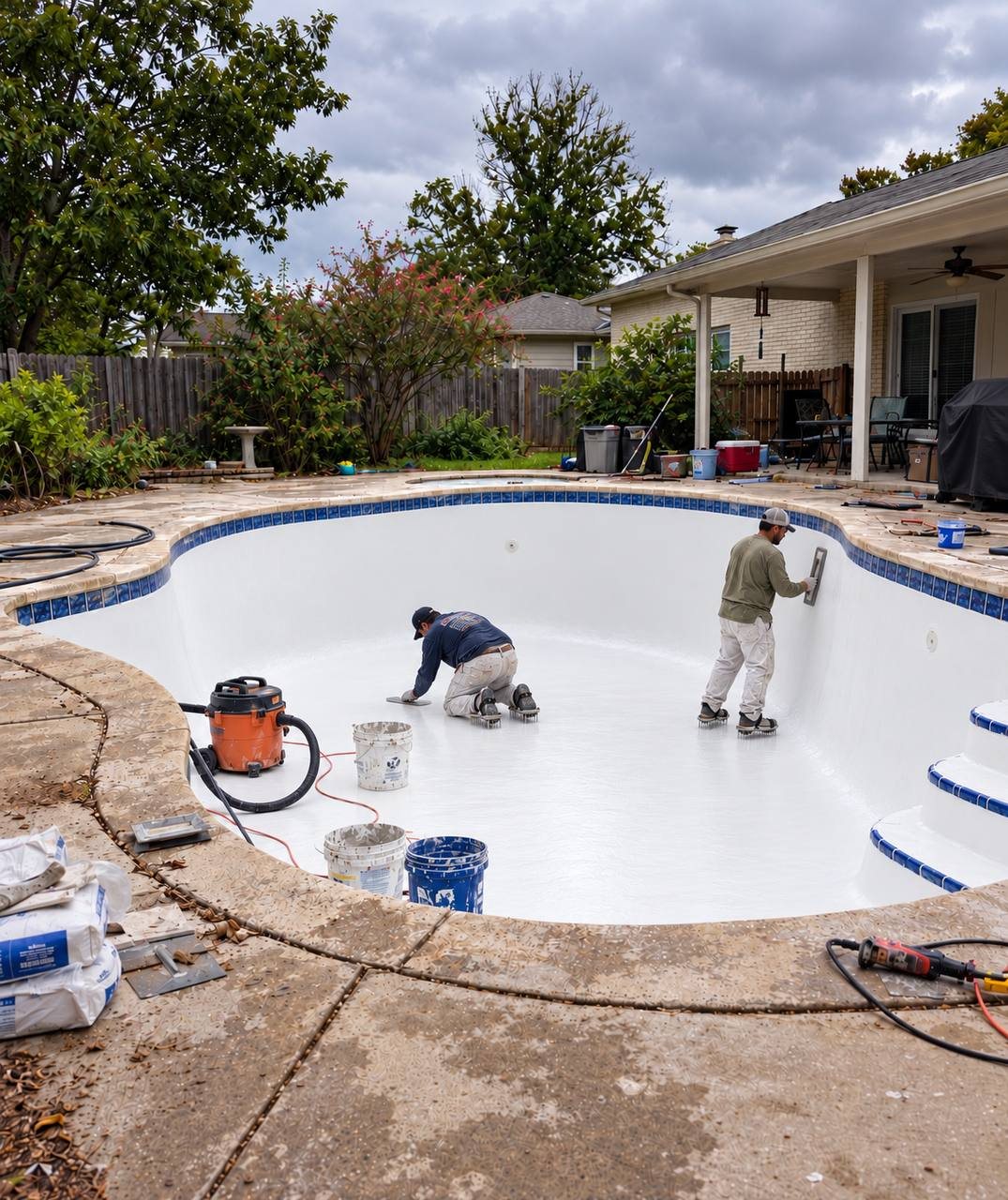
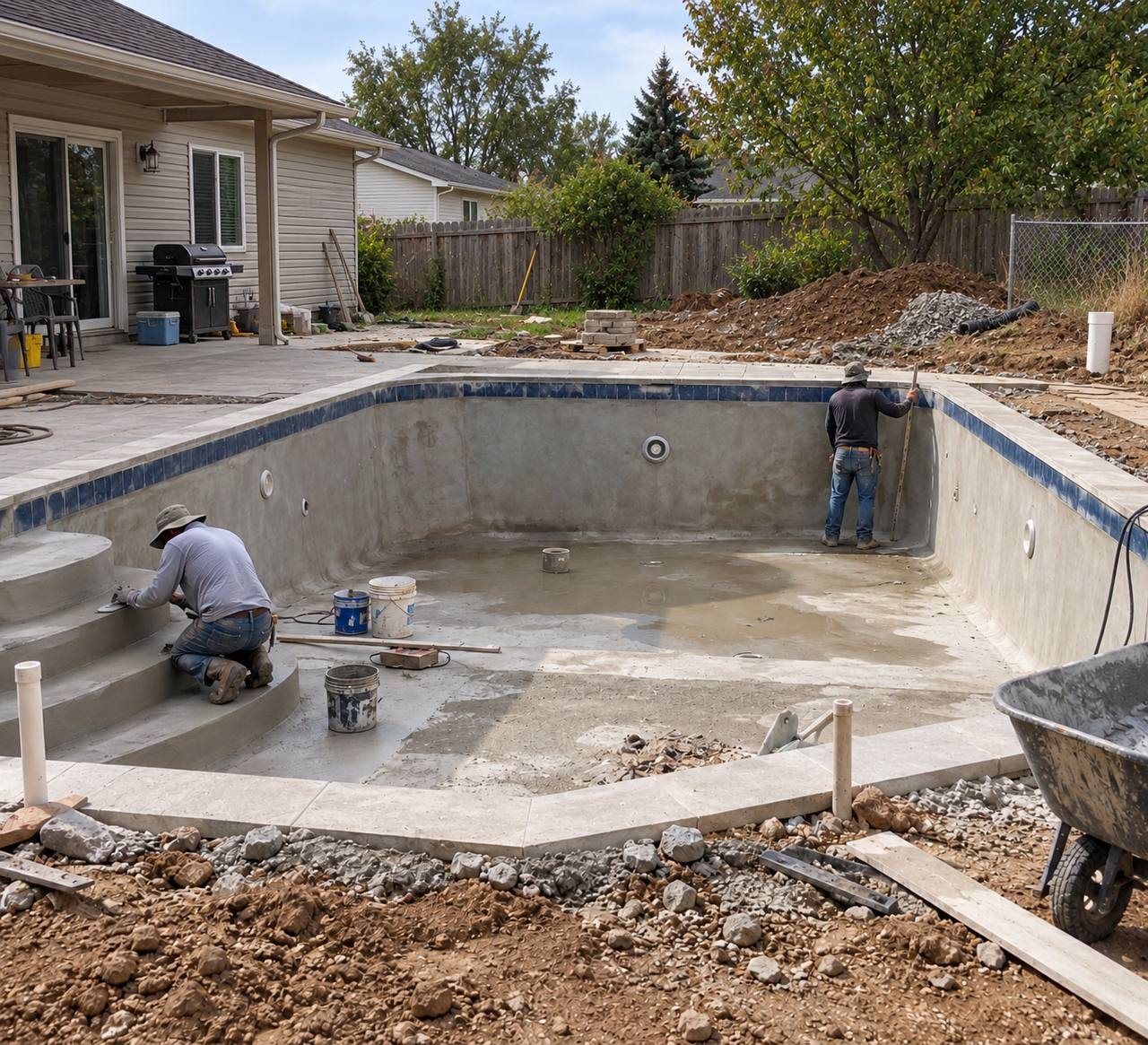
Most Biltmore Forest pools were installed between the 1950s and 1980s. Concrete decks from that era were poured without the polymer additives that extend modern concrete's service life, and their finish layers have often eroded down to coarse aggregate. The practical consequence: prep work on a Biltmore Forest deck typically runs deeper and longer than what crews budget on a newer suburban slab in Fletcher or Weaverville. Price for that before you compare bids. The pool deck resurfacing guide covers all surface types in full; what follows is specific to this town and its pools.
The cost picture for Biltmore Forest
Prices here sit inside the same bands as the rest of Buncombe County, but where a job lands within those ranges depends on three factors specific to older, heavily shaded properties: how much organic material has worked into the surface, whether the drainage grade has shifted over the decades, and how much crack remediation the slab needs before a new surface can bond properly.
| Scope | Material | Typical Range |
|---|---|---|
| Concrete overlay, existing surface intact | Spray or brush-applied coating | $3–$10 per sq ft |
| Stamped concrete overlay | Decorative patterned concrete | $8–$20 per sq ft |
| Travertine tile or natural pavers | Stone set on prepared base | $15–$27 per sq ft installed |
| Surface prep and crack repair | Added to any scope above | $1–$4 per sq ft |
| Drainage grading correction | Added when grade has shifted | Varies by extent |
The full interaction between square footage, material selection, and prep depth is in the pool deck resurfacing cost guide. On a Biltmore Forest scope, prep typically accounts for 15 to 20 percent of the total. Don't accept a bid that folds it into the surface price without breaking it out — that's where corners get cut.
Mountain weather and surface longevity
Buncombe County sits at elevation, and elevation means freeze-thaw cycles that coastal North Carolina pool owners never face. A deck sealed five years ago that has seen temperatures drop below freezing repeatedly has had water infiltrate and expand inside every hairline crack dozens of times by now. By the time visible spalling appears, the subsurface damage is usually broader than it looks from above.
The federal disaster record for this county — 19 declared events spanning 1973-2026 — is dominated by storm and flood episodes, each one delivering sustained moisture to surfaces already taxed by the mountain climate. This is why any serious resurfacing scope here starts with a drainage question: where does water run when it leaves the deck, has the grade shifted over time, and is the pool surround channeling runoff away from the slab or toward it? Surface material applied over an unresolved drainage condition fails early regardless of how well it was installed.
Code requirements and what surfaces have to do
Pool deck surfaces in North Carolina carry real performance obligations beyond appearance. The NC DHHS Environmental Health Section establishes pool and spa standards that address slip resistance and deck condition as part of its pool safety framework — requirements that apply to residential pools when they're part of a permitted renovation. A surface that's slick when wet, or one with raised edges and cracked areas that create trip hazards, isn't just an insurance exposure; it falls below the baseline standard the state sets.
The NC Department of Insurance Building Code Council governs the residential building code thresholds that determine when resurfacing work enters permit territory. A like-for-like overlay on the same footprint typically doesn't require a permit; structural drainage corrections, footprint changes, or elevation additions change that calculation. Biltmore Forest is its own incorporated municipality and its local code layers onto county requirements, so confirm with your contractor before any work begins — a permit pulled after the fact costs significantly more than one pulled upfront. If your project extends past the deck into the pool shell or equipment, the pool renovation guide covers what a combined scope looks like and what to expect from the review process.
What to verify before you hire
Three questions separate experienced crews from merely capable ones in this market. Have they worked on older poured-concrete decks that were never sealed consistently? Do they assess surface moisture before recommending a material? And how do they handle the organic staining and root debris common under established trees — does their prep sequence account for it, or does a pressure wash get it close enough?
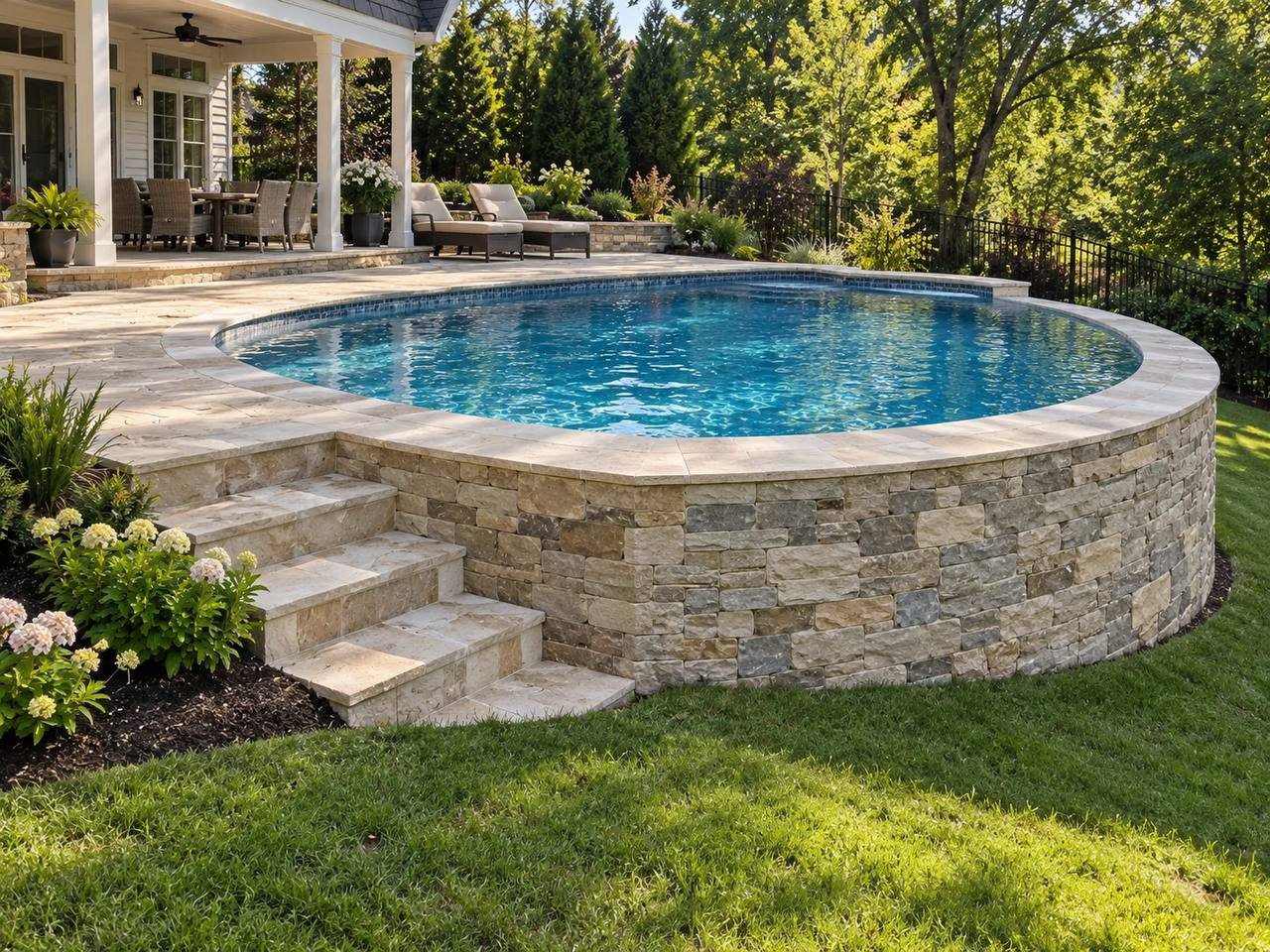
A travertine or paver installation on a well-prepped shaded lot holds up beautifully for decades. The same installation on a base that wasn't cleared of organic matter and properly graded becomes a joint-failure callback in four or five years. The Pool and Hot Tub Alliance publishes installer training and certification standards; it's a reasonable baseline check on whether a crew has formal trade knowledge behind their estimate. Ask for references on properties with mature canopy overhead, not just the cleanest job they've done on a sun-facing suburban yard — those are different skills.