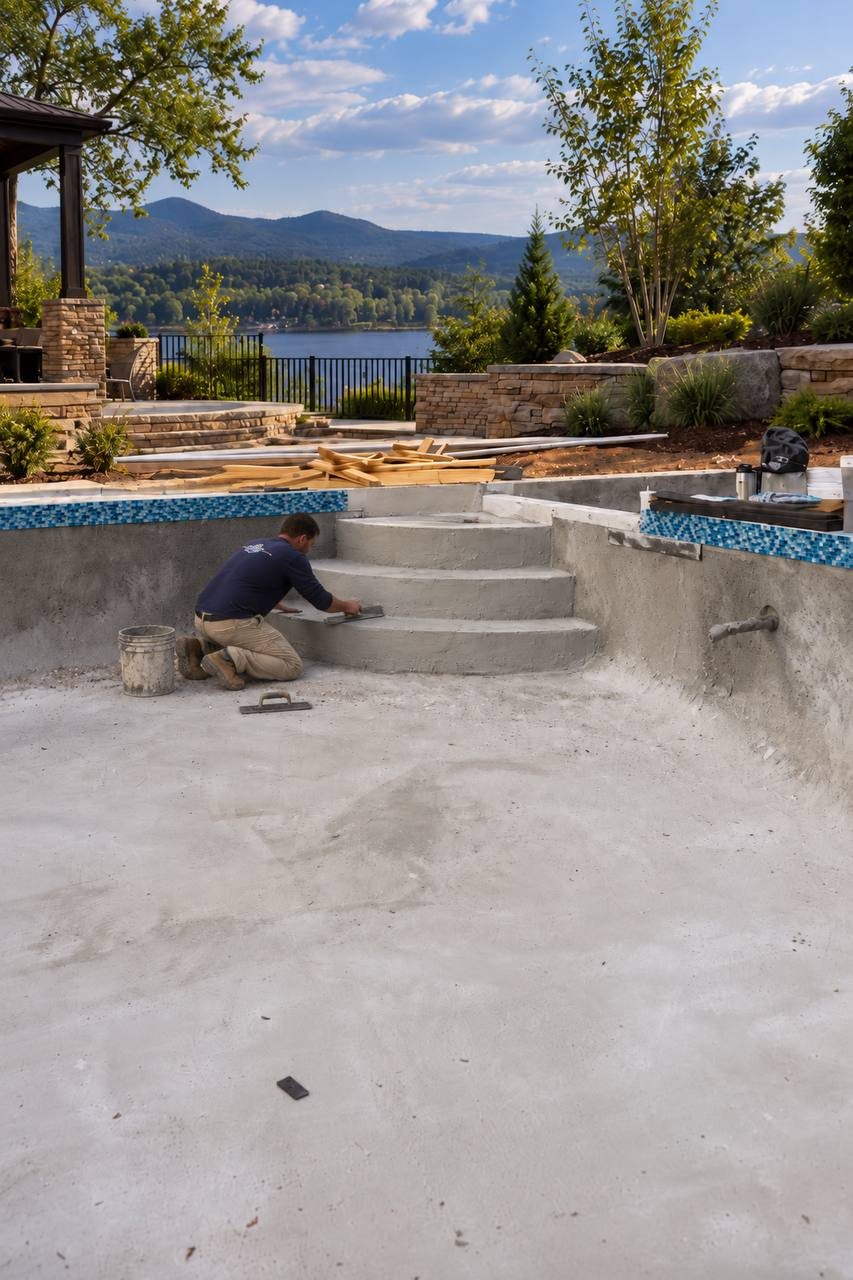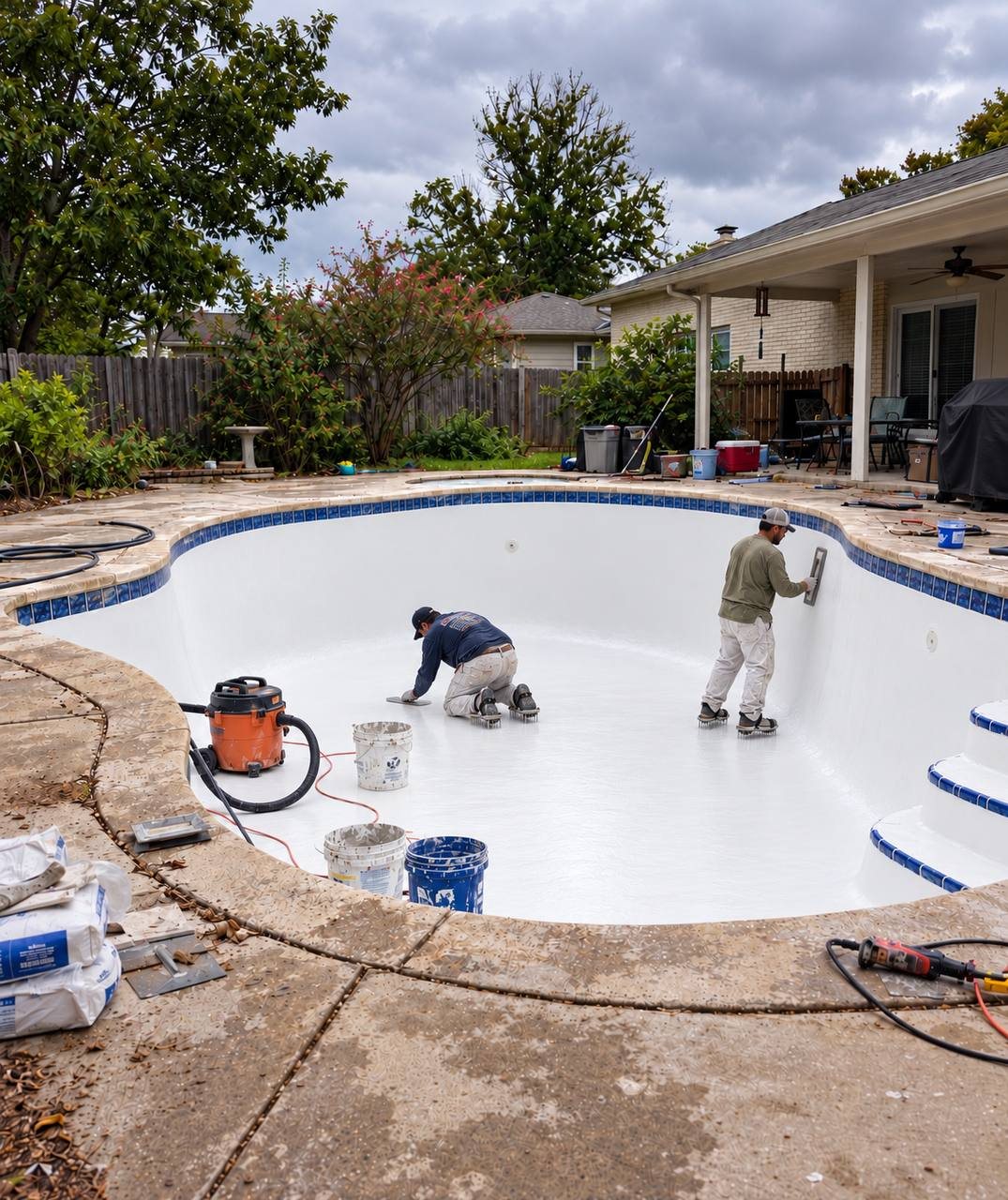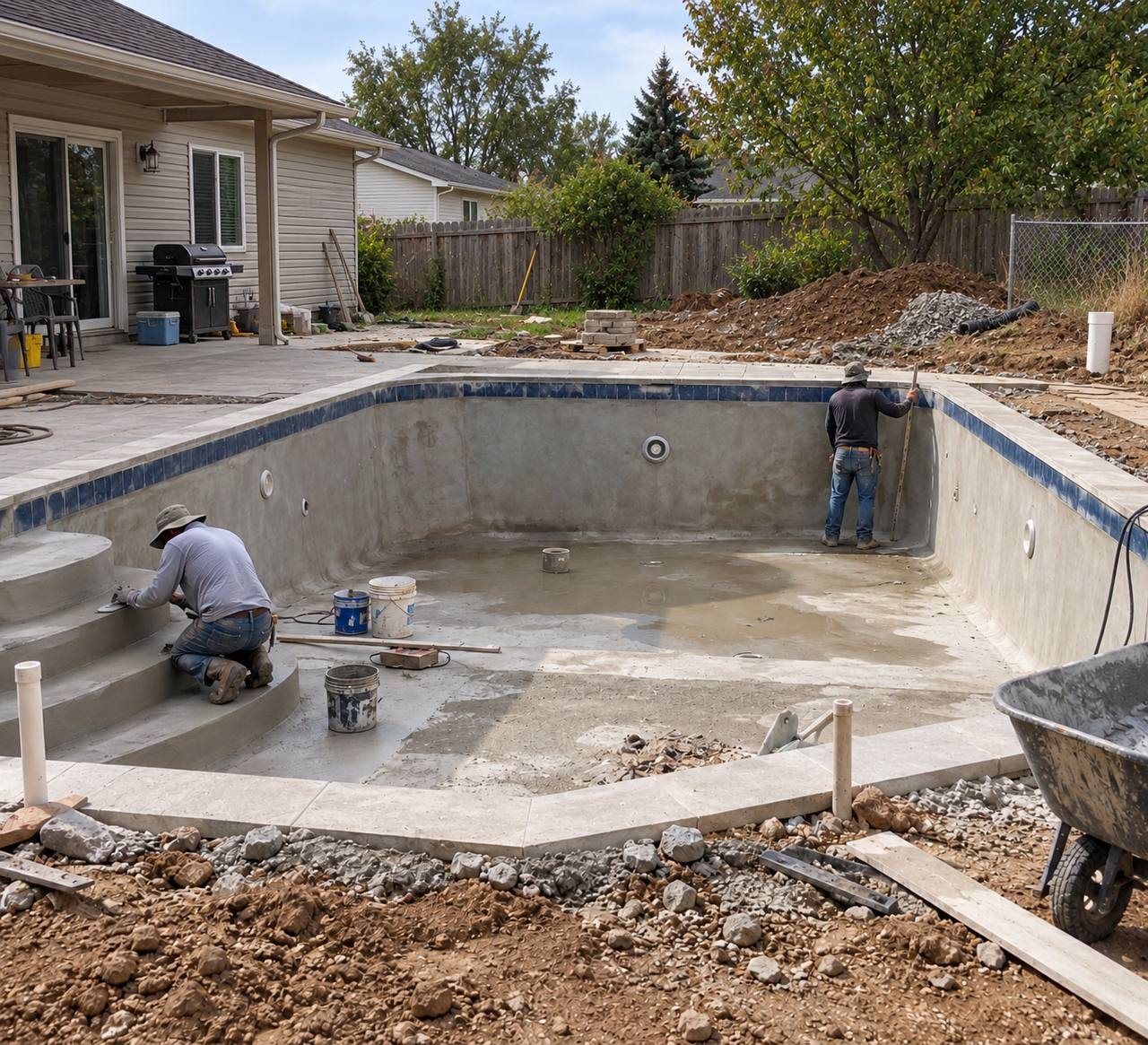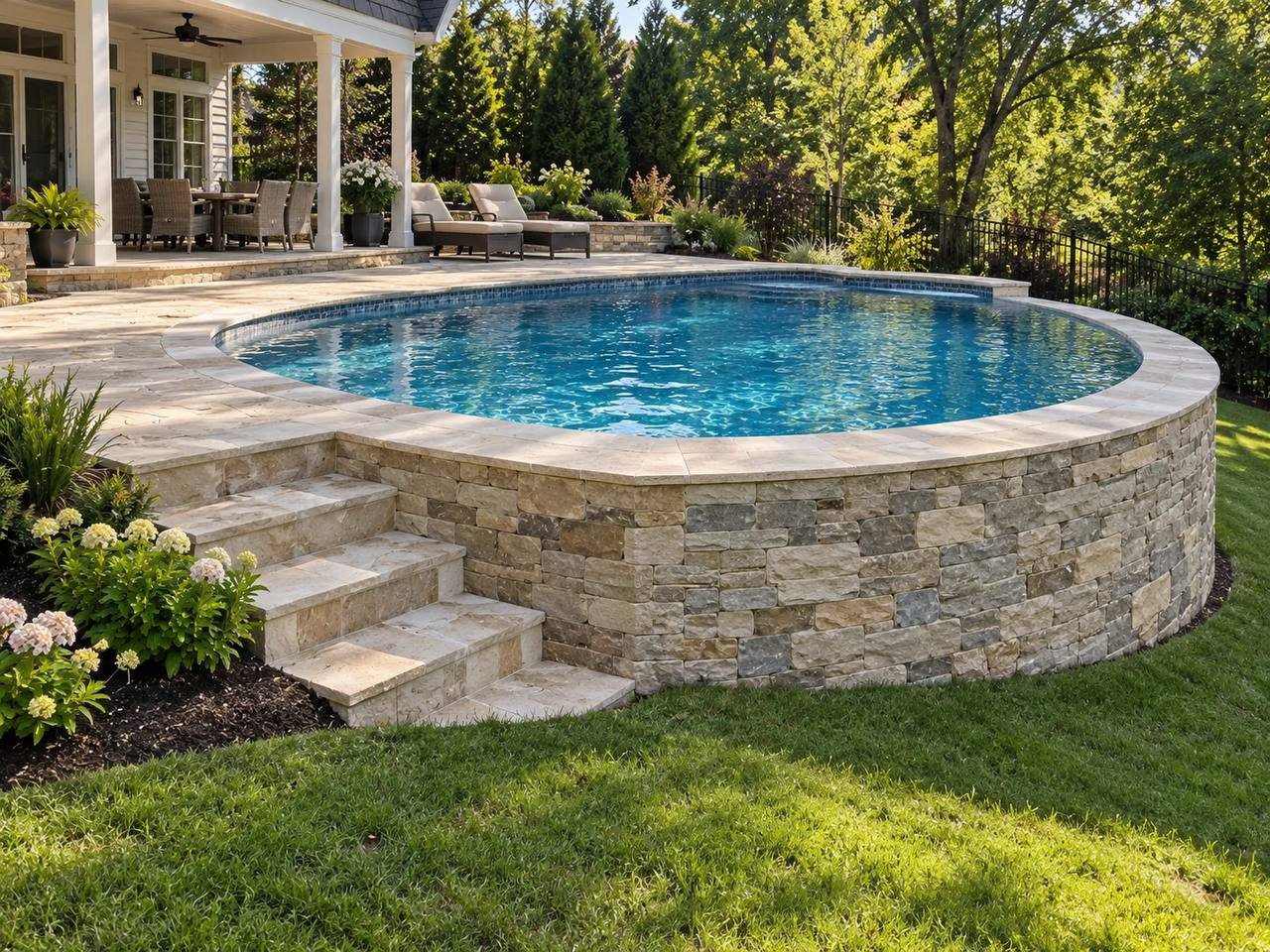
Sloped lots and aging shells are the baseline here
Tryon pools don't sit on flat suburban lots. Polk County's residential pool stock skews toward the terrain-challenged, higher-value side of the market: equestrian estates along Hunting Country Road, retirement and vacation properties climbing toward Howard Gap, and homes tucked into ridges above the Pacolet River valley. A contractor who quotes your job sight-unseen has probably never walked a Tryon driveway. The first variable isn't the finish you want — it's whether a concrete pump truck can reach the water edge without a hose relay, and that access question alone can add hundreds of dollars to a job before a single bag of plaster mixes.
The aging factor compounds the access factor. Many of Polk County's estate pools were built decades ago by owners who weren't full-time residents, which means the plaster is frequently years past its service window by the time anyone calls. Discoloration, rough aggregate showing through the surface, a stubborn algae line that shock won't touch — those are the normal presenting conditions here, not edge cases. Understanding what's under the water before you drain is the difference between a clean replaster and a scope that expands once the shell is exposed. The overview at pool resurfacing covers what a full inspection should include before any price gets written down.
What resurfacing costs in the Tryon area
Standard replaster on a typical 1,000 sq ft gunite pool in Tryon runs $6,000 to $15,000. Quartz and pebble finishes sit in the upper half of that band before any site variables are added. The full Polk County line-item breakdown lives at how much does pool resurfacing cost, but the table below gives the working scope picture:
| Scope | Typical Range |
|---|---|
| Standard white plaster replaster (approx. 1,000 sq ft) | $6,000 – $9,500 |
| Quartz aggregate finish | $9,000 – $12,500 |
| Pebble finish (pebble tec / pebble sheen) | $10,500 – $15,000 |
| Equipment access surcharge (steep or gated lot) | $400 – $1,200 |
| Tile inspection and partial re-bond | $300 – $900 |
| Plumbing or fitting repair found during drain | $300 – $1,500 |
The two cost drivers that surprise Tryon owners most: lot access (pump trucks need a clear run to the water edge, and Polk County's estate driveways often require a relay setup) and the condition of existing tile and bond coat (new plaster applied over a failing bond coat is a warranty call waiting to happen). A crew that skips the drain-and-inspect step before quoting a finish is guessing at what's under the water, not scoping your job.
Finish selection for a four-season foothills climate
Polk County sits in a genuine four-season climate zone — overnight freezes, sustained cold snaps through January and February, and pools that typically sit idle for four to five months. That freeze-thaw cycle matters for finish selection in ways that warmer-climate pool guides won't tell you. Standard white plaster carries the lowest upfront cost and the most repair-accessible profile, but it etches and stains faster in pools that swing pH during long idle periods without regular chemistry maintenance. Quartz and pebble finishes carry more density and hold up better through the chemical drift that happens when a pool gets minimal attention across an off-season — which describes most Tryon pools.
See pebble and quartz pool finishes for a side-by-side look at how each finish wears, stains, and prices out across a ten-year horizon. The honest summary: if your pool sits three seasons and swims one, the extra upfront cost of a denser finish tends to pay back in the midlife of the surface. If you swim it hard and maintain chemistry diligently year-round, standard plaster is a rational choice. Climate and use pattern together give you the right answer — not marketing language.
Storm history and what it means for pool surfaces here
Polk County has logged 20 federally declared disaster events across 1978-2026, the majority of them storm and flood family. For pool owners, those events translate to sediment intrusion, chemistry disruption, and pools that may have received significant runoff between resurfacing cycles. A pool that sat through a flooding event and was never properly rebalanced can carry mineral staining baked into the existing plaster — staining that bleeds through a new finish if the old shell isn't acid-washed and prepped with that history in mind.
If your Tryon property operates as a short-term rental or hosts paying guests, the NC DHHS Division of Public Health Environmental Health Section pool and spa rules apply to your resurfacing scope: surface materials must meet sanitation compatibility requirements, and the pool must pass water chemistry thresholds before reopening to guests. Residential pools operate under local Polk County permit requirements, but the sequencing principle is the same regardless of use type — chemistry and prep first, surface second, refill and startup third.
Hiring well in a small contractor market
Polk County has a thinner contractor market than larger metro counties, which makes pre-hire screening more important, not less. Three practical questions to ask before you hand anyone a deposit: have they worked sloped-lot access in this specific area (not just generic mountain jobs); can they show you the plaster manufacturer's warranty terms and confirm your site conditions are covered; and how do they handle the drain-and-inspect sequence before quoting a finish. If the answer to that last question is "we'll drain it and let you know," that's not a scope — that's a starting pistol for a change-order conversation.
The Pool and Hot Tub Alliance (PHTA) maintains certifications in plastering and water chemistry that signal a crew has invested in documented process. It's a floor check, not a guarantee, but it's a useful one. One line item that catches Tryon owners off guard: if the resurfacing project triggers a permit, any replacement pump equipment must meet current federal efficiency standards. The Department of Energy's dedicated-purpose pool pump rule (Federal Register, 2023) covers replacements; if your pump is more than ten years old, budget that swap into the project before the pool is drained rather than discovering it after.